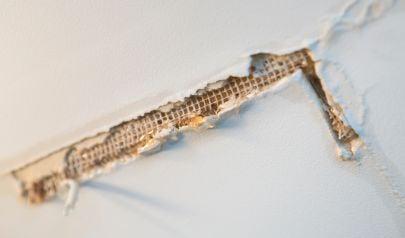
At AdvantaClean of Fairfield and Mason, we usually get calls about water you can see. This time was different. A homeowner in Mason reached out because the floor near their back door felt a bit spongy. There was no visible leak or standing water—just a sense that something was off.
These calls are important. From our experience, floors don’t change texture for no reason. In Mason, Fairfield, and Hamilton, we’ve seen moisture slowly get into subfloors long before you notice any clear signs.
When we arrived, the homeowner had already tried to find the problem. They checked the door seal, looked for plumbing leaks, and even used a fan overnight. Since nothing changed, we knew the issue was probably under the surface.
Why Floor Changes Are Often the First Warning Sign
Floors are excellent messengers. They react quickly when moisture reaches areas it shouldn’t. In this Mason home, moisture readings along the base of the door frame were elevated, even though the surface felt mostly dry.
Exterior doors are common entry points for moisture, especially during heavy rain or when flashing and seals begin to wear. Water doesn’t always pour in. Sometimes it seeps slowly along framing and into subfloor layers, spreading outward over time.
Our technicians checked nearby wall sections and floor seams. The readings showed that moisture had moved in from outside, not from an indoor plumbing problem.
What Our Crew Found Beneath the Finished Flooring
After identifying the problem area, our team carefully inspected the subfloor without removing the entire floor. Under the finished surface, moisture had started to damage materials near the door.
We see this a lot in homes around Fairfield and Hamilton. The top flooring might look fine, but the layers underneath can be damaged. If not fixed, this kind of problem can weaken the structure and cause odors or air quality issues.
We focused on isolating the damaged area, removing any affected materials, and ensuring the rest of the structure remained stable.
Why Drying Exterior Intrusion Is Different Than Interior Leaks
Drying water from an exterior intrusion requires a different strategy than drying water from a burst pipe or an appliance leak. Moisture from outside often reoccurs during rain events, so the source must be addressed along with the damage.
We worked with the homeowner to figure out how water was getting in. Drainage, door flashing, and the slope outside all mattered. Once we fixed those, we could dry the area without worrying about more water coming in.
This step is key. If you dry the area without fixing the source, the problem usually comes back.
How We Monitor Progress Without Guesswork
Our trucks carry monitoring tools that allow our technicians to track moisture movement over several days. In this Mason project, readings gradually returned to normal as drying progressed.
We returned multiple times to confirm stabilization rather than relying on assumptions. That follow-up gives homeowners confidence that repairs aren’t just cosmetic.
When Homeowners Usually Realize They Caught It Early
After we finished, the homeowner said they were glad they had called when the problem was still small. Acting early made a difference. Fixing the moisture issue right away stopped it from spreading to other rooms and walls.
We often see good results when homeowners pay attention to small warning signs instead of waiting for bigger problems.
Questions We Hear During Flooring and Subfloor Projects
Can moisture enter through exterior doors without visible leaks?
Yes. Small gaps, worn seals, or flashing issues can gradually allow water to migrate inward.
Should flooring always be replaced after exposure to moisture?
Not always. It depends on how far the moisture traveled and how the materials respond during drying.
Is this common in newer homes?
Yes. Newer construction can still experience drainage and sealing issues around doors and thresholds.
If Something Feels Off Underfoot
If you live in Mason, Fairfield, Hamilton, or nearby and notice odd changes in your flooring, we’re here to help. Call us at (513) 810-5343. You can also learn more about our restoration services at https://www.advantaclean.com/fairfield-oh/. To see what other local homeowners say, check out our Google Business Profile. Our team is local, our trucks are ready, and we take early warning signs seriously.
AdvantaClean of Fairfield and Mason
(513) 810-5343
https://g.co/kgs/9Mts4yE