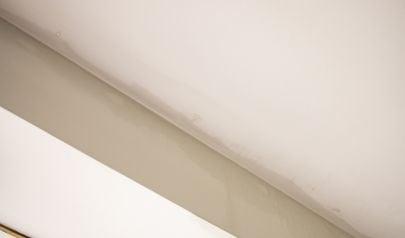
Drive through Mason after a summer storm, and the signs are subtle at first—downspouts overwhelmed for a few minutes too long, mulch lines shifted toward foundations, and rooflines shedding water faster than gutters can redirect it. Many homes here are newer builds with open layouts and integrated roof systems, designed for efficiency but not always for the intensity of sudden Midwest storms. When heavy rain hits in bursts, the structure doesn’t fail outright—it redirects water into places it was never meant to go.
The way Mason homes are constructed directly affects how storm damage develops. Large roof spans push water quickly toward gutter systems, and when those systems are even slightly restricted, overflow concentrates near exterior walls. From there, moisture works into soffits, behind siding, or along foundation edges. Finished basements, common throughout Mason neighborhoods, create another layer where water can settle—especially when grading or drainage is just slightly off. The issue isn’t always the storm itself, but how the home disperses that volume of water in a short window.
Where Storm Moisture Settles Inside the Structure
By the time a homeowner notices staining or dampness, the water has already traveled through multiple materials. Inside Mason properties, that path often leads to:
-
Insulation pockets behind exterior-facing walls
-
Wall cavities near corners and window framing
-
Upper basement wall transitions where framing meets foundation
-
Areas where newer materials meet older construction layers
These aren’t areas that dry on their own.
During inspections, what stands out isn’t standing water—it’s imbalance. One section of a wall may show elevated moisture while an adjacent area remains dry, depending on how framing and airflow interact. In homes with layered upgrades—finished basements, replaced flooring, added insulation—those transitions create pockets where humidity lingers longer than expected.
AdvantaClean of Fairfield and Mason approaches storm-related moisture with attention to how these homes actually handle air and water movement. The goal isn’t just to locate where water entered, but to understand how the structure allowed it to settle and stay.
What Restoration Reveals Beneath the Surface
Once materials are opened and conditions are measured, the real picture comes into focus. In Mason homes, storm damage tends to be uneven—certain sections dry quickly, while others retain moisture due to limited airflow or denser layers of material. That difference leads to long-term environmental issues if left unresolved.
Instead of removing everything at once, technicians work through the structure in controlled sections. This typically involves:
-
Opening materials only where moisture is being held
-
Directing airflow into enclosed or restricted spaces
-
Adjusting humidity levels based on structural response—not just room readings
-
Monitoring internal conditions over time to confirm stabilization
As the environment begins to stabilize, readings are tracked not only in open areas but also within the structural layers where moisture initially settled. This is where many storm-related issues either resolve properly or quietly persist if missed.
AdvantaClean of Fairfield and Mason has seen how quickly storm-driven moisture can change a home's internal environment, especially in areas where insulation, framing, and airflow don’t align evenly.
Bringing the Home Back Into Balance
The final stage isn’t defined by dryness alone—it’s defined by consistency. In Mason, where humidity levels shift between seasons and storms arrive with little warning, the structure needs to return to a state where it can manage moisture without holding onto it.
That means:
-
Enclosed areas are no longer trapping residual humidity
-
Airflow pathways are functioning as intended
-
Moisture conditions are even across all structural zones
When moisture settles unevenly, the structure adapts to it. Bringing it back into balance is what prevents that adaptation from becoming a long-term issue.
Storm damage in Mason homes doesn’t end when the rain stops. It continues in the way moisture interacts with the structure afterward—and resolving it requires understanding how the home responds, not just where the water appeared.
AdvantaClean of Fairfield and Mason
(513) 810-5343
https://g.co/kgs/9Mts4yE