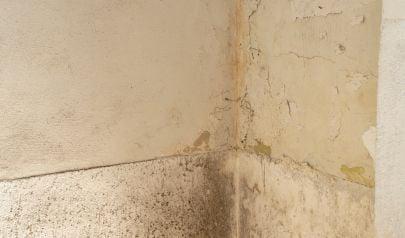
In Fort Lauderdale, the first sign of storm damage isn’t always a dripping ceiling—it’s the saturated earth pressing against your foundation. When our subtropical storms roll through, the local environment doesn't shed water; it holds it. As the water table rises along our streets and canals, a massive amount of hydrostatic pressure builds against your home’s exterior long before a single drop is seen indoors. Keep on reading and check out the checklist below.
Built for the Coast, Vulnerable to the Ground
Fort Lauderdale homes are engineered for the Florida climate—concrete block (CBS) construction, low-slope roofs, and slab foundations built close to grade. While these features are excellent for wind resistance, they create a unique relationship with ground moisture.
Instead of entering through obvious holes, water "presses" inward. It finds microscopic gaps, seams where the wall meets the slab, and transitions between building materials. At AdvantaClean of Fort Lauderdale, our inspections often start at the exterior perimeter because what you see inside—a warped floor or a damp baseboard—is usually just the final stage of a long process of exterior saturation.
The Science of Secondary Intrusion
Once water is held against your exterior, it begins to interact with your home's "skin" in two distinct ways:
-
Capillary Action in Concrete: Concrete blocks are durable but also porous. Under sustained pressure, moisture migrates slowly through the block from the outside in, eventually reaching your interior furring strips and drywall.
-
Lateral Slab Migration: Because our foundations are slabs, water that hits the edge doesn't drain "down"—it moves sideways. It travels across the concrete surface and settles directly beneath your tile, laminate, or wood flooring.
By the time the air inside feels heavy or the humidity spikes, the structure has already absorbed a significant volume of water. The damage is distributed along the entire length of your exterior walls and the edges of your flooring rather than concentrated in a single "leak" spot.
Reversing the Inward Push: Structural Drying
Effective storm damage cleanup in South Florida requires releasing what the structure has absorbed. We don't just dry the air; we have to "pull" the moisture out of the dense building materials.
Opening the Breathing Points
We start by opening the areas where the exterior walls have trapped moisture. This may involve removing baseboards or "flood cutting" small sections of drywall to allow the concrete block behind them to breathe. If flooring has trapped water against the slab, those systems must be evaluated to ensure the concrete itself can release its moisture.
Forcing Environmental Equilibrium
Because our natural outdoor humidity is so high, a home cannot dry itself. We introduce a strategic two-step process:
-
High-Velocity Airflow: We direct air specifically along wall systems and across the slab to "sweep" moisture off the surfaces.
-
Industrial Dehumidification: As the walls and floors release moisture, our dehumidifiers capture it, preventing it from settling back into your furniture or cabinetry.
Restoring the Coastal Balance
The goal isn't just a quick fix; it's structural stability. If the interior dries but the concrete block remains saturated, the moisture will simply migrate back inward a week later. True recovery happens when the exterior walls stop "feeding" moisture into your living space.
Through our local experience at AdvantaClean of Fort Lauderdale, we know that a dry home is a consistent home. Once the flooring systems release their hold and the walls return to normal, your indoor air quality stabilizes, and your home returns to the fortress it was meant to be.
Fort Lauderdale Post-Storm Perimeter Checklist
1. Exterior Ground & Drainage Assessment
-
Check for "Puddling" at the Foundation: Look for standing water within 3 feet of your exterior walls. If the soil remains saturated 24 hours after the rain stops, hydrostatic pressure is likely building against your slab.
-
Inspect Canal or Seawall Levels: If you are on the water, note if the tide or storm surge reached the level of your yard. High groundwater tables prevent your home's foundation from "breathing" moisture outward.
-
Clear Downspout Terminations: Ensure gutters aren't dumping water directly at the base of the concrete block. Water should be directed at least 5–10 feet away from the structure.
2. The Concrete Block (CBS) "Touch Test."
-
Look for Efflorescence: Check exterior walls for a white, powdery substance. This is a sign that water is migrating through the porous concrete and pulling minerals to the surface.
-
Identify Stucco Cracks: Even hairline "spider web" cracks in stucco act as straw-like conduits, sucking pressurized rainwater into the block core.
-
Check Wall Temperature (Interior): Feel the inside of your exterior-facing walls. If a section feels significantly cooler or "clammy" than interior partition walls, it may be retaining moisture within the block.
3. Threshold and Slab Entry Points
-
Examine Door Sweeps and Sliders: Fort Lauderdale homes often have tracks for sliding glass doors that collect water. Check if the "weep holes" in the tracks are clogged, which forces water to back up under the baseboard.
-
Inspect the "Slab Edge": Look where the exterior wall meets the ground. If you see bubbling paint or dark staining at the very bottom of the wall, water is likely migrating laterally across the slab.
-
Check Garage Perimeter: Garages are often the first place slab-on-grade moisture becomes visible. Look for damp concrete or darkening along the bottom of the drywall.
4. Early Interior Warning Signs
-
The "Heavy Air" Test: Walk into a room that has been closed up. If it smells "earthy" or the air feels noticeably heavier/more humid than the rest of the house, the walls are likely off-gassing moisture.
-
Baseboard Gaps: Look for slight pulling or warping at the baseboard-floor joint. This is often the first sign that the subfloor or slab is damp.
-
Cupping or Bubbling: Run your hand across the tile or laminate near exterior walls. Any slight "wave" or lifting indicates that the perimeter pressure has successfully pushed water under your flooring.
AdvantaClean of Fort Lauderdale, FL
236 NE 33rd St, Oakland Park, FL 33334
(954) 994-2947
https://maps.app.goo.gl/nv2Q3gaR4yumLsj8A