Type of Water Damaged Materials Trace Different Paths to Restoration
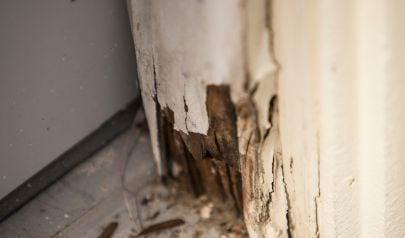
Recommendations from professionals on water damage restoration in Cartersville, GA, often surprise homeowners. Experts suggest different approaches depending on research-based standards developed by the Institute of Inspection, Cleaning and Restoration Certification (IICRC). Some building materials withstand water damage better than might be expected, and others literally crumble when saturated. Because of these differences, restoration strategies vary.
At AdvantaClean of Kennesaw, we realize that restoration does not always mean material preservation, nor does it always lead to material replacement. Professional water damage restoration requires assessing all aspects of a water disaster and implementing appropriate strategies to restore various components of a structure to stability, safety, and usability.
Consider two frequently encountered water damage restoration scenarios:
Hardwood Flooring: Restoration Through Preservation
Hardwood flooring is far more resilient than many Cartersville homeowners expect. While standing water on floors inspires alarm, solid wood floors respond well to professional water damage restoration completed as soon as possible. Aggressive water extraction is the key, followed by applied structural drying.
Extraction and Drying Strategies for Hardwood Floors
-
Traditional wanded extractors — Operators make passes with heavy-duty wanded truck-mounted extractors to remove visible water, assisted with brooms and squeegees. Weight added by riding on the extractors helps express water.
-
Moisture Detection and Metering — Because hardwood floors have crisscrossed joints, cracks, and crevices between planks and strips, it is essential that trained technicians use moisture detection probes and meters, augmented with infrared imaging, to locate pooled liquids and heavily saturated subfloor materials. These actions focus the team on compromised materials and establish baseline data for eventual drying goals.
-
Specialized Floor Mats and Negative Air Pressure — Once we locate the wet "hot spots," we adhere floor mats over trapped water and moisture, connect the mats to hoses attached to the truck-mounted extraction system, and use the negative air pressure (suction) to pull the liquid water from the floor substrate. The powerful suction removes most of the water, enabling efficient drying.
-
Drying Strategies — Drying hardwood flooring is an art as well as a science; when done, the floors skillfully settle back into place with minimal warping. Slow, consistent application of dry, sometimes heated, moving air, along with the use of dehumidifiers, delivers the desired results.
Note: AdvantaClean technicians monitor the drying process, as drying too fast or trending out of balance with the home's relative humidity can actually cause the distortion drying should avoid. Overly dried wood is also prone to cracking and other breakage. When done correctly, we can preserve the original flooring, perhaps sanding and refinishing, but sidestepping a tear-out. The original, water-damaged but restored material remains part of the home's story.
Drywall: Restoration Through Strategic Removal
Drywall damaged by water tells a very different tale. Gypsum board is unforgiving once saturated. It absorbs like a sponge, loses structural integrity, and crumbles, trapping moisture inside wall cavities. This chapter of the restoration narrative often requires controlled demolition, specifically, flood cuts.
-
Anatomy of a Flood Cut
Technicians typically remove drywall at least 12 inches above the highest visible water line, usually stud-to-stud. Often, we take out enough drywall to open areas in 4-by-8-foot increments, which are equivalent to a drywall panel, so installation is quick and straightforward. This step accomplishes several restoration goals at once:
-
Irreparably damaged material exits the scene.
-
Liquid water drains, and the opening creates access for extraction hoses and airflow inside the wall.
-
Technicians dry-framing, insulation, and other wet surfaces that would otherwise remain damp, exposing your structure to progressive deterioration and the potential for mold growth and damage.
-
Flood Cuts Support Water Damage Restoration
Although sawing across and removing materials feels like it accelerates destruction, it actually creates a blank, stable slate for long-lasting restoration. Drywall is not a one-of-a-kind material like a decades-old hardwood floor, pampered and polished to reveal grainlines only centuries-old trees could offer. Clean, measured flood cuts allow new panels to hang efficiently after drying is complete, restoring the wall system wholly and safely rather than risking long-term damage behind intact surfaces. Taping, mudding, sanding, priming, and painting restore the appearance and feel of the water-damaged walls, often looking and functioning even better than the materials removed.
The pros at AdvantaClean of Kennesaw know restoration means understanding materials, respecting the building science behind them, and applying the proper method to achieve the same result: a safe, dry, functional home. Call us at (470) 887-9171 to schedule an assessment and design a water damage restoration plan.
AdvantaClean of Kennesaw, GA
(470) 887-9171