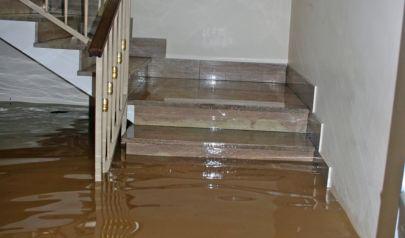
A floor can feel solid underfoot while still retaining water where it matters. That’s the trap hidden inside the word dry. In Westlake homes, the line between something being dry and being dry enough is where repairs either hold or quietly unravel months later.
The misunderstanding starts with surfaces. Carpet fibers stop squishing. Baseboards stop staining. The smell fades. From a homeowner’s perspective, the problem looks resolved. Structurally, though, Westlake houses rarely give up moisture that easily.
When “Dry” Is Only Skin-Deep
Westlake’s housing stock is a mix of mid-century builds and newer developments, many with layered assemblies—finished basements, multiple flooring transitions, and wall cavities interrupted by additions or remodels. These layers slow evaporation. Water moves laterally instead of escaping upward, settling behind insulation, beneath subfloors, and along framing intersections.
This is where “dry enough” becomes a measurable condition, not a feeling.
In homes with finished lower levels, moisture hides behind vinyl plank seams and under pad systems designed to feel insulated underfoot. In older construction, plaster walls and denser lumber absorb and retain water longer than modern materials. Neither scenario announces failure immediately. They wait.
What gets missed isn’t the presence of water—it’s its persistence.
A space is considered dry when it no longer changes to the touch. It becomes sufficiently dry only when internal moisture levels drop to the point where materials stop breaking down, adhesives stop softening, and microbial activity slows. Those thresholds sit well past visual cues.
In Westlake homes, the difference shows up later as:
-
Flooring that releases at seams months after reinstall
-
Baseboards that warp without new leaks
-
Musty pockets that reappear after seasonal humidity shifts
-
Paint that bubbles despite “successful” drying weeks earlier
None of those feel connected to the original water event—until they are.
The corrective work that holds isn’t about drying faster. It’s about complete drying, even when access is inconvenient or disruptive. That means understanding how Westlake homes are assembled, where moisture migrates inside them, and which materials retain water.
That depth of drying is where the local restoration team—AdvantaClean of the West Side, among them—approaches water damage westlake properties differently, using measurements instead of milestones and stopping points that don’t rely on appearances.
The final decision in a water damage situation rarely feels dramatic. It’s a quiet choice between reassembling early or waiting longer than feels necessary. Westlake homeowners who’ve seen the difference know the cost of that choice isn’t immediate—it shows up later, when “dry” turns out not to have been enough.
AdvantaClean of the West Side, OH
31335 Industrial Pkwy Unit 1, North Olmsted, OH 44070
(440) 568-0300
https://maps.app.goo.gl/haE7CZR17uQU6AfN6