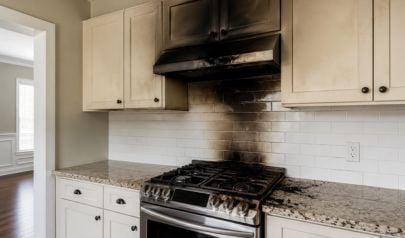
A neighbor of ours—not a customer, just someone who lives nearby—had a kitchen fire two summers ago. It started with grease, a forgotten burner, and a towel too close to the stove. The fire department put it out, and once the trucks left, the flames were gone. But the damage lasted for months in ways she never expected. Smoke spread through the whole house. Her daughter's bedroom, two rooms away on the second floor, smelled like a campfire for weeks. The dining room cabinet turned yellow, and a favorite upholstered chair had to be thrown out. No one warned her about any of this.
We remember that story whenever we help families facing fire damage in Roswell, Sandy Springs, and nearby areas. The fire itself is just the beginning. The recovery process is longer, more complicated, and often more surprising than most people expect when they see the damage the next morning.
Smoke Travels Further Than the Fire Ever Did
This is what surprises people the most. Fire burns in one spot, but smoke spreads everywhere. In most house fires, even if the fire is contained to the kitchen or laundry room, smoke-filled air reaches every room connected to the same HVAC system. It gets into closets and settles into fabric, drywall, and insulation. Smoke can even travel into the attic through ceiling lights and other openings. A faint smoke smell a week after the fire often gets stronger after two weeks because soot particles keep releasing odors as they react with air.
From our work in fire restoration across North Atlanta, we've seen that smoke damage usually goes beyond what you can see at first. A room that looks fine may still have odor-causing particles deep in the carpet or behind outlet covers. Finding all the damage early helps families avoid moving back into a house that seemed clean, only to discover later that it still smells wrong.
Three Distinct Categories of Damage in One Event
Fire damage jobs involve three separate problems happening simultaneously, and each requires a different approach.
The first is fire and char damage, the direct destruction of materials that were burned. This is the most visible and usually the most straightforward to assess in terms of what needs to go and what can stay.
The second type is smoke and soot damage, which is the residue left by burning materials on surfaces throughout the house. Different fires create different kinds of soot. Cooking or grease fires leave behind a nearly invisible but very strong-smelling film that sticks to surfaces and is hard to clean. Fires from furniture or plastics create a dry, powdery soot that spreads easily but can be cleaned off more easily. Using the right cleaning method for the type of soot is more important than most people think.
The third type is water damage from putting out the fire. Firefighting water soaks everything, and with Georgia's humidity, mold can start growing quickly if the house isn't dried out before repairs begin. We've seen Roswell homes where smoke damage was cleaned up, but mold showed up three weeks later because the water well wasn't handled.
What happens to your HVAC system in case of a Fire
If the HVAC system was on during or after the fire, soot and smoke particles were pulled into the ductwork, onto the coil, into the air handler, and out through every vent in the house. Turning the system back on, even for a short time, spreads those particles throughout your home. This is a common mistake families make after a fire, often because the house is uncomfortable and it's natural to want to turn the AC back on.
The HVAC system needs to be inspected, cleaned, and, in many cases, have filters, coils, and duct lining replaced before it's used again. This isn't a minor detail. It's often the difference between a home that smells clean six months later and one that still has a background odor no one can quite explain.
Salvage Decisions Are Harder Than They Look
Not everything that makes it through the fire can be saved. Porous materials like drywall, insulation, mattresses, upholstered furniture, and clothes in affected areas soak up smoke particles deep inside. Some can be cleaned with professional ozone treatment or thermal fogging, but others cannot. Keeping items that can't be cleaned just makes the odor problem last longer.
Hard, non-porous surfaces such as glass, metal, and tile can usually be cleaned if the soot type allows. Wood is a bit different. Surface soot can be cleaned, but if smoke odor has soaked deep into wood framing, it may need to be sealed to stop the smell from coming back, even after cleaning.
From what our crew has observed after working fire jobs throughout Buckhead, Roswell, and Sandy Springs, families who make quick, informed decisions on salvage versus removal tend to have a faster and emotionally easier recovery than those who hold on to borderline items hoping they'll come out okay. That's a hard truth, and we try to deliver it gently, but it's the honest one.
Working With Insurance During Fire Restoration
Fire damage claims are some of the most complicated for homeowners. There are often disagreements about how much was damaged, what can be cleaned, what needs to be replaced, and what counts as smoke damage versus something that was already there. It's important to document everything before cleaning or removing anything. Photos, moisture readings, soot samples, and lists of damaged items help support your claim and avoid problems later.
A restoration company that knows how to handle insurance paperwork is not just being helpful—they are doing their job the right way. We work with adjusters all the time and understand what proper documentation looks like from both sides.
If your family is facing fire damage in Roswell, Sandy Springs, Buckhead, Dunwoody, Alpharetta, or anywhere in North Atlanta, please contact AdvantaClean of Sandy Springs. We understand how hard this experience is, and we're here to support you from the day of the loss until you're back home and comfortable again. You can read our Google reviews to see how we've helped other North Atlanta families during tough times.
AdvantaClean of Sandy Springs | Phone: (404) 474-8443