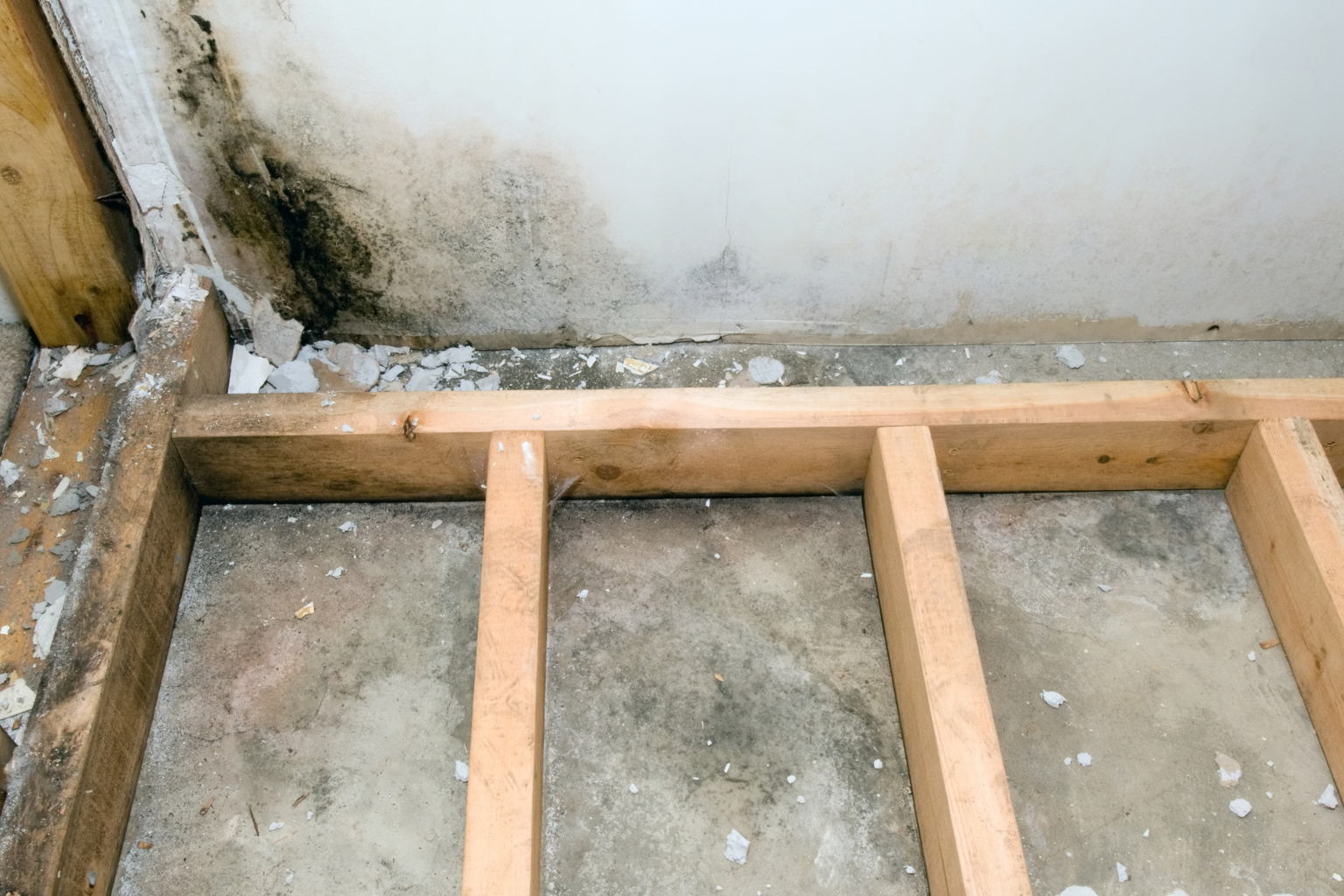
A finished basement provides comfortable living space, yet it also conceals the cold masonry, framing cavities, and vapor barriers that separate indoor rooms from the surrounding earth. When dark spots or peeling paint appear along the lower six inches of a finished drywall partition, homeowners naturally focus on the visible surface. That visible patch, however, is simply the outer face of a multi-layer building assembly.
Remediating basement mold requires evaluating what is happening beneath the flooring, behind the baseboard, and within the wall cavity itself.
The Dynamics of Below-Grade Moisture in Butler County
Basements in communities like Fairfield Township and Hamilton sit directly in native clay soils that retain significant moisture after heavy seasonal rains. Without proper grading, functioning footing drains, or active sump systems, hydrostatic pressure pushes water against foundation walls.
Moisture enters finished basement assemblies through several common pathways:
-
Foundation Seepage: Micro-cracks in poured concrete or masonry block allow groundwater vapor to migrate inward, where it becomes trapped against wood framing and batt insulation.
-
Perimeter Floor Leaks: Water pooling near exterior slabs often slips beneath the sill plate, saturating carpet padding and tack strips before dampness shows on painted drywall.
-
Plumbing and Appliance Condensation: Uninsulated cold-water pipes, water heaters, and HVAC equipment can generate localized condensation in dark, unconditioned perimeter cavities.
-
Slow Supply Line Leaks: Tiny pinhole leaks inside framed partitions can send continuous moisture to the drywall backing and baseboards for months before it surfaces.
Simply wiping away surface mold without identifying how water reached the assembly guarantees the growth will return. A thorough investigation must pinpoint the moisture source before any permanent repairs.
Why Baseboards and Finished Floors Mask the Problem
Trim carpentry serves an aesthetic purpose, but it also seals the expansion gap between vertical drywall and horizontal flooring. When water enters this joint, dense baseboard trim blocks airflow that would otherwise dry the lower edge of the sheetrock.
Standard latex wall paint can hold its shape while the gypsum core behind it breaks down. As moisture wicks upward through the paper backing of the drywall, mold colonies establish themselves on the unpainted interior face long before dark spots penetrate through the front paint layer.
Carpet and underlying padding present an identical challenge. Dense carpet fibers may feel completely dry to the touch on top, while the porous sponge pad beneath holds trapped dampness directly against the concrete slab. Inspecting beneath tack strips, lifting corner carpet edges, and checking subfloor interfaces reveal whether fungal activity extends across the floor plane.
Measured Inspection Over Indiscriminate Demolition
Discovering mold on a lower wall does not mean an entire basement needs to be stripped to bare studs. Aggressive, unplanned demolition creates unnecessary expense and spreads loose spores throughout upper living areas if containment barriers are not established first.
Proper remediation relies on targeted access guided by non-invasive moisture meters and thermal imaging. If readings confirm that dampness is restricted to the bottom twelve inches of a single partition, a controlled inspection cut lets our team inspect internal studs and insulation without destroying unaffected assemblies. If structural timber remains dry and uncontaminated, remediation focuses strictly on the affected lower boundary rather than tearing out entire rooms.
What Property Owners Should Watch For
While specialized testing provides exact moisture levels, everyday sensory cues offer valuable clues about what is happening behind finished surfaces:
-
Persistent Musty Odors: A persistent earthy smell that lingers even when dehumidifiers run usually indicates active colonization behind baseboards or inside exterior wall cavities.
-
Baseboard Distortion: Wood or MDF trim that shows slight buckling, cupping, or gaps along the floorline suggests chronic moisture exposure.
-
Discolored Paint Lines: Chalking, bubbling, or faint yellowish staining along bottom wall margins often signals upward capillary wicking from the slab.
-
Efflorescence Along Slabs: White, powdery mineral deposits along foundation edges or beneath carpet margins indicate moisture vapor passing through the concrete.
Sharing these observations during an initial property assessment helps focus on the true origin of the problem.
Thorough Remediation for Butler County Properties
Remediating basement fungal growth requires a balanced approach that addresses existing contamination while correcting the moisture conditions that allowed it to develop. Our local crew provides comprehensive mold remediation and inspection in Fairfield, along with full fire damage restoration and emergency water mitigation across Mason, Hamilton, and surrounding neighborhoods.
If you suspect hidden moisture or notice recurring mold growth along your basement walls, contact AdvantaClean of Fairfield and Mason at (513) 810-5343 to schedule a detailed structural assessment and restore your home.
AdvantaClean of Fairfield and Mason
(513) 810-5343
https://g.co/kgs/9Mts4yE