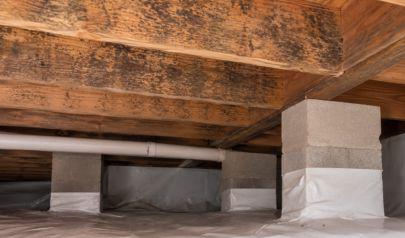
If you’ve spent any time in Matthews or Monroe, you know how humid it gets. Summers can feel like you’re breathing through a wet towel, and even spring and fall are often sticky. This climate is perfect for mold. Mold loves warmth, moisture, and anything organic—like drywall, wood, carpet padding, or insulation. It’s not picky.
The good news is, finding mold doesn’t mean your house is ruined. It just means there’s a moisture problem that needs fixing. Here’s what you need to know to get your home back to normal.
Where Mold Hides in Matthews and Monroe Area Homes
Mold often appears in places you might not expect. While bathroom grout and caulk are common spots, these are usually easy to clean. The bigger problems come from mold growing in areas you don’t check often.
Crawl spaces are a common trouble spot in this part of North Carolina. Many homes in Matthews, Monroe, Waxhaw, and Indian Trail have crawl spaces instead of basements or slabs. These spaces sit on clay soil that holds moisture and slowly releases it into the air. Without a good vapor barrier or encapsulation, that moisture rises into your floors over time. By the time you notice a musty smell in your living room, mold may already be growing on the subfloor below.
Attics are another place where mold often grows, especially if bathroom fans vent into the attic instead of outside, or if vents have become blocked over time. When hot air gets trapped and meets the cooler roof in the morning, condensation forms. If this happens often, mold can start growing on the roof sheathing.
Another common spot is behind walls near plumbing. A slow leak under a kitchen or bathroom sink that goes unnoticed for months gives mold the darkness and moisture it needs to grow.
What Mold Remediation Actually Involves
Many people are confused about the difference between mold remediation and just cleaning visible mold. Cleaning with bleach or sprays might remove stains, but it doesn’t fix the underlying moisture problem or kill mold deep in the material. That’s why mold often comes back after surface cleaning.
Professional remediation starts with an assessment. A trained technician looks at where the mold is, what's causing the moisture that allowed it to grow, and how far the growth has spread. Sometimes that means pulling back flooring, opening wall cavities, or accessing the crawl space. Moisture meters and air quality sampling help fill in the picture.
From there, the work involves physical removal of materials that can't be saved. Wet drywall and insulation are almost never worth trying to treat in place. After removal, technicians clean and treat the structural elements that remain. Containment matters during this process; you don't want mold spores traveling through the rest of the house as disturbed material gets removed.
The last step, which some companies skip, is fixing the moisture source. For example, new drywall in a bathroom won’t help if the exhaust fan isn’t working. Crawl space work without encapsulation or better drainage is only a temporary fix.
How to Tell If What You're Seeing Needs a Professional
Not every stain or spot on a wall means you have a mold emergency. Here’s an easy way to decide what to do:
If you see surface mold in a bathroom that’s less than 10 square feet and you know what caused it, you can usually handle it with cleaning and better ventilation. If mold comes back after you’ve cleaned it, the moisture problem is still there and the issue is probably bigger. If you smell a musty odor but can’t see mold, it’s likely hidden in a wall, crawl space, or attic. Mold near HVAC equipment or in ductwork spreads quickly and needs professional help right away. If anyone in your home has asthma, allergies, or immune issues, it’s safest to get a professional assessment.
A Word About Mold Testing
Mold testing is often heavily marketed, but it’s important to know when it’s actually useful. Air and surface testing can help in certain cases: if you need paperwork for a real estate deal, if someone in your home has health symptoms and you need to know the mold type, or if you want to confirm that remediation worked.
If you can already see or smell mold, you can often skip testing and go straight to assessment and remediation. You know there’s a problem—you just need it fixed the right way. A good remediation company will tell you if testing is actually needed in your case.
Frequently Asked Questions About Mold in Union County Homes
Does homeowners' insurance cover mold remediation?
It depends on the cause. If mold is from a covered event like a burst pipe or storm flooding, your insurance may pay for remediation. Mold from long-term humidity or lack of maintenance usually isn’t covered. Keep records and contact your agent as soon as possible.
How long does mold remediation take
For a crawl space or a single room, professional remediation usually takes one to three days. Bigger jobs that cover more areas or need a lot of material removed can take longer. Your technician should explain the timeline before starting.
Can I stay in my home during remediation?
For most small or contained projects, you can stay in your home during remediation. Professionals use barriers and negative air pressure to keep spores from spreading. If the job is large or involves your HVAC, your contractor will let you know if you should leave temporarily.
What's the difference between mold removal and mold remediation
Mold removal suggests getting rid of all mold, but that’s not possible since mold spores are everywhere. Remediation means bringing mold levels back to normal by removing visible growth, treating affected areas, and fixing the moisture problem.
If you’ve noticed a musty smell, seen a strange stain, or want your crawl space checked before summer, AdvantaClean of Monroe serves Matthews, Monroe, Indian Trail, Waxhaw, and nearby areas. They offer honest assessments and quality remediation—no upselling or unnecessary tests. You’ll get a clear explanation of what’s going on and how to fix it.
You can also find them and read what your neighbors have said at AdvantaClean of Monroe on Google Maps.
Think you might have a mold problem in your crawl space or walls? Reach out to the team. A conversation costs nothing and can save you a lot of headaches down the road.
AdvantaClean of Monroe | Phone: (704) 256-4869