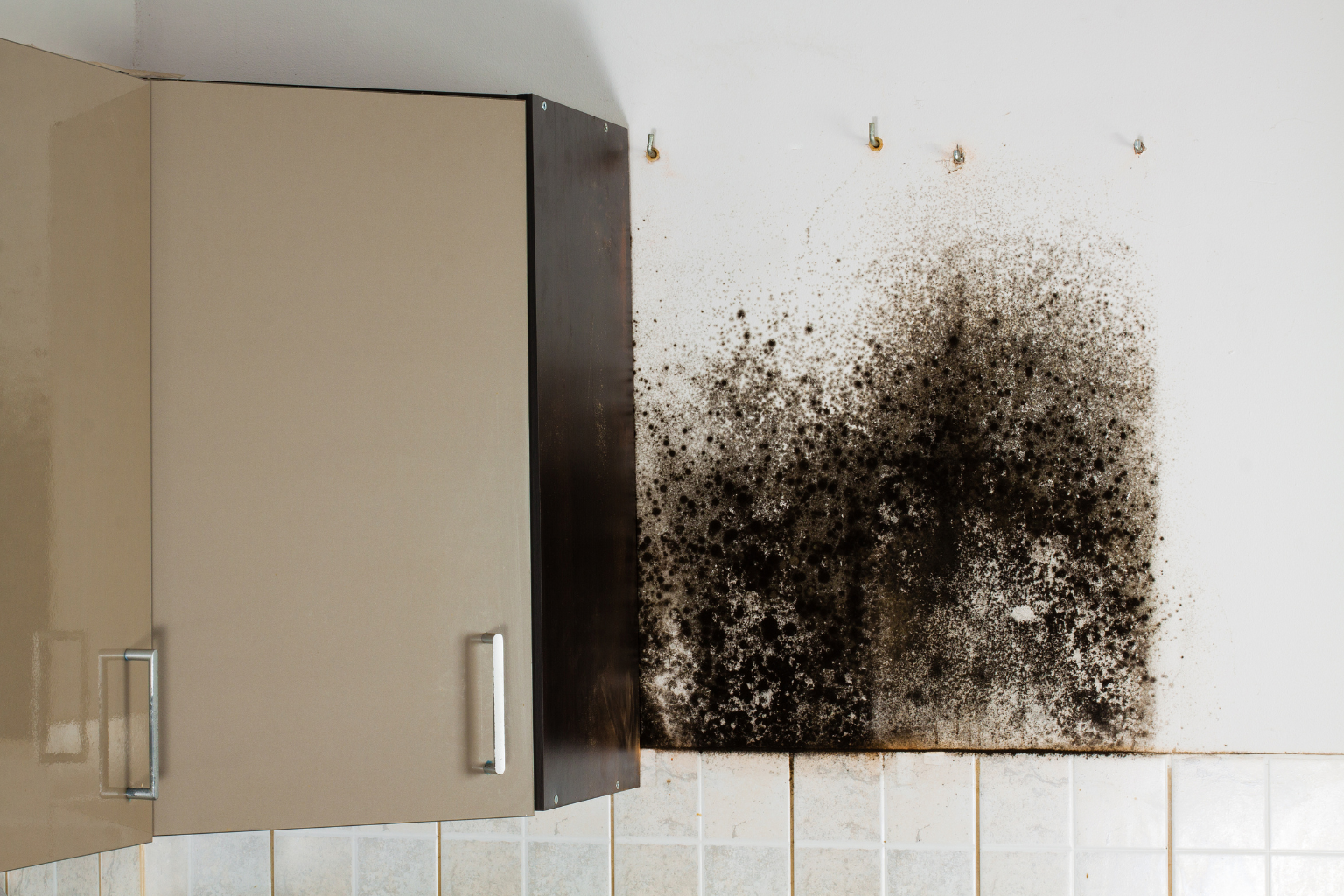
A particular kind of basement is familiar to anyone who has spent time in older Cleveland-area homes. It may have block or masonry walls, a floor that has seen several generations of paint, and shelves or finished walls added long after the house was built. Most of the year, everything seems perfectly ordinary. Then a stretch of wet weather arrives, snow begins to melt, or summer humidity settles in, and the basement starts to smell different.
That smell should not automatically be labeled a mold emergency. It should not automatically be dismissed as “just an old basement,” either.
For homeowners in North Olmsted, Westlake, Bay Village, North Ridgeville, and Lakewood, mold remediation makes the most sense when it begins with a question unrelated to cleaning products: Where is the moisture coming from?
AdvantaClean of the West Side provides mold remediation and inspection services across these west-side communities. Its local project history includes mold associated with foundation moisture, slow plumbing leaks, bathrooms, finished basements, wall cavities, and other concealed spaces.
A Mold Problem Can Be a Building Clue
Mold needs moisture. That simple fact makes the moisture source one of the most valuable pieces of information in an inspection.
Sometimes the connection is obvious. A pipe leaked behind a bathroom vanity, and mold is discovered when the cabinet is removed. Other situations require more investigation. Moisture might enter through a foundation, collect from condensation, remain from an earlier water loss, or accumulate in a poorly ventilated area.
AdvantaClean of the West Side recently described a Westlake situation involving a slow-moving pipe leak that went unnoticed until a musty odor and changes in nearby materials prompted further investigation. The company notes that much of the housing stock in Westlake, Bay Village, and North Olmsted dates to the mid-20th century, making plumbing history one factor worth considering when investigating unexplained moisture.
That does not mean an older house is inherently a mold problem. It means the building’s history matters.
From Lakewood Basements to Bay Village Wall Cavities
One advantage of looking at local projects is seeing how mold can present itself differently from one property to another.
In Lakewood, AdvantaClean of the West Side has documented mold remediation in an approximately 100-year-old basement as well as another basement where hydrostatic pressure contributed to moisture at the walls and floor. Those projects remind us that mold on a basement wall may be connected to moisture movement through the structure, not something that can be permanently solved by painting over the discoloration.
In Bay Village, the company documented hidden mold discovered around a window or door frame and inside a wall cavity. What appeared at the finished surface was only part of the condition behind the material.
These examples illustrate why mold remediation should not be reduced to treating only what can be seen.
If growth is visible on a finished surface, the questions continue. What is behind it? Is the material damp now? Was there a previous leak? Is exterior water reaching the assembly? Is condensation involved? Has the moisture source already been repaired?
The answers determine what happens next.
North Ridgeville Homes Have Their Own Moisture Challenges
Moving farther west into North Ridgeville, housing can look very different from Lakewood’s tightly spaced older neighborhoods. Newer construction, expanding subdivisions, finished basements, attics, and modern building assemblies introduce their own moisture-management considerations.
AdvantaClean of the West Side specifically identifies attics and basements as areas where moisture and mold can become concerns in North Ridgeville homes. Its local guidance emphasizes that different areas of a house may require different remediation approaches and that longer-term corrections may involve ventilation, roof repairs, or other measures intended to address the condition that supported the growth.
That distinction matters.
Removing mold from an attic while ignoring a ventilation or roof problem can leave the building conditions that contributed to the problem intact. Cleaning a basement wall without investigating recurring moisture creates a similar disconnect.
The goal isn't just to make the visible mold disappear. It is to understand why that particular material became hospitable to growth in the first place.
Mold Inspection and Mold Remediation Are Related, but They Are Not the Same Thing
A homeowner who smells something musty but cannot see anything is in a different position than someone seeing obvious growth across a section of drywall.
Inspection establishes conditions and defines the problem. That can involve visual inspection, moisture detection, reviewing building history, and investigating areas associated with leaks or elevated moisture levels. Testing may be appropriate when it answers a useful question about the property’s condition.
Remediation is the work performed after identifying the affected area.
Depending on the situation, this can include containment, removing affected porous materials, using HEPA-filtered equipment, cleaning remaining surfaces, and drying. AdvantaClean’s West Side case studies describe using containment, negative air equipment, HEPA vacuuming, antimicrobial treatments, material removal, and moisture-control measures across different mold projects. The exact combination has varied depending on the conditions at each property.
That point matters because mold remediation should not look identical in every house.
Why Containment Matters During Mold Remediation
Once you disturb affected material, the work changes.
Cutting drywall, removing insulation, pulling damaged trim, or cleaning contaminated material can release dust and particles into the immediate work area. Containment helps separate that area from unaffected portions of the property while remediation is underway.
Depending on the scope, negative air and HEPA-filtered equipment may also be used as part of the remediation setup.
This is one of the major differences between professional remediation and a homeowner simply scrubbing a suspicious patch on a wall. The project is concerned not only with what is being removed but also with what happens while that material is disturbed.
AdvantaClean of the West Side has documented using containment and HEPA-filtered equipment on local mold projects, including work involving concealed mold and mold-affected drywall.
Westlake and North Olmsted Homeowners Should Remember the Leak They Almost Forgot
A slow leak has a frustrating characteristic: by the time the mold is discovered, the water itself may no longer seem like the main story.
Maybe the washing machine connection was repaired three weeks ago. Perhaps the bathroom leak was small enough that nobody thought much about it. A cabinet was wiped dry, the plumber left, and daily life resumed.
Then the smell begins.
AdvantaClean’s Westlake example shows why that timeline is useful during an inspection. The company describes a slow supply-line leak, followed later by a musty odor and the discovery of mold.
Homeowners in Westlake, North Olmsted, Bay Village, North Ridgeville, and Lakewood should mention any previous leaks when reporting a new mold concern, even if they seemed minor at the time. A seemingly unrelated moisture event may provide exactly the history needed to understand why growth appeared where it did.
Local Experience Can Be Checked Before You Make the Call
Inviting a remediation company into your home can mean giving technicians access to basements, attics, bedrooms, wall cavities, and other areas most homeowners don't routinely open to strangers. Checking a company’s background is reasonable.
AdvantaClean of the West Side maintains an A+ rating with the Better Business Bureau. Homeowners can review the company’s Better Business Bureau profile rather than relying solely on advertising claims.
Customer feedback provides a different kind of information. You can also read Yelp reviews for AdvantaClean of the West Side when researching the company.
AdvantaClean of the West Side is also a member of the HVAC Inspection, Cleaning and Restoration Association (NADCA), and homeowners can view the company’s NADCA professional listing. The franchise’s own company information also lists certifications covering mold inspection, mold remediation, water damage restoration, applied structural drying, and air-systems cleaning.
For local updates and information between service calls, homeowners can follow AdvantaClean of the West Side on Facebook.
The Goal Is Not a Mold-Free Photograph
Before-and-after photographs can be satisfying. A stained basement wall becomes clean. Damaged drywall disappears. A previously affected room looks normal again.
But appearance alone is a poor measure of whether the underlying problem has been addressed.
A better outcome is one in which the affected area has been identified, the remediation scope reflects what was actually found, damaged material has been handled appropriately, and the moisture conditions that supported growth have been corrected or clearly identified for repair.
That principle applies whether the problem is in an older Lakewood basement, behind a wall in Bay Village, around a slow leak in Westlake, in an attic or finished basement in North Ridgeville, or inside a home or commercial property in North Olmsted.
Mold is only part of the story. Moisture is what connects the rest of it.
AdvantaClean of the West Side serves North Olmsted, Westlake, Bay Village, North Ridgeville, and Lakewood. Property owners concerned about mold can visit AdvantaClean of the West Side or view the company’s Google Business Profile. For mold remediation or inspection services, call (440) 568-0300.
AdvantaClean of the West Side, OH
31335 Industrial Pkwy Unit 1, North Olmsted, OH 44070
(440) 568-0300
https://maps.app.goo.gl/haE7CZR17uQU6AfN6