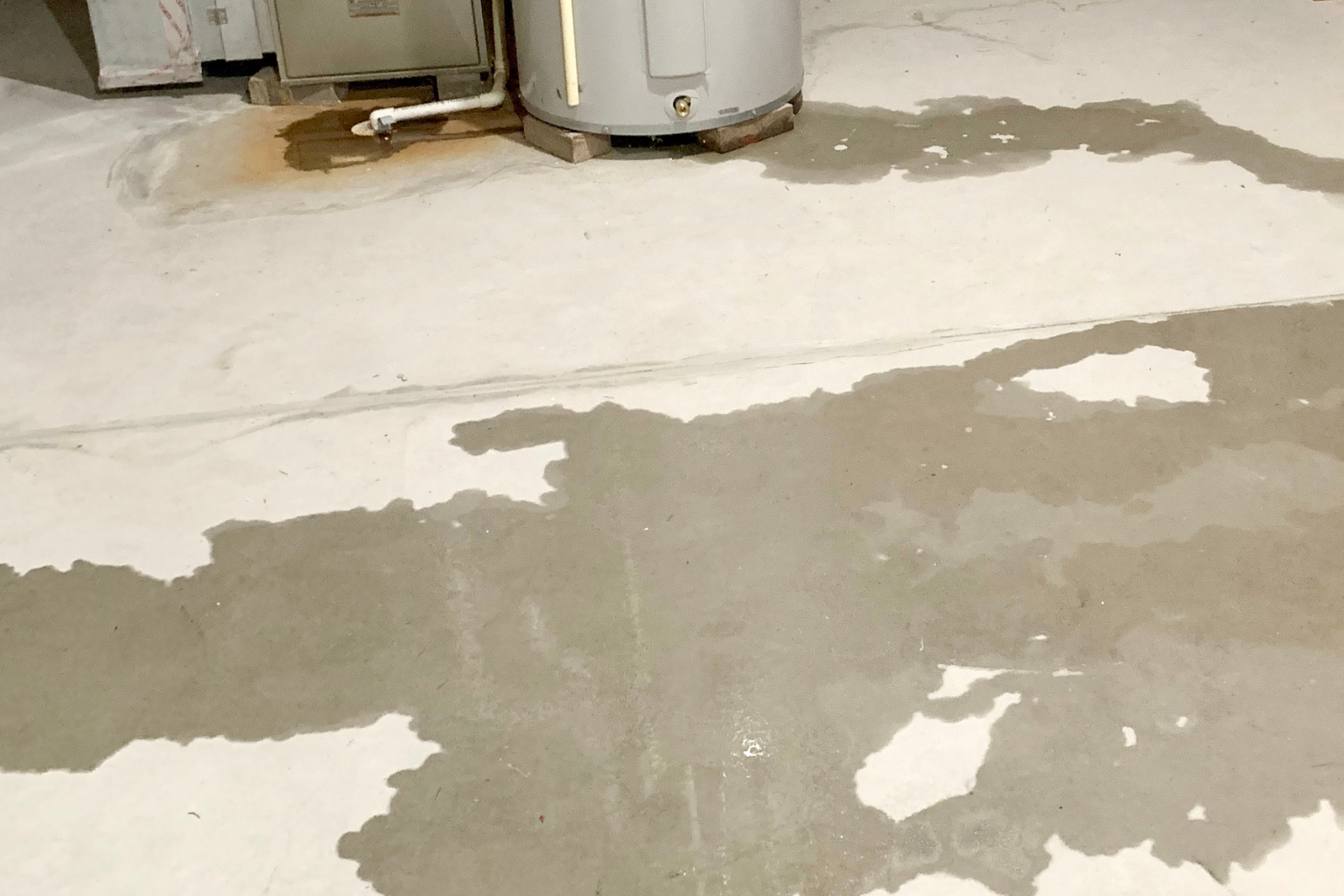
Walk downstairs after basement water damage, and the damage may seem simple.
The floor is wet.
That description is accurate, but it isn’t complete enough to guide restoration. A finished basement is a collection of materials with very different relationships to water. What happens to the concrete under a floor covering differs from what happens to drywall at the perimeter. Carpet behaves differently from trim. A cardboard storage box creates different concerns from a metal shelving unit.
So instead of treating “the basement” as one wet object, it helps to break the room apart mentally.
Start at the Lowest Layer
Concrete appears solid, but you can’t judge moisture conditions by looking at its surface.
After basement flooding or a substantial leak, coverings over the slab may complicate drying. Water can move beneath flooring or remain in materials installed directly above the concrete. What to remove, dry in place, or monitor depends on the assembly and the extent of exposure.
Fairfield Township properties can face basement water from several sources, including plumbing failures and storm-related conditions. The local AdvantaClean franchise also discusses rain, snowmelt, drainage, and foundation conditions as possible contributors to basement moisture problems in the area.
That doesn’t mean every wet basement has a foundation problem. It means restoration should begin by identifying the source instead of assuming all basement water arrived the same way.
Move Up to the Bottom of the Walls
The lowest few inches of a wall can tell a different story from the middle of the wall.
Drywall, trim, insulation, and wall cavities create places where moisture can remain after you clean the exposed floor. Depending on the circumstances, restoration may require access to affected material rather than simply directing air toward the painted wall surface.
Appropriate access depends on the water source, the extent of wetting, the material condition, and the assembly’s ability to dry.
That is why arbitrary demolition rules aren’t particularly helpful. Cutting every wall to the same height without an assessment can remove more material than necessary. Refusing to open anything can create the opposite problem.
Measurements should help determine the work.
Carpet Is a System Too
People often say, “The carpet got wet,” as if carpet were the only material involved.
There may also be padding below it and subflooring or a slab below that.
The carpet face may appear dry while moisture remains elsewhere in the assembly. Depending on the conditions, portions may be salvageable, or removal may be appropriate to provide access for drying.
The water source is also relevant. Clean water from a plumbing failure raises different restoration considerations than contaminated water. Material condition matters too.
There is no useful one-size-fits-all answer.
Storage Changes the Room Again
Basements tend to accumulate things.
Boxes sit against walls. Furniture may have very little clearance underneath it. Shelving creates shaded areas with limited airflow. Rugs cover flooring. Finished basement rooms may contain upholstered furniture, books, clothing, and other porous belongings.
Water doesn’t distinguish between the structure and the possessions inside it.
Moving unaffected belongings away from the damaged area may provide working room, while wet items may require separate evaluation. If an insurance claim is likely, photographs and documentation can also help before you discard damaged property, as long as there’s no immediate safety reason to remove it.
This is where the basement stops behaving like a single room and begins behaving like a small restoration system.
The Water Source Determines What Comes Next
A failed pipe can be repaired.
Surface drainage may require a different correction.
A leaking appliance introduces another starting point.
Storm-related water may require addressing exterior conditions before returning new finishes to the basement.
Drying without dealing with the cause leaves the job incomplete. Rebuilding too soon can cover up moisture that still needs attention.
AdvantaClean of Fairfield and Mason provides water damage restoration and mold remediation services from its Hamilton-based franchise location, serving Fairfield and surrounding communities. Property owners can read more about the local restoration services offered by AdvantaClean of Fairfield and Mason.
The useful way to look at basement water damage is not “How wet is the basement?”
Ask instead which materials became wet, what lies underneath or behind them, and which conditions allowed the water to reach the space.
Those answers produce a much better restoration plan.
If a basement in Fairfield Township has been affected by flooding, a plumbing problem, or another water damage, contact AdvantaClean of Fairfield and Mason at (513) 810-5343 to discuss the condition of the property and the next practical steps.
AdvantaClean of Fairfield and Mason
(513) 810-5343
https://g.co/kgs/9Mts4yE