7:10 a.m.
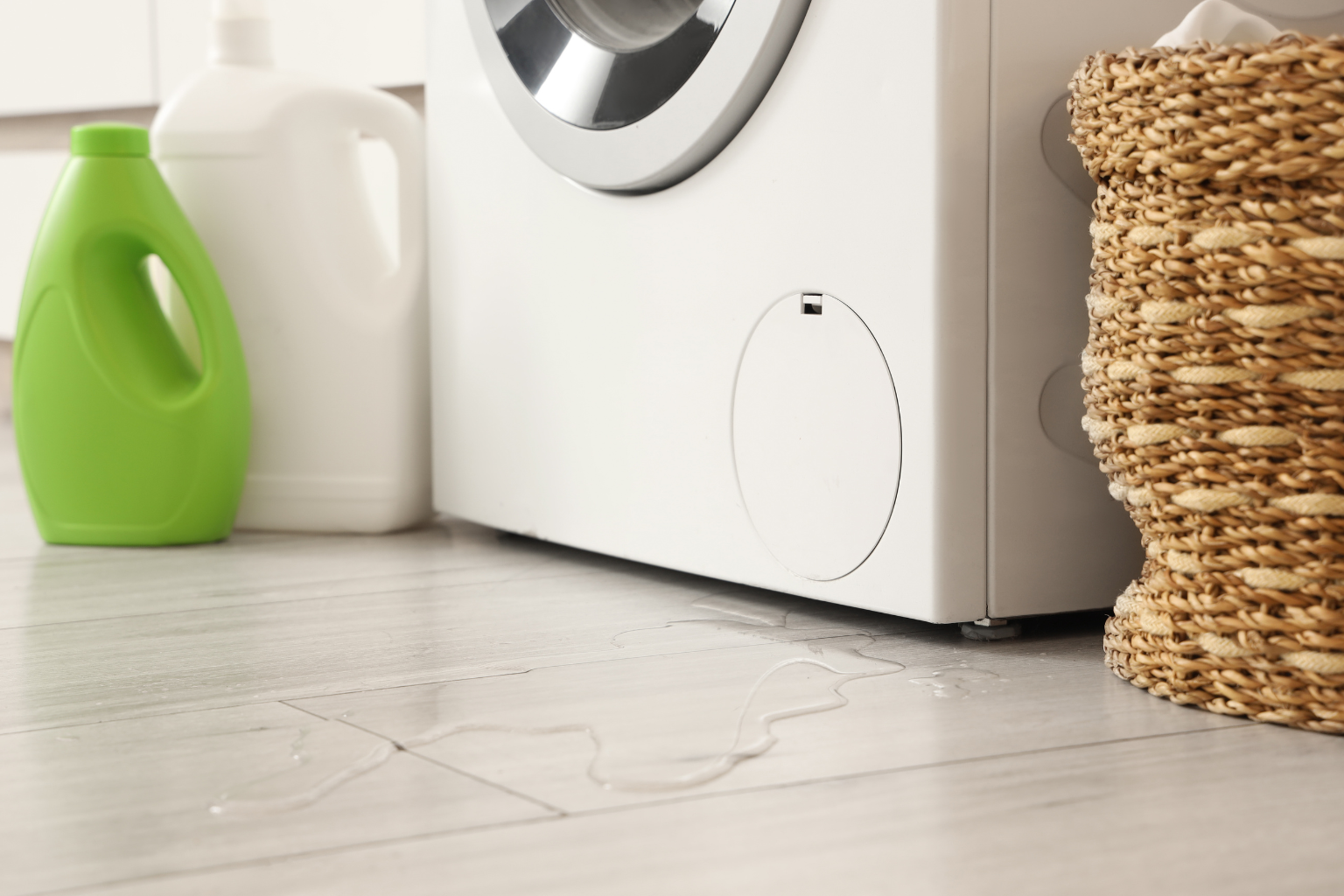
You switch on the washing machine, go into the kitchen and then return to find water spreading across the laundry-room floor.
The first thing to do is to stop the water flowing; if it is safe to do so, switch off the appliance, stop the water supply if you know how, and make sure that people do not go near any electrical equipment that may have come into contact with water.
Then the situation is not so clear.
A homeowner will naturally focus on the puddle, while a restoration crew must consider all the materials the puddle came into contact with.
That difference determines what happens afterward.
7:30 a.m.: The Visible Water Is Only the Map’s Starting Point
Let us imagine that the laundry room has a hallway leading from it. The water has gone over the threshold, come into contact with the baseboard, and reached the edge of the floating floor.
A mop can remove water from the surface, and towels can make the room look much better, but neither tells you whether moisture has gotten underneath the flooring or into the base of the wall.
Water passes through the cracks, joints, edges, and openings. There are materials which cannot be seen by merely standing in the middle of the room and looking down.
In the Fairfield and Mason area, AdvantaClean has recorded cases of water loss in which the first sign was mild rather than obvious. In one instance, a homeowner observed a soft spot near an exterior door, and moisture measurements were used to detect damp material beneath the finished surface.
The same principle applies to leaks inside buildings; the outer appearance doesn’t always define the extent of the damage.
At 8:15 a.m. Flooring and Water Damage
Now consider the layers.
A laundry room floor can consist of a finished surface installed over the underlayment or subflooring. When carpet is adjacent to it, this provides a layer of padding. Baseboards cover the lowest part of the wall, and cabinet work can be used to restrict airflow in some areas.
Different layers react differently to water.
That is why water damage restoration does not start with a general rule stating that all wet items must be removed. In some cases, materials may be suitable for controlled drying. At the same time, in other instances, they may be so affected that it is not possible to keep them, or they may have to be moved to gain access to something wetter below.
The decision must be based on an assessment.
Homeowners in Mason can review the franchise’swater damage and property restoration services through AdvantaClean of Fairfield and Mason. The local franchise serves Mason as well as Fairfield, Hamilton, and other nearby communities.
At 10.00 a.m., drying becomes the principal task.
After the excess water has been extracted, the moisture still contained in the building materials must go somewhere.
Drying achieves this by promoting the escape of moisture from wet materials and by managing the humid air produced in the process. Air movement and dehumidification can be organized based on the materials and spaces involved, and moisture measurements offer a more reliable basis for decision-making than relying solely on touch.
That is not at all the same as putting a household fan in the doorway.
The equipment is only one element of the process; the placement, access, and knowledge of which materials require monitoring are important.
The water restoration services carried out by AdvantaClean of Fairfield and Mason include extraction, controlled drying, humidity control, and moisture monitoring.
At 1:10 p.m., the room appears to have improved, but that still isn’t the end of the journey.
By the afternoon, the homeowner might look into the laundry room and feel a great deal better about it. The standing water has disappeared. The floor, which was previously exposed, is no longer shiny. It seems nothing is spreading.
Good.
Yet the restoration is not considered complete simply because the emergency appears less dramatic.
The only remaining issue is whether the affected materials are returning to the right moisture level. The edges of the floor, the subfloor, the wall materials and the hidden areas may not dry out at the same rate.
It is also important at this stage to keep the original cause within the discussion. Any issue, such as a faulty hose, a loose joint, a damaged appliance connection or a plumbing problem, must be repaired before the incident can be considered fully resolved.
The Useful Lesson From Those Six Hours
It’s easier to understand water damage if you cease viewing it as a puddle and begin seeing it as a path.
Where did the water start?
What direction did it go?
What did it pass over, under, or beside?
Which materials held onto moisture after the visible water disappeared?
Those questions lead to a more sensible restoration plan than simply asking how big the spill looked.
For a washing machine leak, plumbing failure, or other water damage in Mason, call (513) 810-5343 to speak with AdvantaClean of Fairfield and Mason. The sooner the affected materials are identified, the sooner the drying plan can be based on what actually got wet.
AdvantaClean of Fairfield and Mason
(513) 810-5343
https://g.co/kgs/9Mts4yE