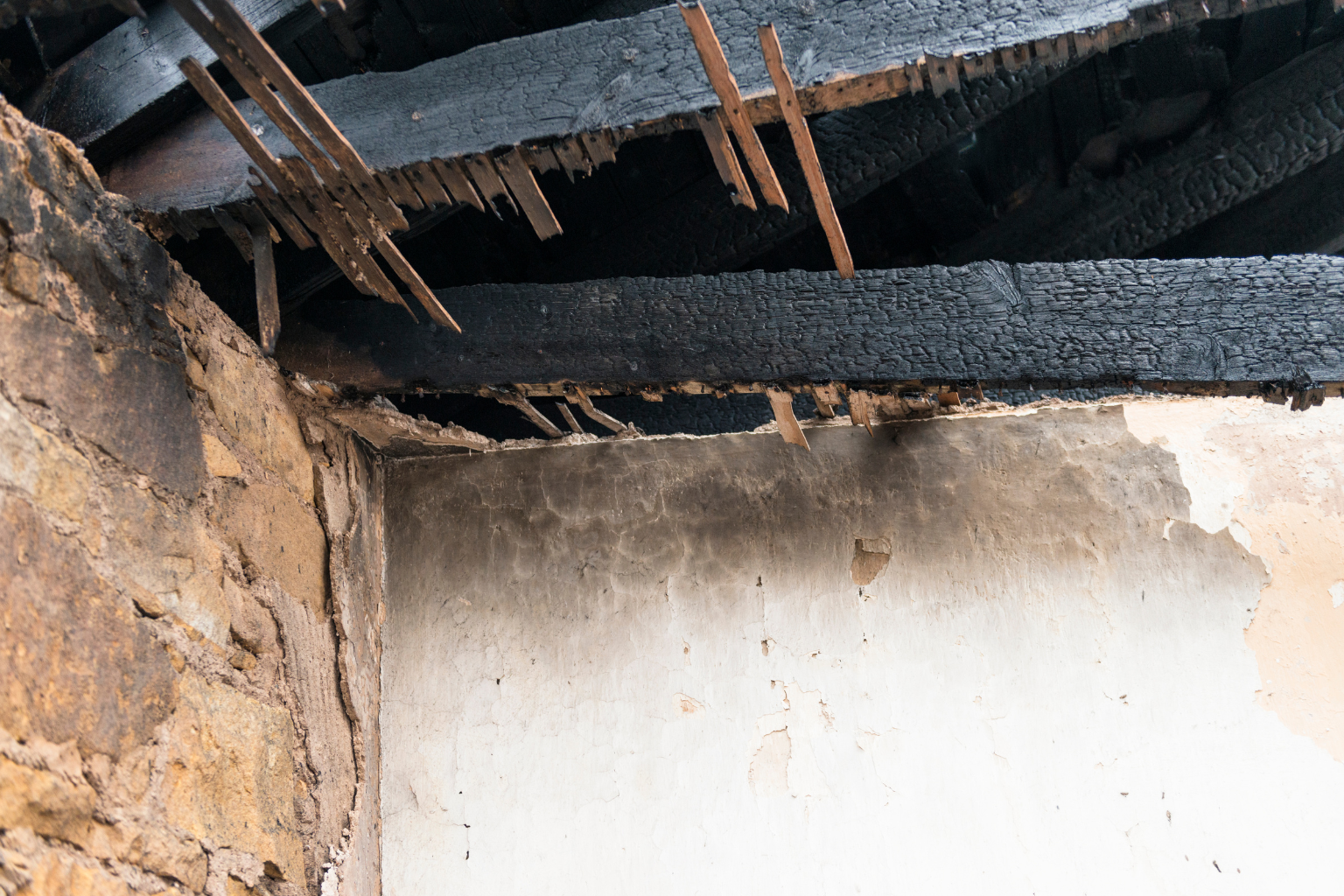
Structural fires cause damage you can't see. Superheated smoke transports acidic soot through ductwork and framing, coating studs, joists, and ceiling assemblies throughout the home.
In Hamilton and Fairfield Township, effective fire recovery depends on understanding how heat, acidic residues, and firefighting water affect building components.
Soot Residue Dynamics and Structural Materials
Fires produce different residues depending on the fuel source and oxygen levels. Synthetic materials, such as plastic furniture and foam, leave sticky soot that adheres to framing. Protein fires from cooking oils create thin, nearly invisible grease films that penetrate drywall and wood trim.
Using household cleaners on soot-covered walls pushes acidic particles deeper into paint and drywall, leading to permanent stains and lingering odors. Professional restoration matches chemical neutralizers and dry sponge methods to each residue type.
Firefighting water adds complexity. Water-soaked framing timbers may swell, warp, or develop mold unless high-capacity dehumidification starts promptly alongside soot removal.
Sequential Phase Structural Recovery
Restoring a fire-impacted building requires systematic execution. Technicians first secure the building envelope, boarding up damaged windows and tarping roofs to block weather intrusion in Mason or Fairfield.
Technicians remove standing water with submersible pumps. Commercial LGR dehumidifiers stabilize humidity to prevent timber warping. Dry soot sponges collect loose particles before we begin wet cleaning. We clean, decontaminate, and seal interior wall cavities to neutralize odors.
For technical details on structural soot cleaning, visit our overview of Hamilton fire restoration services.
Molecular Level Smoke Odor Removal
Scented sprays or surface sealers don’t eliminate smoke odors because combustion gases penetrate deep into structural wood. Fluctuating indoor temperatures release trapped smoke molecules, causing odors to return.
Effective deodorization breaks down combustion compounds at the molecular level. Hydroxyl generators use ultraviolet light to neutralize volatile organic compounds. Thermal fogging drives neutralizing agents deep into porous studs and subfloors, following the smoke’s path. This process permanently removes smoke odors rather than masking them.
Restoring Structural Strength and Family Comfort
Proper fire damage restoration goes beyond cosmetic repairs, keeping structural timbers sound and indoor air clean. Methodical cleaning lets homeowners safely reclaim damaged spaces.
If fire or smoke has affected your property, trust the experienced technicians at AdvantaClean of Fairfield and Mason. Call (513) 810-5343 to begin recovery and schedule a structural assessment.
AdvantaClean of Fairfield and Mason
(513) 810-5343
https://g.co/kgs/9Mts4yE