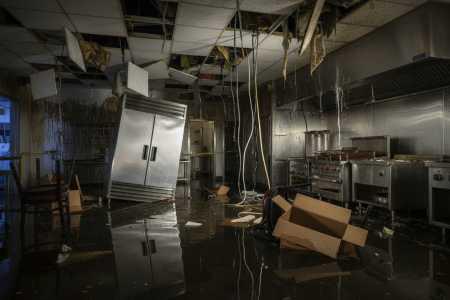
Restaurant water damage creates immediate operational risk. Unlike residential properties, restaurants depend on strict health standards, uninterrupted service, and safe food handling. A small leak or overnight flood quickly escalates into lost revenue, failed inspections, and long-term building damage.
This article explains where water damage starts in restaurants, how it impacts operations, what owners need to do first, and why professional restoration plays a critical role.
Why restaurants face higher water damage risk
Restaurants use water constantly. Prep sinks, dishwashers, ice machines, beverage stations, restrooms, and HVAC systems operate for long hours. Many buildings also rely on older plumbing or shared drainage systems.
Common risk factors include:
• Grease-clogged drains backing up
• Supply line failures under pressure
• Ice machine overflow
• Roof leaks over dining or kitchen areas
• Fire sprinkler activation
• After-hours leaks going unnoticed
Water damage often spreads faster in commercial kitchens because flooring, walls, and subfloors trap moisture beneath nonporous surfaces.
Hidden water damage areas restaurant owners often miss
Surface water draws attention fast. Hidden water causes the most damage.
High-risk hidden areas include:
• Under commercial kitchen equipment
• Behind dishwashers and prep stations
• Inside wall cavities near plumbing chases
• Beneath walk-in cooler floors
• Under bar counters and soda lines
These conditions mirror the same problems seen in storm-related overflows, as described in fast water mitigation in Deerfield Beach. Delayed response allows moisture to migrate into framing and insulation.
How water damage threatens health code compliance
Health inspectors focus heavily on moisture control. Standing water, damp flooring, or hidden mold growth create immediate violations.
Water damage often leads to:
• Mold growth in wall cavities
• Bacterial contamination under flooring
• Odors in dining areas
• Slip hazards
• Food safety concerns
Humidity and moisture control issues resemble those outlined in moisture control in Davie, where indoor conditions directly affect health outcomes.
What to do immediately after water intrusion
The first hours matter more than most owners realize.
Immediate steps include:
• Shut off the water source if accessible
• Stop food prep in affected zones
• Move dry inventory away from moisture
• Avoid using fans that spread contamination
• Document damage with photos
Quick professional response limits downtime. The same urgency applies in storm scenarios discussed in Pompano Beach storm damage cleanup, where fast action prevents mold and reduces restoration cost.
Why DIY drying fails in commercial kitchens
Restaurants often attempt cleanup using mops, shop vacs, or standard fans. This approach removes surface water only.
Commercial kitchens contain layered flooring systems, sealed finishes, and dense equipment. Moisture becomes trapped below surfaces, where mold and bacteria thrive.
This mirrors residential failures explained in water damage restoration in Plantation, where incomplete drying leads to long-term issues.
Professional restaurant water damage restoration process
Professional restoration focuses on speed, containment, and verification.
The process includes:
• Moisture mapping and inspection
• Controlled water extraction
• Targeted drying using commercial equipment
• HEPA air filtration
• Antimicrobial treatment
• Clearance testing when required
These steps reduce health risks and help meet reopening requirements.
Mold risk after restaurant water damage
Mold develops quickly in food service environments. Heat, humidity, and organic debris accelerate growth.
Restaurants experiencing water damage often require mold inspection, similar to the assessments described in mold inspections paired with smart home tech. Early detection prevents shutdowns and costly remediation.
Insurance considerations for restaurant owners
Most commercial policies require immediate mitigation. Delayed reporting or incomplete drying may affect coverage.
Key documentation includes:
• Time of discovery
• Cause of loss
• Photos of affected areas
• Restoration reports
Professional restoration teams provide detailed records that support claims and compliance.
Preventing future water damage in restaurants
Prevention reduces downtime and liability.
Effective steps include:
• Routine plumbing inspections
• Grease trap maintenance
• Equipment line monitoring
• Moisture sensors in high-risk zones
• After-hours leak detection
These steps align with broader prevention strategies seen in water damage restoration for hurricane season in Deerfield Beach, where preparation limits losses.
FAQ: Restaurant water damage concerns
How fast does water damage affect operations?
Within hours. Moisture spreads beneath equipment and flooring quickly.
Should I close the restaurant immediately?
Affected prep or dining areas should close until safe conditions return.
Is mold testing required after water damage?
Testing becomes necessary when moisture remains longer than 24 to 48 hours.
Does insurance cover lost revenue?
Coverage depends on policy terms and documentation.
How long does restoration usually take?
Minor events take days. Larger losses take longer based on drying needs.
Professional water damage restoration for restaurants
Restaurant water damage requires fast, controlled response to protect health standards and limit downtime. Professional restoration addresses hidden moisture, supports inspections, and speeds reopening.
AdvantaClean provides commercial water damage restoration, mold prevention, and moisture control for restaurants across South Florida. Google Business Profile.