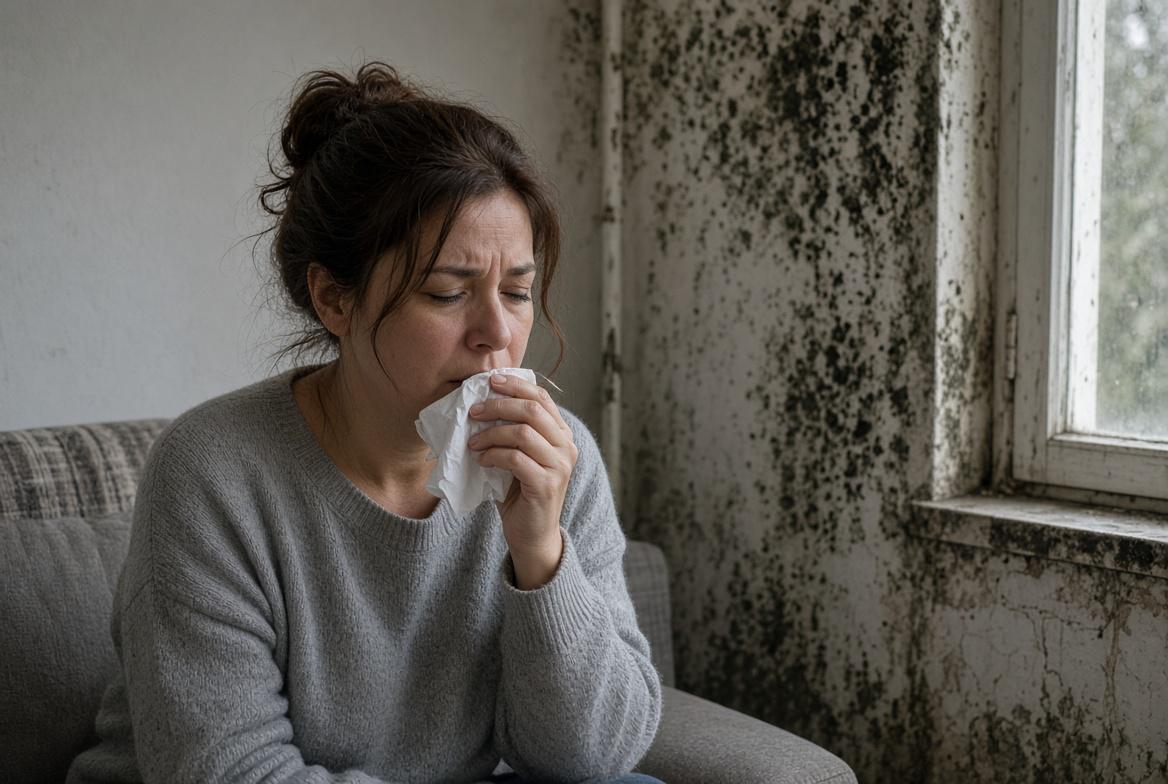
If you have been feeling congested, coughing, or dealing with irritated eyes and you suspect the house is the cause, you are asking a reasonable question. In a climate like South Florida's, indoor mold is common enough that it is worth ruling in or out.
The honest answer involves two parts. Mold exposure does cause real, well-documented symptoms in a meaningful number of people. It is also blamed for a much broader set of health problems than the evidence supports, and that overclaiming can send people looking in the wrong direction while something else goes undiagnosed.
This guide covers the symptoms that are actually associated with mold exposure, who is genuinely at elevated risk, how to distinguish mold-related symptoms from a cold or seasonal allergies, and when the right call is a physician rather than a remediation company.
One thing up front: nothing here is medical advice, and no remediation company can tell you whether mold is causing your symptoms. That determination belongs to a physician.
Common physical symptoms of mold exposure
The symptoms consistently associated with indoor mold and damp buildings are respiratory and allergic in nature. The major evidence reviews, including the Institute of Medicine's CDC-sponsored report Damp Indoor Spaces and Health and the World Health Organization's guidelines on dampness and mould, converge on roughly this list:
-
Nasal congestion, runny nose, and sneezing
-
Throat irritation or a scratchy throat
-
Cough
-
Wheezing
-
Eye irritation, including watery, itchy, or red eyes
-
Skin irritation or rash in some people
-
Worsening of asthma symptoms in people who already have asthma
-
Shortness of breath or chest tightness, primarily in people with asthma or existing sensitization
Two less common but genuinely documented conditions belong on the list as well. Hypersensitivity pneumonitis is an inflammatory lung response that can develop in susceptible people, though it typically requires heavy or sustained exposure and is more often seen in occupational settings than ordinary homes. Invasive fungal infection is a serious risk, but essentially confined to people with significantly compromised immune systems.
For most people, what mold produces is an irritant or allergic response rather than poisoning. That distinction matters, because it shapes both what symptoms to expect and what resolving the problem looks like.
The timing pattern is as informative as the symptom list. Mold-related symptoms generally appear or worsen during exposure and improve when you are away from the building. Symptoms that persist unchanged whether you are home, at work, or on vacation are less likely to be building-related.
For more on the allergic mechanism specifically, the blog's mold allergies overview and mold and allergies connection guide go into more detail.
What the evidence supports and what gets overclaimed
This section exists because the gap between the medical literature and the internet on this topic is unusually wide, and knowing where the line falls protects you.
What the major reviews found sufficient evidence for: upper respiratory tract symptoms, cough, wheeze, asthma symptoms in people already sensitized, and hypersensitivity pneumonitis in susceptible individuals. There is more limited but suggestive evidence linking damp indoor environments to the development of asthma, shortness of breath, and lower respiratory illness in otherwise healthy children.
What the reviews found insufficient evidence for: a long list of conditions commonly attributed to household mold online, including chronic fatigue, memory loss, difficulty concentrating, mood changes, autoimmune disease, and cancer.
The term "toxic mold syndrome" comes up constantly in this space. The National Capital Poison Center describes it as a legal construct rather than a medical diagnosis. Reviews of patients who believed they had it have generally found either mold allergy, which is real and treatable, or other well-established conditions that explained the symptoms.
The same applies to "black mold." Stachybotrys chartarum became famous after a 1990s cluster of infant pulmonary hemorrhage cases in Cleveland was preliminarily attributed to it. CDC later determined the original analysis contained errors and that the cause remained unknown, and a similar cluster elsewhere showed no mold association. Poison Control's summary is direct: black mold is unsightly, but has not been identified as a cause of human illness.
Two important qualifications, because this cuts both ways.
First, insufficient evidence is not the same as proven absence. The IOM committee noted that very few well-constructed studies had examined these questions, and said the available evidence did not support an association while acknowledging it could not rule one out. That is genuine scientific uncertainty, not a verdict.
Second, none of this is an argument against remediating mold. Mold damages building materials, is a legitimate allergen source, and always indicates a moisture problem that will keep causing damage until it is fixed. Those are sufficient reasons on their own. The reason to be careful about health claims is different: if you have persistent fatigue or cognitive symptoms and you attribute them to mold without evaluation, you may spend months and significant money on remediation while whatever is actually causing them goes unaddressed. People in that situation are often genuinely unwell. They deserve a real diagnosis.
Who is most at risk from mold in the home
Risk is not evenly distributed. For a healthy adult with no mold allergy and no asthma, ordinary household mold is largely a property problem and a nuisance rather than a serious health threat. Several groups face meaningfully higher risk:
People with mold allergy. Sensitization is the key variable. If your immune system has developed a specific response to mold allergens, exposure produces the full allergic picture. An allergist can test for this directly.
People with asthma. Mold is a well-documented asthma trigger, and damp indoor environments are associated with worse asthma control. The blog's asthma and mold remediation guide covers this population specifically.
People with COPD or other chronic lung disease. Reduced respiratory reserve means irritant exposure has more impact.
Infants and young children. Developing airways are more susceptible, and the evidence linking damp housing to lower respiratory illness in children is among the stronger findings in the literature.
Older adults, particularly those with existing cardiopulmonary conditions.
People who are significantly immunocompromised. This is the group where mold poses a genuinely serious rather than merely uncomfortable risk. Organ transplant recipients, people undergoing chemotherapy, people with neutropenia, people with advanced HIV, and people on long-term high-dose corticosteroids can develop invasive fungal infections, particularly from Aspergillus species. Anyone in this category with respiratory symptoms and known mold exposure should contact their physician promptly rather than waiting.
People with cystic fibrosis, who face elevated risk of allergic bronchopulmonary aspergillosis.
How to tell mold symptoms apart from allergies or a cold
Symptom overlap is the reason this is hard. A few patterns help sort it out.
Versus a common cold. Colds often bring a fever, body aches, and a sore throat that develops and then resolves, with symptoms typically peaking around days three to five and clearing within seven to ten days. There is usually a plausible exposure, meaning someone around you was sick. Mold and allergic reactions do not cause fever or body aches, tend to feature prominent itching in the eyes, nose, and throat, and persist well past the ten-day mark without following the peak-and-resolve arc.
Versus seasonal allergies. Seasonal allergy symptoms track the pollen calendar, worsen outdoors, spike on dry windy days, ease after rain, and usually improve indoors with the windows shut and the AC running. Indoor mold reverses several of those signals: symptoms are worse indoors and better outside, show no pollen-season pattern, may track humidity and rainfall instead, and can concentrate in specific rooms.
The strongest single test is geographic. If symptoms noticeably improve within a day or two of leaving the house and return within a day of coming back, that correlation points at the building. It is more informative than any individual symptom.
Other patterns worth noting:
-
Symptoms concentrated in one room and absent in others
-
Multiple household members affected at once, sometimes including pets
-
Symptoms that began after a water event, a leak, or moving into a new home
-
Symptoms that worsen when the HVAC system runs, which can indicate growth in the ductwork or on the coil
That last one has its own diagnostic path. Our guide to whether your AC is making allergies worse covers how to tell whether the system is contributing.
One caution: the house being the source does not mean mold specifically is the source. Dust mites, pet dander, cockroach allergen, and off-gassing from new furnishings all produce similar building-correlated patterns. Confirming that the house is involved is step one, not a conclusion.
The way to settle whether you are even allergic to mold is testing. An allergist can run a skin prick test or a specific IgE blood panel. That result changes the entire calculus, because someone who tests negative for mold sensitization is unlikely to be having an allergic response to it.
Warning signs there is hidden mold in your house
If the symptom pattern points at the building, the next question is whether there is actually mold in it. The signals worth checking:
-
A persistent musty or earthy smell, particularly after rain or when the AC starts up
-
Water stains or discoloration on ceilings and walls
-
Paint that is bubbling, blistering, or peeling in a localized area
-
Warped flooring, soft drywall, or separating baseboards
-
Indoor relative humidity consistently above 60 percent
-
Visible condensation on windows or cold water pipes
-
Any history of leaks, flooding, or water damage that was not professionally dried
-
Prior remediation that was never confirmed with post-remediation verification testing
Our full guide to the signs of hidden mold covers where to physically look, room by room. If you rent, the blog's mold testing guide for renters covers how responsibility is typically divided with a landlord.
When to see a doctor and when to call a professional
These are two separate decisions, and conflating them is a common mistake.
See a physician if:
-
Symptoms persist beyond ten to fourteen days without improvement
-
You have asthma and your control is worsening, or you are reaching for a rescue inhaler more often
-
You have shortness of breath, chest tightness, or any difficulty breathing
-
You have a fever, which suggests infection rather than an allergic response
-
You are coughing up blood or discolored sputum
-
You are immunocompromised and have any respiratory symptoms
-
Symptoms are disrupting your sleep or daily functioning
-
You want to know whether you are actually allergic to mold, which an allergist can test directly
A physician is the only person who can diagnose what is happening to you. A remediation company can tell you whether there is mold in your building and remove it. It cannot tell you whether that mold is what is making you feel unwell, and any company that claims otherwise is overstepping.
For context on how quickly symptoms can appear relative to exposure, the blog's guide on timing of mold-related illness covers common questions, and the respiratory health overview covers the respiratory picture in more depth.
Call a mold professional if:
-
You can see growth covering more than about ten square feet, the threshold above which Florida requires a licensed remediator
-
There is a persistent musty smell you cannot trace to a source
-
You have had water damage that was not professionally dried
-
You suspect growth in the HVAC system
-
Mold keeps returning after you clean it, which means the moisture source is still active
-
You are buying or selling a property and need an assessment
Worth stating plainly: remediate mold because it is damaging your building, because it is a legitimate allergen source, and because its presence means you have a moisture problem that will keep causing damage. Those reasons stand on their own. You do not need a health diagnosis to justify fixing it, and you should not use remediation as a substitute for getting one.
Frequently asked questions
What are the most common symptoms of mold exposure? Nasal congestion, sneezing, throat irritation, cough, wheezing, and itchy or watery eyes. Some people also develop skin irritation. People with asthma commonly experience worsening symptoms. These are allergic and irritant responses rather than poisoning.
How long does it take for mold to make you sick? In sensitized people, allergic symptoms can appear within minutes to hours of exposure. For others, symptoms develop gradually over weeks or months of living with ongoing exposure. The telling pattern is symptoms that improve away from the building and return when you come back.
Can mold cause fatigue, brain fog, or memory problems? The major evidence reviews did not find sufficient evidence to support these associations with household mold exposure. If you have persistent fatigue or cognitive symptoms, they warrant a medical workup rather than being attributed to mold without evaluation. Something is causing them, and finding out what matters.
Is black mold more dangerous than other mold? Stachybotrys chartarum has not been shown to cause the serious illnesses popularly attributed to it. That said, any mold growing indoors should be removed, because it damages materials and signals an active moisture problem. Species identification rarely changes what needs to be done.
How can I tell if it is mold or just a cold? Colds may involve fever and body aches and typically resolve within seven to ten days. Mold-related symptoms do not cause fever, tend to involve prominent itching, and persist as long as exposure continues. The clearest signal is whether symptoms improve when you are away from home.
Who is most at risk from mold in the home? People with mold allergy, asthma, or chronic lung disease; infants and young children; older adults; and, most seriously, people who are significantly immunocompromised, who face genuine risk of invasive fungal infection and should contact a physician promptly.
Should I get mold testing to find out if mold is causing my symptoms? Air and surface testing tells you what is in the building. It does not tell you what is happening in your body. If the question is whether you are reacting to mold, allergist testing answers that. If the question is whether there is mold in your home and where, environmental assessment is the right tool.
Will remediation resolve my symptoms? If your symptoms are driven by an allergic response to mold in your home, removing it and fixing the moisture source should help. If they have another cause, remediation will not change them. This is one reason to pursue medical evaluation alongside rather than after addressing the building.
Getting help
If the pattern in your household points at the building, the useful sequence is usually parallel rather than sequential: see a physician about the symptoms, and get the home assessed for moisture and mold. Neither substitutes for the other.
AdvantaClean of Fort Lauderdale provides mold inspection, mold testing, and remediation across Broward County, including Fort Lauderdale, Deerfield Beach, Plantation, and Pompano Beach. We can tell you whether your home has a mold and moisture problem and what it will take to resolve it. For questions about your health, see a physician. To schedule an assessment, call (754) 218-8070 or visit our local team page.
This article is general information and not medical advice. Consult a licensed physician for diagnosis and treatment of any health condition.