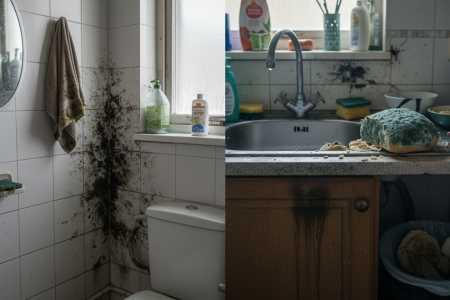
Mold needs moisture and organic material. Bathrooms and kitchens supply both every day.
Showers release steam that condenses on walls and ceilings. Sinks leak slowly under cabinets. Dishwashers and refrigerators generate moisture. Poor ventilation traps humidity for hours.
Homes that already struggle with indoor moisture often see mold spread across multiple rooms. The same conditions described in moisture control in Davie often show up first in kitchens and bathrooms.
Common hidden mold locations homeowners miss
Surface mold is easy to spot. Hidden mold causes the real damage.
In bathrooms, mold often grows:
• Behind tile and grout
• Inside vanity cabinets
• Under toilets and sinks
• Above shower ceilings
In kitchens, mold often appears:
• Under sink bases
• Behind dishwashers
• Around refrigerator drip pans
• Inside wall cavities near plumbing
These hidden areas mirror the same patterns discussed in hidden water damage warning signs, where moisture spreads silently behind finished surfaces.
Why bleach and store-bought sprays fail long term
Many homeowners clean mold repeatedly without stopping regrowth. Surface cleaners remove discoloration but leave moisture sources untouched.
Bleach does not penetrate porous materials like drywall, wood or grout. Once moisture remains, mold returns.
This cycle mirrors what happens when water damage dries poorly. Your article on water damage restoration in Plantation explains how incomplete drying leads to secondary problems like mold growth.
How kitchen and bathroom mold affects indoor air quality
Mold releases spores into the air. In enclosed spaces, those spores circulate through vents and doorways.
Bathrooms often share duct pathways with bedrooms. Kitchens connect directly to living areas. Over time, mold exposure can worsen allergies and respiratory irritation.
Homes with recurring humidity issues often experience wider air quality problems, similar to those covered in mold inspections paired with smart home tech.
When professional mold remediation becomes necessary
Professional remediation becomes necessary when:
• Mold keeps returning after cleaning
• Odors persist despite ventilation
• Cabinets or drywall feel soft
• Leaks occurred weeks or months ago
• Mold spreads beyond a single surface
Professional teams identify moisture pathways, remove contaminated materials and stop regrowth at the source. This process aligns with the same controlled remediation methods described in mold remediation in Weston.
What professionals do differently in kitchens and bathrooms
Professional mold remediation focuses on both removal and prevention.
Technicians:
• Inspect plumbing connections
• Remove affected drywall or cabinetry
• Treat framing and subfloors
• Use HEPA filtration to control spores
• Dry enclosed cavities thoroughly
• Improve ventilation strategies
This approach prevents mold from spreading into flooring or nearby rooms, unlike partial DIY attempts.
Simple prevention steps that reduce mold risk
You reduce mold risk daily with a few consistent habits.
• Use exhaust fans during and after showers
• Fix slow leaks immediately
• Wipe condensation under sinks monthly
• Keep cabinet bases dry
• Avoid storing items directly on bathroom floors
Homes in storm-prone areas also benefit from fast response after flooding. Your article on Pompano Beach storm damage cleanup shows how delayed action increases mold risk.
How mold spreads from kitchens and bathrooms into other rooms
Once mold colonizes cabinets or wall cavities, spores travel through airflow and shared framing.
Kitchen mold often spreads into:
• Dining areas
• Adjacent living rooms
• Hallway walls
Bathroom mold often spreads into:
• Bedrooms
• Closets
• Attic insulation
This spread pattern is similar to what occurs after floods, as explained in carpet water extraction in Coconut Creek.
FAQ: Bathroom and kitchen mold concerns
Why does mold keep coming back in my bathroom?
Recurring moisture or poor ventilation usually causes regrowth.
Is kitchen mold dangerous even if hidden?
Hidden mold affects air quality and damages materials even when unseen.
Should I replace cabinets with mold?
Replacement depends on saturation level. Professionals assess structural integrity.
Does mold mean I have a plumbing leak?
Often yes. Even small leaks support long-term growth.
How long does professional remediation take?
Most bathroom or kitchen projects take one to three days, depending on damage.
Professional mold help for kitchens and bathrooms
Bathroom and kitchen mold spreads faster than most homeowners expect. Professional remediation stops moisture, protects materials and restores healthy indoor air.
AdvantaClean provides mold inspections, remediation and moisture control services tailored to South Florida homes. Google Business Profile: https://g.co/kgs/hSUTUAL