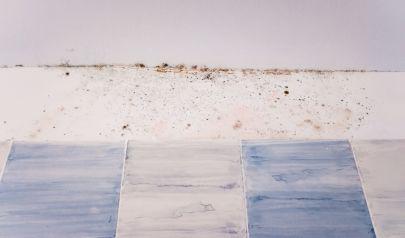
Most homeowners assume mold is obvious. They expect to see it, smell it, or notice something wrong before a problem gets serious. The reality is different. Mold colonies can establish for months behind drywall, in wall cavities, and beneath subflooring before any visible signs appear. By the time a Lakewood homeowner spots a dark patch along a basement wall, what they see is rarely the beginning of the problem but closer to the end of a longer process that started quietly in places no one thought to check.
That matters more in a city like Lakewood than in a newer suburb. The housing stock here is older, densely built, and layered with decades of repairs, renovations, and additions that have introduced many gaps in the building envelope. The same brick exterior and stone foundation that give these homes character also allow freeze-thaw cycles to push moisture inward, season after season. When conditions are right, mold doesn't wait for an invitation.
Where Mold Actually Hides in Older Homes
Lakewood's century-old bungalows and two-family homes were built long before modern vapor barriers and mechanical ventilation were standard. Their basements, crawl spaces, and attic rafters often move moisture in ways that current owners never knew about. Our technicians regularly find mold behind finished basement walls, in joist cavities above concrete slabs, and along framing near older wood-framed windows where condensation has quietly accumulated for years.
Rim joists are one of the most overlooked spots. They sit at the foundation line, exposed to ground-level cold, and in older construction, they are rarely insulated properly. In homes throughout Berea and Rocky River, we find mold concentrated there more than almost anywhere else. Plumbing chases, areas beneath kitchen and bathroom floors, and the back side of exterior sheathing are other places missed in a visual scan. Mold doesn't advertise its location.
The Inspection Comes First, Always
There's a temptation to move straight to remediation once mold is suspected. But treating what you see without understanding the source, extent, and species involved is like patching a roof without knowing where water is getting in. Our team always begins with a proper mold inspection before planning remediation work.
In Westlake and Olmsted Falls, we've entered homes where previous contractors cleaned visible mold without testing, only to have the problem return within a season. Inspection includes air sampling, surface testing, and a thorough moisture assessment to identify elevated readings even where no visible growth exists. That data shapes the entire remediation scope. Without it, the plan is just a guess.
What Lakewood's Climate Adds to the Equation
Lake Erie sits just a few miles north of Lakewood and keeps ambient humidity elevated in a way inland communities do not. Spring and fall are especially significant seasons for mold risk here. Snowmelt saturates the soil in late winter, and that moisture migrates into the lower levels of older homes through aging foundations and cracked masonry. Lakewood also experiences freeze-thaw cycles that affect brick exteriors and stone foundations year after year, creating pathways for water that are not visible on the surface. Homes in Bay Village and Avon Lake face similar exposure, but Lakewood's age and density concentrate the risk.
Remediation Is Not the Same as Cleaning
Surface cleaning removes what you see. Real remediation addresses underlying contamination, contains the affected area to prevent spore migration, and includes controlled removal of materials that cannot be saved. Our local crew in Lakewood follows established industry protocols: containment barriers, HEPA air filtration, safe removal and disposal of compromised materials, and post-remediation verification to confirm the work was effective.
Homes in North Ridgeville and Columbia Station have benefited from the same structured process we use here. The goal is not just to remove visible mold but to restore the space to a normal fungal ecology and confirm that with clearance testing. A contractor who skips that step is not doing remediation. They are doing cosmetic work.
If you have noticed signs of mold in your Lakewood home or had moisture issues and want to know if a problem is developing out of sight, AdvantaClean of the West Side is here to help. Our team approaches every inspection with the thoroughness older homes require and the care a health concern deserves. Reach us anytime at (440) 568-0300, learn more at advantaclean.com/north-olmsted-oh, or find us on Google. We are a local crew and take that seriously.
AdvantaClean of the West Side, OH
31335 Industrial Pkwy Unit 1, North Olmsted, OH 44070
(440) 568-0300
https://maps.app.goo.gl/haE7CZR17uQU6AfN6