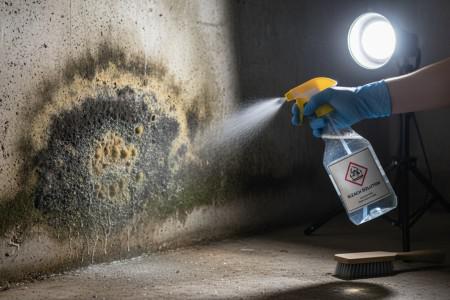
You spot dark, splotchy growth on your garage floor or basement walls. Your first instinct? Grab a bottle of bleach, mix it with water, and scrub until it's gone. It's what most homeowners do. But here's the uncomfortable truth: bleach does not kill mold on concrete. In fact, it can make the problem worse. For homeowners in Fort Lauderdale, Hollywood, Plantation, and across Broward County, understanding why bleach fails—and what actually works—can mean the difference between a temporary cosmetic fix and a permanent, healthy solution.
Why homeowners reach for bleach first
Bleach is cheap, readily available, and powerfully effective at one thing: disinfecting. It kills bacteria and viruses on non-porous surfaces like glass, tile, and stainless steel. It also whitens and removes stains. When you see black mold on gray concrete and pour bleach on it, the mold disappears before your eyes. It looks like a miracle cure.
But that disappearing act is deceptive. You're seeing surface bleaching, not true mold removal.
The science: Why bleach fails on concrete
To understand why bleach doesn't work, you need to understand two things: how bleach works and what concrete really is.
Bleach is water-based
Household bleach is approximately 90-97% water. The active ingredient, sodium hypochlorite, makes up only 3-10% of what's in that jug. When you apply bleach to porous concrete:
-
The water soaks deep into the concrete pores
-
The bleach chemical remains mostly on the surface
-
The water carries mold spores deeper into the material
Concrete is porous
Concrete is not solid. Under a microscope, it resembles a hardened sponge with countless tiny channels and pores. Mold grows into these pores, sending root-like structures called hyphae deep within the material.
When you apply bleach:
-
The surface mold lightens or disappears (temporarily)
-
Water carries live spores deeper into the concrete
-
The surface dries, appearing clean
-
Moisture returns, and mold regrows from deep within
Bleach cannot penetrate
The sodium hypochlorite molecule is too large and breaks down too quickly to penetrate deeply into concrete. It simply cannot reach the mold roots embedded in the material. Mold removal is not instantaneous, and surface treatments like bleach prove why—they address only what you can see, not the underlying problem.
The hidden dangers of using bleach on moldy concrete
Using bleach doesn't just fail to solve the problem; it creates new ones.
Moisture feeds future growth
By adding water to concrete, you're providing the moisture mold needs to thrive. South Florida's humidity already challenges homeowners. Adding water to a musty garage only accelerates the cycle of regrowth.
Toxic fumes in enclosed spaces
Garages and basements often have poor ventilation. Mixing bleach with mold creates chlorine gas and other volatile compounds. Breathing these fumes can cause:
-
Respiratory irritation
-
Burning eyes and throat
-
Coughing and wheezing
-
Headaches and dizziness
Damage to concrete
Repeated bleach applications can actually deteriorate concrete over time, weakening the surface and making it even more porous and hospitable to future mold growth.
What actually kills mold on concrete?
Effective concrete mold removal requires a different approach—one that kills mold deep within the material and prevents regrowth.
Professional-grade antimicrobial solutions
Restoration professionals use EPA-registered fungicides specifically formulated for porous materials. These products:
-
Penetrate deeply into concrete pores
-
Kill mold at the root level
-
Leave an antimicrobial residue that prevents regrowth
-
Are safe for indoor use when applied correctly
Mechanical removal
For established mold colonies, cleaning solutions alone aren't enough. Professional remediation includes:
-
Soda blasting or media blasting: Gently abrades the concrete surface to remove embedded mold
-
HEPA vacuuming: Captures spores released during cleaning
-
Pressure washing (with caution): Used with appropriate antimicrobials, not just water
Addressing the moisture source
This is the most critical step. Mold needs moisture to survive. Hidden water damage often fuels garage mold problems. Common sources include:
-
Leaky garage doors or seals
-
Poor drainage around the foundation
-
High humidity from open doors or poor ventilation
-
Ground moisture seeping through slab
Garage mold: A special South Florida problem
Garages in Fort Lauderdale and surrounding areas face unique challenges:
Constant humidity
Our subtropical climate means garages experience high humidity year-round. Cars drive in rainwater, wet grass clippings cling to mowers, and humid air flows freely under garage doors.
Temperature swings
Garages often aren't insulated or air-conditioned. Temperature fluctuations create condensation on concrete surfaces, especially during summer storms when warm, humid air meets cooler concrete.
Storage of organic materials
Cardboard boxes, stored furniture, wood scraps, and lawn equipment all provide food sources for mold. When these sit on damp concrete, mold grows rapidly.
Vehicles and moisture
Cars bring in rain, road moisture, and condensation. Parking a wet car in a garage repeatedly introduces water that soaks into concrete and never fully dries.
Step-by-step: Proper concrete mold removal
If you discover mold on garage or basement concrete, here's the right approach:
Step 1: Identify and fix moisture sources
Before cleaning anything, determine why mold is growing. Check for:
-
Leaky pipes or water heaters
-
Cracks in foundation allowing groundwater
-
Poor grading around the exterior
-
Condensation patterns
Step 2: Clear the area
Remove all stored items from the affected area. Inspect boxes, furniture, and equipment for mold growth. Discard heavily contaminated porous materials.
Step 3: Apply appropriate cleaning solution
For small areas (under 10 square feet), use:
-
White vinegar (undiluted)
-
Hydrogen peroxide (3%)
-
Commercial mold cleaners labeled for concrete
Apply, let sit, scrub, and rinse. Never mix cleaning products.
Step 4: Dry completely
Use fans, dehumidifiers, and open doors (when humidity outside is lower) to dry the concrete thoroughly. This may take several days.
Step 5: Monitor and seal
Once completely dry, consider applying a concrete sealer designed for garage floors. This creates a moisture barrier that makes future cleaning easier and mold growth less likely.
When to call a professional
Some situations demand professional expertise:
Large affected areas
If mold covers more than 10 square feet, professional remediation is recommended. Black mold in particular requires careful handling to prevent spore spread.
Persistent regrowth
If mold returns after cleaning, the moisture source hasn't been found, or mold has penetrated deeply into concrete.
Health concerns
If family members experience unexplained symptoms that improve when away from home, professional assessment is essential.
Before selling a home
Mold issues discovered during home inspections can derail sales. Professional remediation provides documentation that the problem was properly resolved.
Preventing garage mold in Florida's climate
Prevention is far easier than remediation. Follow these tips:
Control humidity
-
Install a dehumidifier in attached garages
-
Use exhaust fans when doors are closed
-
Consider mini-split AC units for finished garages
Improve ventilation
-
Install vents or louvers
-
Keep garage doors open periodically on dry days
-
Use circulating fans
Manage water entry
-
Ensure gutters direct water away from foundation
-
Repair cracks in garage floor and walls
-
Install door seals and weatherstripping
Store smart
-
Use plastic shelving instead of cardboard boxes
-
Elevate everything off the floor on pallets or shelving
-
Avoid storing damp items
Regular maintenance
-
Sweep regularly to remove organic debris
-
Wipe up spills and standing water immediately
-
Inspect periodically for early signs of growth
Frequently asked questions about concrete mold
Will vinegar kill mold on concrete?
White vinegar is more effective than bleach for concrete because its acidity penetrates porous surfaces better. It's safe and environmentally friendly, though large infestations still need professional treatment.
Can I just paint over moldy concrete?
Never. Painting over mold traps moisture and allows mold to continue growing beneath the paint, eventually destroying the coating and causing bigger problems.
Why does my garage smell musty even after cleaning?
A persistent musty smell usually means mold is growing in hidden areas—under stored items, inside wall cavities, or deep within concrete pores. Tracking down the source is essential before the smell will truly disappear.
Is garage mold dangerous if I don't spend much time there?
Yes. Mold spores travel through doorways and HVAC systems into living spaces. Garage mold frequently affects indoor air quality throughout the home.
How long does concrete stay damp after cleaning?
In Florida's humidity, concrete can take 3-7 days to dry completely even with fans running. Never seal or paint until moisture readings confirm it's fully dry.
The bottom line: Skip the bleach
Bleach is not your friend when it comes to concrete mold. It offers a temporary illusion of success while actually feeding the long-term problem. Effective mold removal requires understanding the unique relationship between mold and porous concrete—and using products and methods designed for that challenge.
For small, surface-level spots, white vinegar or hydrogen peroxide can work. But for persistent growth, large areas, or mold that keeps returning, professional remediation is the only real solution.
Get professional help for stubborn concrete mold
If you're tired of fighting garage mold that keeps coming back, or if you've tried bleach and made the problem worse, the experts at AdvantaClean of Fort Lauderdale can help. Our certified technicians understand how mold behaves in South Florida's unique climate and on challenging surfaces like concrete.
We use professional-grade antimicrobial treatments, specialized cleaning equipment, and thorough moisture assessment to eliminate mold at its source—not just on the surface.
Don't let garage mold compromise your home's air quality. Request service online to schedule a professional inspection. Or find us on Google Maps and give us a call. We'll help you understand what's really happening with your concrete and provide a lasting solution that bleach never could.