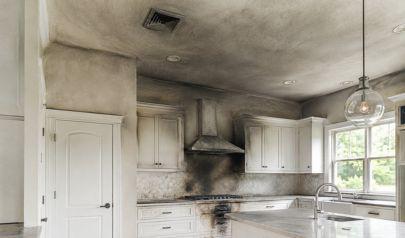
The fire trucks leave, and the house is still standing, and somehow that feels like good news. In a lot of ways it is. But what follows a residential fire in Weston is a process most homeowners have never thought through, and the gap between what they expect and what the job actually requires tends to show up fast.
Smoke does not stay where the fire was. That is the thing people consistently underestimate. In a two-story Weston home with a centralized HVAC system, a fire in the kitchen can deposit smoke residue into the ductwork, ceiling cavities and second-floor closets. The system moves air through every room when the fire starts, and it carries smoke along with it. Rooms that never saw flame can smell like a fire for months if that residue is not properly addressed.
Soot Chemistry Is Not Uniform, and It Changes How Cleaning Works
Not all soot behaves the same way, and the type of fire determines the cleaning approach. Wood and paper fires leave a dry, powdery soot that can be vacuumed and cleaned with dry chemical sponges on many surfaces. Fires involving synthetic materials, foam cushions, plastics, and treated lumber create a wet, oily residue that smears aggressively if you apply moisture to it before removing the dry layer. Cooking fires, which are common in kitchen fires, leave almost no visible residue but create one of the most stubborn odors in residential restoration work.
Wiping down walls without knowing what type of residue you are dealing with is one of the most common mistakes homeowners make after a fire. The wrong cleaning method for the wrong soot type can permanently set stains in surfaces that could have been salvaged. Before any cleaning starts, the type of residue needs to be identified on a surface-by-surface basis.
Water From Firefighting Is Its Own Problem
Fire suppression uses a significant amount of water, and that water goes everywhere. In Weston homes with high-end finishes, hardwood floors, and plaster ceilings, water from suppression saturates walls and flooring, creating the same mold risk as any other water damage event. In a South Florida summer, that risk is higher than it would be in a drier climate.
In a fire restoration job, structural drying starts alongside smoke and soot remediation, not after. Commercial extractors pull standing water first. Then air movers and dehumidifiers run continuously in the affected areas while cleaning work is done in other parts of the home. Moisture readings are tracked daily. Getting the water issue under control early keeps the job from expanding into mold remediation territory on top of everything else.
The First 48 Hours Shape the Entire Restoration
Soot bonds more deeply with every surface it sits on over time. Acidic smoke residue starts corroding metal hardware, appliances, and fixtures within the first day or two. Smoke odor penetrates porous materials such as drywall, insulation, and upholstery to depths that surface cleaning cannot reach. The longer the remediation is delayed after a fire, the more material ends up being removed and replaced rather than cleaned and saved.
Emergency board-up and tarping happen first to secure the structure against additional weather intrusion, which matters in Broward County where an afternoon storm can push through with no warning. After that, a thorough damage assessment documents every affected area with photos and moisture readings. That documentation is the foundation of the insurance claim, and it is far more useful when it is done right after the event than when it is assembled a week or two later from memory.
How the Insurance Process Works for Fire Claims
Fire claims are among the most complicated property insurance claims most homeowners ever file, because their scope spans multiple categories: structural fire damage, smoke remediation, water damage from suppression, contents losses, and temporary housing if the home is not livable. Each of those has its own documentation requirements, and an adjuster works from the scope of work presented to them.
One thing worth knowing if you are in this situation: you are not required to use the restoration company your insurance carrier suggests. You have the right to choose your own contractor. Choose one with actual fire restoration experience, not just water damage work, because the two are different in approach and in scope.
What Smoke Odor Treatment Actually Involves
Thermal fogging introduces a deodorizing agent as a fog that penetrates porous materials at the same depth smoke odor did. Ozone treatment oxidizes odor compounds at the molecular level throughout the airspace of the affected area. Hydroxyl generators do similar work through a different chemical process and can run safely in occupied spaces. In most large fire restoration jobs, a combination of methods is used depending on the materials involved and the severity of penetration.
Ductwork in Weston homes almost always requires cleaning after a significant fire, because any HVAC system that was running during the event distributed smoke residue through every supply and return in the house. Running the system after a fire without cleaning it just redistributes the problem.
If you are dealing with fire damage in Weston, Cooper City, Fort Lauderdale, or anywhere in Broward County, AdvantaClean of Fort Lauderdale handles the full scope from initial emergency response through reconstruction. You can read what other Broward County homeowners have said on Google. Reach the team at (954) 994-2947.
AdvantaClean of Fort Lauderdale | (954) 994-2947