After a burst pipe or storm-driven water intrusion, the first question almost every homeowner asks is some version of "How long until things are back to normal?" The honest answer is that it depends on the size of the loss, the category of water, what materials got wet, and how the insurance side moves. There are realistic ranges though, and they hold up across most South Florida jobs.
This guide breaks down the typical timeline by job size, walks through what each restoration phase actually involves, and covers the Fort Lauderdale-specific factors that push timelines longer than the national average.
The short answer: typical timelines by job size
Most water damage jobs in Broward County fall into one of three brackets.
Small jobs (single room, clean water, caught within 24 hours): 3 to 5 days, end to end. A supply line under a bathroom sink that fails overnight, gets shut off in the morning, and is dried before drywall has to come out. Contents go back, the homeowner barely notices a disruption.
Medium jobs (multiple rooms, or Category 2 water, or drywall removal required): 1 to 3 weeks. A dishwasher leak that ran for a day before discovery, with subfloor exposure and lower-cabinet damage. Some materials come out, drying takes longer, and a small reconstruction follows. Mold checks are usually part of the scope.
Large jobs (whole-floor flood, Category 3 water, hurricane-related intrusion, or significant structural materials affected): 4 to 8+ weeks. Roof failure during a tropical storm with attic insulation and ceiling damage across multiple rooms. Or a sewer backup that contaminates flooring throughout the first floor. These almost always involve mold remediation, multi-trade reconstruction, and longer insurance processing.
These ranges assume the homeowner called for help within 24 hours and the insurance carrier moves at a normal pace. Either delay can extend the timeline by days or weeks.
The phases of water damage restoration and how long each takes
A complete restoration runs through five or six distinct phases. Some overlap; some have to wait on the previous phase to finish.
Phase 1: Emergency response and assessment (first 4 to 8 hours). A licensed responder arrives, identifies the water source, stops it if it is still active, classifies the water category (Cat 1 clean, Cat 2 grey, Cat 3 black), and maps the extent of moisture using meters and infrared cameras. Initial documentation for the insurance claim begins now. This phase usually wraps within a single visit.
Phase 2: Water extraction (first 24 hours). Standing water is removed with truck-mounted or high-capacity portable extractors. Saturated carpet padding (which is not salvageable and traps water under the carpet) is typically pulled. Affected baseboards may be removed to expose wall cavities for drying access. This phase often runs continuously with Phase 3.
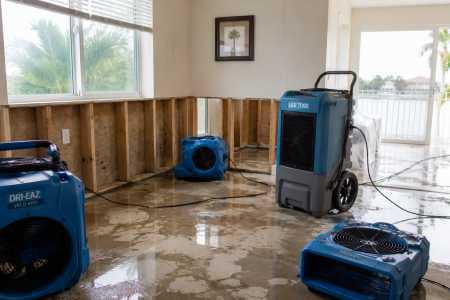
Phase 3: Structural drying (3 to 7 days, typically 4 to 5). Commercial dehumidifiers and air movers are placed to bring materials back to dry standard. The IICRC S500 standard for water damage restoration sets the target: affected materials should reach moisture content matching unaffected reference materials in the same building. Daily moisture readings track progress. In Fort Lauderdale, the high ambient humidity makes this phase take about a day longer than it would in a drier climate. Concrete block walls (CBS construction) common in South Florida hold moisture differently than wood-frame walls and often need extended drying.
Phase 4: Moisture verification (1 day). Before anything closes up, materials are confirmed dry. If anything is still reading high, drying continues. Skipping this step is the most common cause of mold problems that surface weeks later.
Phase 5: Mold remediation if needed (3 to 10 days). If mold growth has started (which is likely past the 48 to 72 hour mark, especially in this climate), a separate licensed mold assessor evaluates the extent. Under Florida Statute 468.8419, the same party generally cannot perform both assessment and remediation on the same job. Containment is set, contaminated materials are removed, surfaces are HEPA-cleaned, and the area is verified by post-remediation testing. For more on this phase, see our emergency mold removal guide.
Phase 6: Reconstruction (1 to 6 weeks, depending on scope). Drywall, flooring, paint, trim, cabinetry. This is the most variable phase because it depends on what came out, what is being replaced with, lead times on materials, and permit requirements. A simple drywall and paint touch-up can finish in a week. A kitchen with custom cabinetry can take two months.
What makes Fort Lauderdale restoration take longer than the national average
National contractor surveys often quote restoration timelines that assume a temperate climate, wood-frame construction, and a normal-paced insurance market. South Florida has none of those.
High humidity slows the drying phase. When indoor relative humidity sits at 65 to 70 percent for most of the year, dehumidifiers work harder to pull moisture out of materials. Drying that takes three days in Dallas can take five days here.
Storm season creates contractor backlogs. From June through November, named storms can trigger thousands of simultaneous claims across Broward, Miami-Dade, and Palm Beach counties. Reputable contractors get booked solid. Adjusters fall weeks behind. A job that would start the next day in March may not start for a week in September.
Florida insurance processing is often slow. Florida Statute 627.70131 requires insurers to acknowledge a claim within 14 days of notice and pay or deny within 60 days of receiving proof of loss. In practice, claims often hit those maximums, especially after named storms. Reconstruction work usually waits on insurer approval of the scope.
Permit timelines for reconstruction tightened after Surfside. Following the 2021 Champlain Towers South collapse, South Florida building departments tightened scrutiny on permits, especially for condos and any work touching structural elements. Permits that used to issue in a week can now take two to three.
Masonry construction holds moisture differently. Many Fort Lauderdale homes are concrete block with stucco exterior. Concrete block can hold water in its cores for days after wood would have dried. Stucco that has absorbed water from wind-driven rain releases it slowly. Both extend the drying phase.
Factors that can extend your timeline
Beyond the climate and market baseline, individual jobs hit specific delays:
-
Hidden moisture missed in the initial assessment. If the technician misses water that migrated behind a cabinet or under a vinyl plank floor, drying completes on the visible areas but mold starts in the hidden one. Discovery weeks later restarts the clock.
-
Category 3 water (sewage, river or storm flooding). Black water jobs require more aggressive material removal and additional sanitization steps. Add several days minimum to any timeline.
-
Insurance disputes or delayed approvals. If the adjuster questions the scope, work pauses until it is resolved. This can add days for a simple disagreement or weeks for a contested claim.
-
Contractor handoff gaps. When water mitigation, mold remediation, and reconstruction involve three different companies, schedule coordination adds friction. Single-source providers move faster.
-
Reconstruction complexity. Custom cabinetry, imported tile, hardwood floor matching, or any work in a kitchen or primary bathroom can extend reconstruction by weeks because of material lead times.
-
Permits and inspections. Required for most reconstruction work involving electrical, plumbing, or structural changes. Inspector availability varies by jurisdiction.
-
HOA or condo association approvals. Condos almost always require board notification and sometimes formal approval for any work touching common elements or modifying the unit interior. This can add a week or more before reconstruction starts.
How to shorten the timeline
The fastest jobs share the same homeowner behaviors. Most of what saves time is decided in the first 24 hours.
Call within hours, not days. Every hour past the water event raises the chance of mold growth and material loss. A same-day response keeps you in the small-job timeline bracket. A week-late response often moves you to the large-job bracket.
Document everything from the start. Time-stamped photos and video of the source, affected materials, contents, and moisture readings make insurance processing dramatically faster. Adjusters need evidence, not narrative. Our storm damage step-by-step guide covers the documentation checklist.
Choose a contractor with combined water mitigation and mold remediation capability. Splitting these phases between two companies almost always adds time. A team that can extract, dry, monitor, and then remediate (or hand off cleanly to a licensed remediator) keeps the schedule tight.
Make decisions quickly on reconstruction choices. When the contractor needs your sign-off on a tile selection or cabinet replacement, waiting a week to decide adds a week to the project. Pre-thinking these decisions before they come up saves real time.
Move contents out of the affected area yourself. Restoration crews can do this, but it costs time you are paying for. If you can safely relocate furniture, books, and breakables to an unaffected room or garage before the crew arrives, drying setup goes faster.
Coordinate with your insurer early and often. Open the claim within the first day, get the adjuster scheduled, and stay responsive to information requests. The fastest claim files are the ones where the homeowner is reachable and organized.
For deeper detail on the drying phase specifically, our guide on how long to run a dehumidifier after a flood covers the mechanics in more depth.
Can you stay in the house during restoration?
Whether you can stay depends on which phase you are in and which rooms are affected.
During extraction and drying: usually livable if the affected area is contained. The noise from air movers and dehumidifiers is constant and can be hard to sleep through. Power consumption goes up significantly. If the affected area includes the only bathroom or kitchen, staying becomes impractical.
During mold remediation: plan to vacate at least the affected area, and often the whole house if the air system is involved. Containment with negative air keeps spores from spreading, but living inside an active remediation zone is not advisable.
During reconstruction: depends entirely on what is being worked on. A bathroom rebuild can be tolerable. A kitchen rebuild forces most families out for the duration. A roof or attic project usually does not displace anyone unless interior ceiling work is also happening.
Standard Florida homeowners policies often include Additional Living Expense (ALE) coverage that pays for hotel and meal costs while you are displaced. Check your declarations page or call your agent to confirm the limit before assuming.
What "back to normal" actually looks like
For a small clean-water loss, you are often functionally back to normal within a week, with maybe a few touch-up paint days a week after that.
For a medium loss with some material removal and reconstruction, plan for two to three weeks of disruption.
For a large loss with mold remediation and significant reconstruction, plan for one to two months, sometimes longer if condo approvals or custom materials are involved.
The fastest path through any of these is a same-day call to a licensed responder, good documentation from the start, and a single contractor team that can handle water mitigation, mold remediation, and reconstruction coordination.
AdvantaClean of Fort Lauderdale provides 24/7 water damage restoration across Broward County, including Fort Lauderdale, Deerfield Beach, Plantation, and Pompano Beach. To start a job or get a realistic timeline estimate for your situation, call (754) 218-8070 or visit our local team page.