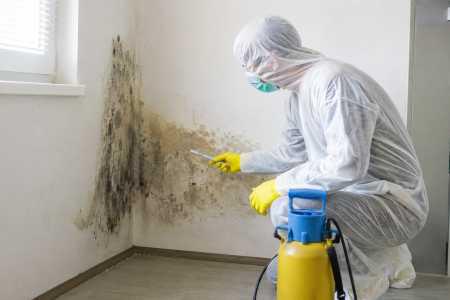
In South Florida, mold is not a hypothetical. With humidity that often sits above 70 percent and a storm season that can drop several inches of rain on a single roof in an afternoon, almost every home in Broward County will deal with a moisture event at some point. What separates a small problem from a five-figure repair is usually the contractor you choose to handle it.
The mold remediation industry in Florida is regulated, but the regulations are not always well understood by homeowners, and unlicensed operators show up in force after every major storm. This guide walks through the seven questions you should ask any company before signing a contract:
-
Does the company hold an active Florida mold remediator license, and can you verify it?
-
What industry certifications do the technicians hold?
-
Will the assessment and the remediation be handled by separate parties?
-
How is the estimate built, and what does it include?
-
Can the company show you local project examples and verifiable references?
-
Will you receive a written scope of work with clear payment terms?
-
Is post-remediation verification testing part of the job?
Each of these questions points to a real risk if the answer is unclear or evasive.
What certifications should a mold remediation company have?
Florida is one of the stricter states for mold work. Under Florida Statutes Chapter 468, Part XVI, any company performing mold-related services on areas larger than 10 square feet must hold an active license issued by the Department of Business and Professional Regulation (DBPR). There are two relevant license types:
-
Mold Assessor (MRSA) for inspection, sampling, and reporting
-
Mold Remediator (MRSR) for the actual cleanup and removal
You can verify any company's license in about 30 seconds at MyFloridaLicense.com. Search by company name or license number. If a contractor cannot give you a license number on request, that is a hard stop. Florida also requires remediators to carry a general liability policy of at least $1 million with specific coverage for mold-related claims.
Beyond the state license, look for nationally recognized industry credentials. The most common is the IICRC Applied Microbial Remediation Technician (AMRT) certification. The IICRC sets the standards most remediation firms in the country operate under, and AMRT specifically covers containment, PPE, drying integration, and disposal procedures.
A licensed and certified team is the floor, not the ceiling. It is the minimum required to legally perform the work; it is not on its own a guarantee of quality. For more on the inspection side of this work, see our companion guide on hidden mold detection and assessment services.
How much does professional mold remediation cost?
Honest cost estimates for mold remediation depend on three things: the square footage of the affected area, what materials are involved (drywall and insulation are easier than tile and subflooring), and whether the underlying moisture source has been fixed.
Industry pricing data from HomeAdvisor and Angi puts the national average for residential mold remediation in the range of roughly $1,200 to $3,800 per job, with a midpoint around $2,400. Small contained jobs can run a few hundred dollars; whole-house contamination or projects involving HVAC systems and structural materials can exceed $10,000. South Florida pricing tends to sit at or above the national average because of higher humidity, more frequent storm-related insurance work, and stricter licensing overhead.
A trustworthy estimate should be itemized. At minimum it should break out:
-
Containment setup (poly sheeting, negative air pressure)
-
HEPA filtration and air scrubbing
-
Removal of affected porous materials
-
Antimicrobial treatment of remaining surfaces
-
Disposal fees
-
Post-remediation verification testing, if included
Be cautious of any of the following:
-
A flat verbal quote with no on-site walk-through
-
An estimate that lumps everything into one line called "mold removal"
-
Pricing that is dramatically lower than other bids on the same scope
-
A request for full payment up front before work begins
Our guide to professional mold mitigation goes deeper into how pricing typically breaks down by project type.
How can you verify a company's mold removal experience?
A license and certifications get a contractor in the door. Experience is what tells you whether they actually know what to do once they are inside your house.
Start with three checks.
Years in business locally. A company that has been remediating mold in Broward County for a decade has handled the specific conditions you have: high humidity, stucco moisture intrusion, attic ventilation problems, AC condensation issues, and post-storm flood damage. A contractor who just moved into the market for hurricane season is a different proposition.
A real portfolio of local work. Ask for case studies, before-and-after photos, or project documentation from homes in similar neighborhoods. Generic stock photos on a website are not evidence of anything.
Independent reviews across multiple platforms. Google, Yelp, BBB, and Angi all aggregate verified customer reviews. Look for patterns, not perfect scores. A company with 50 reviews averaging 4.6 stars, with the negative reviews answered professionally, tells you more than a company with 12 reviews all at 5 stars.
You can also ask the contractor for two or three references from past jobs of similar scope. A company that has done the work will produce these without hesitation. If a contractor cannot or will not, treat that as an answer.
What questions should you ask before signing a contract?
Once you have narrowed the field, the contract phase is where the remaining questions get answered in writing.
Will the assessment and the remediation be handled by separate parties? Under Florida Statute 468.8419, a licensed mold assessor generally cannot perform remediation on the same property they assessed within the previous 12 months, with limited exceptions. The rule exists to prevent the obvious conflict of interest where the same company finds the mold, frames the urgency, and then sells the solution. If a contractor offers to do both on the same job, ask them directly how they comply with this rule.
Is there a written, itemized scope of work? The contract should specify exactly which areas of the home are being treated, which materials will be removed, what containment will be used, and what equipment will be deployed. "Treat mold in the master bathroom" is not a scope of work. "Remove and replace 28 sq ft of drywall on the south wall of the master bathroom, install 6 mil poly containment with negative air, HEPA-scrub the affected room, dispose of contaminated materials per Florida DEP requirements" is.
What are the payment terms? A typical structure is a small deposit at contract signing, a progress payment at the midpoint, and the balance on completion after a final walk-through. Be wary of any company demanding full payment up front, especially in cash.
What guarantees or warranties are offered? Reputable remediators will warranty their work for at least one year, conditional on the underlying moisture problem being addressed. If a roof leak causes the mold and the roof is not repaired, no remediator can guarantee against return.
Is post-remediation verification (PRV) testing included? This is third-party air sampling and surface testing that confirms the work was actually effective. Florida's licensing structure intentionally separates the assessor from the remediator partly so PRV stays credible. If a company tries to talk you out of PRV, or offers to do it themselves on a job they remediated, that is a flag. See our companion guide on keeping your home mold-free after remediation for more on what PRV should look like.
Warning signs of an unreliable mold remediation contractor
After every named storm in South Florida, a wave of out-of-state contractors arrives chasing insurance work. Some are legitimate. Many are not. The following patterns should make you stop and ask more questions before signing anything.
Door-to-door solicitation after a flood or storm. Licensed Florida remediators do not generally drive neighborhoods looking for work. Established companies get jobs from referrals, repeat clients, and inbound calls.
Refusal to provide a license number. Performing mold-related services without a DBPR license is a violation of Florida law, and the license is also the easiest deception to verify in 30 seconds online.
No inspection before pricing. A legitimate company does not quote a remediation job sight unseen. The scope depends on the actual conditions, which require an in-person walk-through.
Pressure to sign immediately. Once the moisture source is controlled, mold does not get dramatically worse in 24 hours of decision time. A company that insists you sign on the spot is selling, not advising.
Vague language about containment and equipment. Real remediation involves physical barriers, negative air machines, HEPA filtration, and PPE. If the explanation is some version of "we spray and clean," that is cleaning, not remediation.
Combined assessment and remediation on the same job. As covered above, this is restricted under Florida law for good reason.
Demands for cash or full payment up front. Standard payment structures protect both parties. Demands outside that pattern usually do not end well for the homeowner.
If you are still working out whether your situation actually needs a professional in the first place, our guide on what you can safely DIY versus what you should never touch yourself is a useful starting point.
Hiring with confidence
The right mold remediation company in Fort Lauderdale will hold an active DBPR license, carry the required insurance, separate assessment from remediation, document the scope of work in writing, and stand behind the result with verification testing. You should not need to push for any of this. A company that operates this way will lead with it.
AdvantaClean of Fort Lauderdale serves Broward County including Fort Lauderdale, Deerfield Beach, Plantation, and Pompano Beach. To request an inspection or talk through a specific concern, call (754) 218-8070 or visit our local team page.