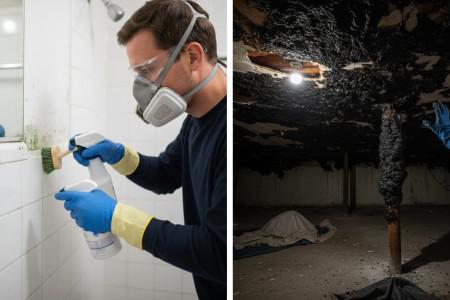
You spot mold in your home. Your first instinct is probably to grab a scrub brush and some bleach and make it disappear. After all, mold looks like a simple cleaning problem. How hard can it be?
The answer depends entirely on where the mold is growing, how much of it exists, and what is causing it to grow in the first place. Some mold situations are perfect for a weekend DIY project. Others require professional training, equipment, and containment. Crossing that line can turn a small problem into a health hazard and a minor cleanup into a costly remediation nightmare.
For homeowners in Fort Lauderdale, Hollywood, Plantation, and across Broward County, knowing what you can safely handle yourself and what should never be touched is essential. The humid Florida climate means mold is a constant threat. But that does not mean every speck of mold requires an expensive professional call.
The first question you must answer
Before you decide whether to DIY or call a pro, ask yourself one question: why is the mold there? Mold does not appear in dry, well ventilated homes. It appears because moisture is present somewhere. That moisture could be from a one time event like a small spill that never fully dried. Or it could be from an ongoing problem like a slow leak inside a wall, high humidity from poor ventilation, or condensation from uninsulated ductwork.
If you clean the mold without addressing the moisture, the mold will return. It might return in days or weeks, but it will return. The DIY versus professional question is not just about cleaning. It is about whether you can identify and fix the underlying moisture source yourself.
What you can safely clean yourself
Small patches of mold on hard, non porous surfaces are generally safe for homeowners to clean. Think tile grout in a shower, the surface of a sink, a windowsill, or a small area on a sealed concrete floor.
The mold must be contained to an area smaller than about three feet by three feet. Anything larger than that should involve a professional, not because you cannot scrub it, but because larger areas release more spores and require proper containment.
The surface must be non porous. Tile, glass, metal, and sealed concrete can be cleaned effectively. Porous materials like drywall, ceiling tiles, unsealed wood, and carpet trap mold inside their fibers or pores. You cannot clean mold out of these materials completely. Attempting to do so usually makes the problem worse by spreading spores or pushing them deeper into the material.
The cause of the mold must be obvious and fixed. If the mold is on a bathroom ceiling because someone forgot to run the exhaust fan for months, you can clean it and change your ventilation habits. If the mold is on a wall near a pipe and you have no idea if the pipe is leaking, you are not ready to clean anything.
How to DIY mold removal safely
If you have a small, surface level mold problem on non porous materials, follow these steps carefully.
Protect yourself first. Wear an N95 mask or better, disposable gloves, and eye protection. Mold spores become airborne during cleaning, and you do not want to breathe them.
Do not use bleach. Bleach is mostly water. It whitens the stain but leaves water behind that can feed remaining mold. Use white vinegar, hydrogen peroxide (three percent), or a commercial mold cleaner labeled for household use. Vinegar is effective on many common molds and safe for most surfaces.
Apply the cleaner and let it sit for ten to fifteen minutes. Scrub with a brush or sponge. Wipe away the residue with a damp cloth. Dry the area completely. If the mold returns within a week, you have not solved the moisture problem or the mold is growing from within the material.
Never mix cleaning products. Combining vinegar and bleach creates toxic chlorine gas. Combining hydrogen peroxide and vinegar creates peracetic acid, which can irritate your lungs and damage surfaces.
After cleaning, address the moisture issue. Run a dehumidifier. Improve ventilation. Fix the leak. Without this step, you will be cleaning the same spot again next month.
A musty smell in your house often returns after DIY cleaning because the moisture source was never found. If you smell mold after cleaning, you have not solved the problem.
What you should never touch yourself
Some mold situations are firmly in professional territory. Attempting DIY on these scenarios can spread contamination, expose you to high levels of mold spores, and leave hidden growth that continues damaging your home.
Mold on porous materials
Any mold growing on drywall, plaster, unsealed wood, carpet, padding, upholstery, insulation, or ceiling tiles requires professional handling. These materials absorb mold like a sponge. Cleaning the surface leaves the roots intact inside the material. Within days or weeks, the mold grows back through the surface.
Professionals remove and replace these materials, using containment and negative air pressure to prevent spore spread. A homeowner cutting out moldy drywall without proper containment can release millions of spores into the rest of the house.
Mold larger than ten square feet
The Environmental Protection Agency recommends professional remediation for mold covering more than about ten square feet, roughly a three foot by three foot area. The reason is simple. Large mold colonies release large numbers of spores. Controlling those spores requires professional containment, HEPA air filtration, and sometimes negative air pressure.
A homeowner cleaning a large mold patch without these controls will spread spores throughout the home. Those spores settle on other surfaces, find moisture elsewhere, and create new mold problems in previously clean areas.
Mold inside your HVAC system
If you see mold inside your air conditioning vents, on your air handler, or in your ductwork, do not attempt to clean it yourself. Your HVAC system is designed to move air throughout your home. Disturbing mold inside it without proper procedures will blow spores into every room.
Professional HVAC mold cleaning involves accessing the system, cleaning coils and drain pans with specialized tools, and in some cases applying antimicrobial treatments designed for HVAC components. Duct cleaning requires powerful HEPA vacuum equipment that homeowners do not have access to.
Attic mold remediation is almost always a professional job because attics contain insulation, complex structures, and often connect to HVAC systems.
Mold caused by contaminated water
If your mold resulted from sewage backup, floodwater from outside, or any water that may have contained bacteria or chemicals, you need professional remediation. This is not about mold anymore. It is about biohazards. The same porous materials that absorbed mold also absorbed whatever was in that water. Professional remediation includes sanitation protocols that DIY cleaning cannot match.
Mold in hard to reach places
Mold inside wall cavities, under flooring, above ceilings, or in crawl spaces requires professional access, equipment, and training. You cannot clean what you cannot see. Cutting into walls or pulling up floors without containment spreads contamination. Professionals use borescopes, moisture meters, and controlled demolition to access hidden mold safely.
Black mold or confirmed Stachybotrys
While the hysteria around black mold is often overblown, confirmed Stachybotrys chartarum does produce mycotoxins that can cause health effects. Professional remediation ensures that the area is contained, the mold is removed without spreading toxins, and the space is tested afterward to verify safety.
Black mold in Plantation homes is a serious concern that warrants professional assessment and removal, not DIY scrubbing.
If anyone in your home has health conditions
Even a small mold problem can be dangerous for people with asthma, severe allergies, compromised immune systems, or chronic respiratory conditions. If you or a family member falls into these categories, professional remediation provides the safest outcome. The cost of professional service is small compared to a medical emergency.
The hidden costs of DIY when you should have called a pro
Homeowners who attempt DIY on jobs that require professionals often end up paying more in the long run. Here is what happens.
You scrub the visible mold. It looks clean. You feel proud. But the mold inside the drywall continues growing, hidden from view. By the time it breaks through again weeks or months later, the damage is worse. The drywall needs replacement over a larger area. The mold has spread to nearby studs or insulation. What could have been a simple removal of a small drywall section becomes a much larger demolition.
Worse, your cleaning efforts spread spores to other areas. A month later, you find mold in a closet on the other side of the house. That closet was clean before you started. You introduced the problem by disturbing mold without proper containment.
Some homeowners seal moldy areas with paint or caulk, thinking they have solved the problem. The mold continues growing behind the seal, unseen and untreated, until it causes structural damage or health symptoms that finally prompt a real inspection.
When the decision is not clear
Some situations fall into a gray area. A small patch of mold on drywall from a one time leak that has been fully dried. The mold covers about two square feet. You could cut out that section of drywall yourself, bag it carefully, and replace it. That is a reasonable DIY project for a handy homeowner.
But you need to be honest with yourself. Do you have the right mask? Do you know how to seal the area to prevent spore spread? Do you know how to dispose of moldy materials properly? If the answer to any of these is no, professional help is still the better choice.
The professional difference
When you hire a certified mold remediation professional, you are paying for more than just cleaning. You are paying for containment systems that keep mold from spreading. HEPA air scrubbers that remove spores from the air during the job. Moisture meters and thermal imaging that find hidden water sources. Commercial grade antimicrobial treatments that homeowners cannot buy. Post remediation verification that the mold is actually gone. And warranties that protect you if the problem returns.
For small, surface level mold on tile or glass, that professional package is overkill. For anything involving porous materials, large areas, hidden spaces, or health concerns, it is essential.
Frequently asked questions about DIY mold removal
Can I use bleach to kill mold in my shower?
Bleach is not the best choice. It whitens the stain but does not penetrate porous grout or caulk. The water in bleach feeds remaining mold roots. White vinegar or hydrogen peroxide are more effective on bathroom mold.
How do I know if mold is growing inside my walls?
Signs include persistent musty odors that do not go away, warped or bubbling drywall, peeling paint, and allergy symptoms that worsen when you are home. A professional with a moisture meter can confirm without cutting holes.
What happens if I paint over mold?
The mold continues growing beneath the paint. Within months, it will break through, often worse than before. Special mold blocking primers can help, but only after the mold has been properly cleaned or removed.
Can I use a fogger or bomb to kill mold throughout my house?
Mold foggers and bombs are not effective for established mold colonies. They kill airborne spores temporarily but do nothing to remove mold growing on surfaces. They also release chemicals throughout your home that can be hazardous. Professionals use fogging only as a supplement to physical removal, never as a primary treatment.
How much does professional mold remediation typically cost?
Costs vary based on the size of the affected area, the materials involved, and whether structural repairs are needed. Small jobs might cost five hundred to fifteen hundred dollars. Large jobs involving demolition and rebuilding can run several thousand dollars. Most insurance policies cover mold remediation when it results from a covered water loss.
The bottom line on DIY versus professional mold removal
Mold removal is not one size fits all. Small patches on hard, non porous surfaces with an obvious and fixable moisture source are reasonable DIY projects. Anything involving porous materials, large areas, hidden spaces, HVAC systems, contaminated water, or health concerns belongs in professional hands.
The mistake homeowners make is assuming that all mold is the same and that cleaning visible mold solves the problem. It does not. The visible mold is often just the tip of the iceberg. The real issue is the moisture that allowed it to grow and the hidden growth you cannot see.
If you are unsure whether your mold problem is DIY safe, get a professional assessment. Most restoration companies offer free or low cost inspections. That assessment might tell you that you can handle it yourself, saving you money. Or it might reveal hidden problems that would have turned your DIY project into a disaster.
Either way, you get peace of mind. And with mold, peace of mind is worth more than any cleaning product.
Ready to stop guessing about your mold problem?
You do not have to figure this out alone. The certified mold remediation specialists at AdvantaClean of Fort Lauderdale offer thorough inspections that tell you exactly what you are dealing with, whether it is a simple DIY cleaning or a job that needs professional equipment and training.
If the mold is something you can handle yourself, they will tell you that and send you on your way with confidence. If it requires professional remediation, they will provide a clear plan and a straightforward estimate. No pressure. No scare tactics. Just honest assessment from people who do this work every day in South Florida homes.
Do not let mold anxiety keep you from taking action. Get the answers you need and the help you deserve.
Find AdvantaClean of Fort Lauderdale on Google Maps to see their location, read customer reviews, and get directions. Then reach out for an inspection that will finally answer the question: DIY or call the pros? Your home and your health are worth the clarity.