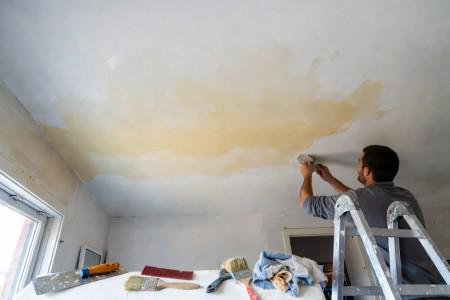
A brown or yellow ring on the ceiling causes immediate concern. The first question is whether water is still leaking. The second question is who should fix the stain. Some stains are purely cosmetic and can be handled by a homeowner. Others point to hidden damage that requires professional attention. Knowing the difference saves time, money, and frustration.
Before doing anything: Find the source
No one should fix a ceiling stain without knowing where the water came from. A stain is evidence that moisture found its way into the ceiling at some point. That moisture may still be present. It may have come from a leak that was already repaired. Or it may be an active problem that will only get worse.
Check directly above the stain. If the stain is on a first floor ceiling, look in the second floor bathroom, laundry room, or attic space above. If the stain is on the top floor, check the attic or roof. Look for plumbing leaks, roof damage, or signs of condensation around air conditioning equipment.
If water is actively dripping or the stain grows larger after rain, the leak is still active. Call a plumber or roofer first. Fixing the stain before fixing the leak is pointless.
If the stain is dry to the touch and has not changed size in weeks or months, the leak has likely been resolved. The stain is a cosmetic reminder of a past problem.
When a homeowner can handle the stain
A water stain on a ceiling can be painted over if several conditions are met.
The ceiling material must be structurally sound. Press gently on the stained area. If the drywall feels firm and does not crumble, sag, or feel soft, the material is likely intact.
The stain must be completely dry. Touch the stain and the area around it. If it feels cooler than the surrounding ceiling or if a moisture meter shows elevated readings, the area is still wet.
The cause of the stain must be resolved. If the stain came from a one time event like a spilled bucket or a small leak that was fixed and dried, painting is appropriate. If the stain keeps returning after painting, the moisture source is still active.
There must be no visible mold. Black, green, or dark spots around the stain indicate mold growth. Painting over mold does not kill it. The mold continues growing beneath the paint and eventually breaks through.
The correct way to paint a water stain
Many homeowners try to paint directly over a water stain with regular ceiling paint. The stain bleeds through within hours or days. This happens because water stains contain minerals and tannins that dissolve in water based paints.
The proper method requires a stain blocking primer first.
Clean the stained area with a mild detergent and water to remove any dust or residue. Allow the area to dry completely. Apply a stain blocking primer designed for water stains. Oil based or shellac based primers work best. Latex primers often fail to block the stain. Apply a thin, even coat and let it dry according to the product instructions. If the stain still shows through, apply a second coat. Once the primer is fully dry and the stain is no longer visible, paint the ceiling with matching ceiling paint. Feather the edges to blend with the surrounding area.
This process works well for small stains on otherwise sound ceilings. A motivated homeowner can complete the job in an afternoon.
When a professional should handle the stain
Some water stains indicate problems that cannot be fixed with primer and paint. Professional help is needed in several situations.
The drywall is soft, sagging, or crumbling. Water weakens drywall over time. Soft drywall can collapse, especially if the area above is wet. A professional can cut out the damaged section, inspect for mold, and install new drywall.
The stain is large. A stain covering several square feet suggests that water spread through a wide area. The drywall may be damaged beyond what is visible. A professional assessment is wise.
Mold is present. Any visible mold around a water stain means the area has been damp long enough for growth to establish. Black mold in Plantation, FL homes is a serious concern, but any mold requires proper handling to avoid spreading spores throughout the house.
The stain returns after painting. If a stain bleeds through primer and paint, the moisture source is still active. There may be a slow leak inside the ceiling or ongoing condensation from an HVAC system. A professional can use moisture meters and thermal imaging to find the source.
Water came from sewage or floodwater. Stains from contaminated water require special handling. The materials may need removal rather than painting.
What professionals do that homeowners cannot
A professional restoration company has tools and training that go beyond a can of primer.
Moisture meters detect hidden moisture inside drywall and ceiling cavities. A ceiling can feel dry to the touch while the back side of the drywall remains wet. A professional can measure moisture levels and determine whether drying is complete.
Thermal imaging cameras show temperature differences that reveal wet insulation or active leaks behind finished ceilings. This technology finds problems that no amount of visual inspection can uncover.
Containment and HEPA filtration prevent mold spores from spreading when damaged drywall is removed. A homeowner cutting into a moldy ceiling without containment risks contaminating the entire home.
Proper drying equipment including industrial dehumidifiers and air movers can dry ceiling cavities that would otherwise remain damp for weeks.
Post repair testing verifies that the area is dry and mold free before new paint is applied.
Hidden water damage in Hollywood homes often goes unnoticed until a professional inspection reveals the full scope of the problem.
Understanding what causes recurring stains
A water stain that keeps coming back is frustrating but also informative. It tells the homeowner that moisture is still present somewhere.
Common causes of recurring stains include slow plumbing leaks inside walls or ceiling cavities. The leak may be small, only a few drops per day, but enough to keep the drywall damp. Condensation from poorly insulated air conditioning ducts or cold water pipes can also create persistent moisture. Roof leaks that only occur during certain wind directions or heavy rain may appear fixed during dry weather. Improperly sealed flashing around vents, chimneys, or skylights is another common culprit.
Knowing what to do immediately after a flood in your Pompano Beach property includes understanding that stains appearing weeks later may be related to that event if drying was incomplete.
The cost of waiting
A ceiling stain is not an emergency in most cases, but ignoring it comes with risks. Moisture that sits behind drywall eventually leads to mold growth. Mold requires professional remediation once it spreads beyond a small area. Structural wood including ceiling joists can rot if exposed to moisture for months. Rot weakens the framing and requires carpentry repairs. Small leaks can become larger leaks. A pinhole in a pipe that creates a minor stain today can burst tomorrow and flood the room.
Addressing a stain when it first appears is generally simpler and less expensive than waiting.
Frequently asked questions about water stained ceilings
Can I just paint over a water stain without primer?
No. The stain will bleed through regular paint within hours or days. Stain blocking primer is necessary.
How do I know if my ceiling is dry enough to paint?
Touch the stained area. If it feels cool or damp, it is not dry. A moisture meter provides a definitive reading. A dry stain feels the same temperature as the surrounding ceiling.
Will a water stain go away on its own?
No. The stain is permanent unless painted over or the drywall is replaced. It will not fade or disappear with time.
Can I use bleach to remove the stain before painting?
Bleach whitens the surface but does not remove the minerals that cause the stain. It also leaves water behind that can further damage drywall. Primer is the correct solution.
My ceiling stain came back after painting. What should I do?
The moisture source is still active. Do not paint again. Find the source of the moisture. Look for plumbing leaks, roof problems, or condensation issues. A professional inspection may be necessary.
Is a water stain always a sign of a current leak?
No. Many stains come from past leaks that have been repaired. If the stain is dry and has not changed size for months, the leak is likely resolved. If the stain grows or changes, the leak is active.
When to call a professional
A water stained ceiling is often fixable with primer and paint, but not always. If the drywall is soft, the stain is large, mold is visible, or the stain keeps returning, professional help is the smart choice. Attempting to fix deeper problems without the right tools and training can lead to more damage and higher costs later.
For homeowners in Fort Lauderdale and across Broward County, AdvantaClean of Fort Lauderdale offers professional water damage assessment and repair. Their technicians can find hidden moisture, test for mold, dry ceiling cavities properly, and restore the area to safe condition. If you are unsure whether your ceiling stain needs professional attention, a consultation provides clarity.
Contact AdvantaClean of Fort Lauderdale to schedule an inspection.