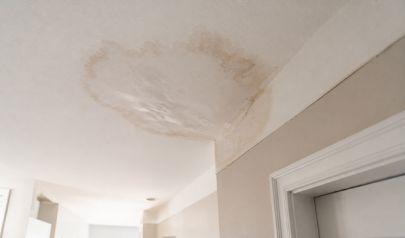
Most people who call us about water damage in July are not dealing with the hurricane aftermath. They are dealing with their air conditioner. Specifically, a condensate drain that got sluggish, then clogged and finally overflowed into a wall cavity or ceiling space, without anyone noticing until the drywall started to feel wrong.
This happens constantly in Cooper City and throughout Broward County, and it makes sense when you think about it. A central AC unit in South Florida runs somewhere between 14 and 18 hours a day during peak summer. That is a lot of condensation being routed through a drain line, and those lines collect algae, dust, and debris. A slow clog is not dramatic. There is no obvious event. One day the pan fills up and overflows quietly into the ceiling or down into the wall framing below the air handler, and by the time anyone notices, the damage has been sitting there for days or weeks.
What the Water Actually Does Inside Your Home
The problem with AC overflow water damage is that it tends to occur in tight, enclosed spaces where building materials absorb moisture and retain it. Drywall is particularly bad for this. Once water wicks into the paper facing and the gypsum core, it will not dry out on its own in a South Florida summer. The humidity outside is 85 percent. There is nowhere for that moisture to go.
Wood framing in the wall cavity next absorbs the moisture. Then the insulation. By the time a homeowner sees a discolored ceiling tile or notices a soft spot in the drywall, a moisture meter on that wall will typically read well above the safe threshold across a fairly wide area. What looked like a small drip has usually traveled further than the visible damage suggests.
Why Mold Follows So Quickly in Broward County
We have worked on enough water-damage jobs across Fort Lauderdale and Cooper City to say with confidence that mold is almost always part of the conversation when the water source is the AC system. The conditions here just do not give mold much reason to wait. Broward County's summer humidity, combined with warm temperatures and organic building materials, means fungal growth can establish within 24 to 48 hours on wet drywall or wood.
That timeline is not meant to alarm anyone. It is just the reality of doing restoration work in South Florida versus somewhere like Colorado or Nevada, where a wet wall might air out on its own over a week. Here it does not. If water got in, the drying process has to be deliberate and measured.
What to Look For Before the Damage Shows Itself
The homeowners who catch AC water damage early tend to be the ones who check their system occasionally rather than waiting for a symptom. A few specific things worth doing at least once a month during summer:
Pour a cup of water into the AC condensate drain cleanout and watch whether it drains freely. Check the drip pan under the air handler for any standing water or mineral staining that suggests previous overflow. Press your hand along the drywall directly below the air handler and around any ceiling penetrations for soft spots. If there is an access panel near the unit, open it and check the bottom of the cabinet for watermarks or rust streaks.
None of this takes more than five minutes. Finding a clogged drain in May costs almost nothing to fix. Finding water damage in August after a slow clog has been overflowing for six weeks is a different conversation.
How Professional Drying Works and Why It Is Not Just Fans
When we arrive at a water damage job in Fort Lauderdale or Cooper City, the first thing we do is map out where the water actually went. Not where it appears to have gone. Where it went. Thermal imaging cameras show temperature differentials in walls and ceilings that indicate wet material behind finished surfaces. Moisture meters give us readings at multiple depths, so we can determine whether the problem is surface-level or structural.
That mapping determines the drying plan. Commercial air movers are positioned to pull moisture out of wall cavities and ceiling assemblies, specifically, not just to move air around the room. Dehumidifiers calibrated for the ambient conditions outside run continuously to capture that moisture before it redistributes elsewhere in the home. We check readings daily and adjust the equipment placement as materials dry. The goal is documented moisture content at or below the baseline for each material type before we close anything up.
In South Florida's summer conditions, doing this correctly takes longer than it would in a drier climate. We plan for that from day one rather than calling a job complete based on how things look.
Talking to Your Insurance Company About This
Whether an AC overflow water damage claim is covered depends on the specific policy language and the cause of the overflow. Sudden and accidental events are typically covered. Gradual leaks that developed over time and went unaddressed are frequently excluded. Documenting when the problem started and what caused it matters more than most homeowners realize.
When we work on a claim in Pompano Beach or Cooper City, we document the moisture readings, the affected materials, and the probable timeline of the event in a format that gives the adjuster what they need. A thorough inspection report prepared right after the discovery is worth a lot more than trying to reconstruct what happened weeks later.
If your AC system has been running harder than usual or you noticed any soft ceilings or an unexplained musty smell this summer, it is worth getting eyes on it. AdvantaClean of Fort Lauderdale handles water damage assessment and structural drying throughout Cooper City, Fort Lauderdale, Pompano Beach, Weston, and Deerfield Beach. You can also find the team on Google to read what other Broward County homeowners have said. Call (954) 994-2947 anytime.