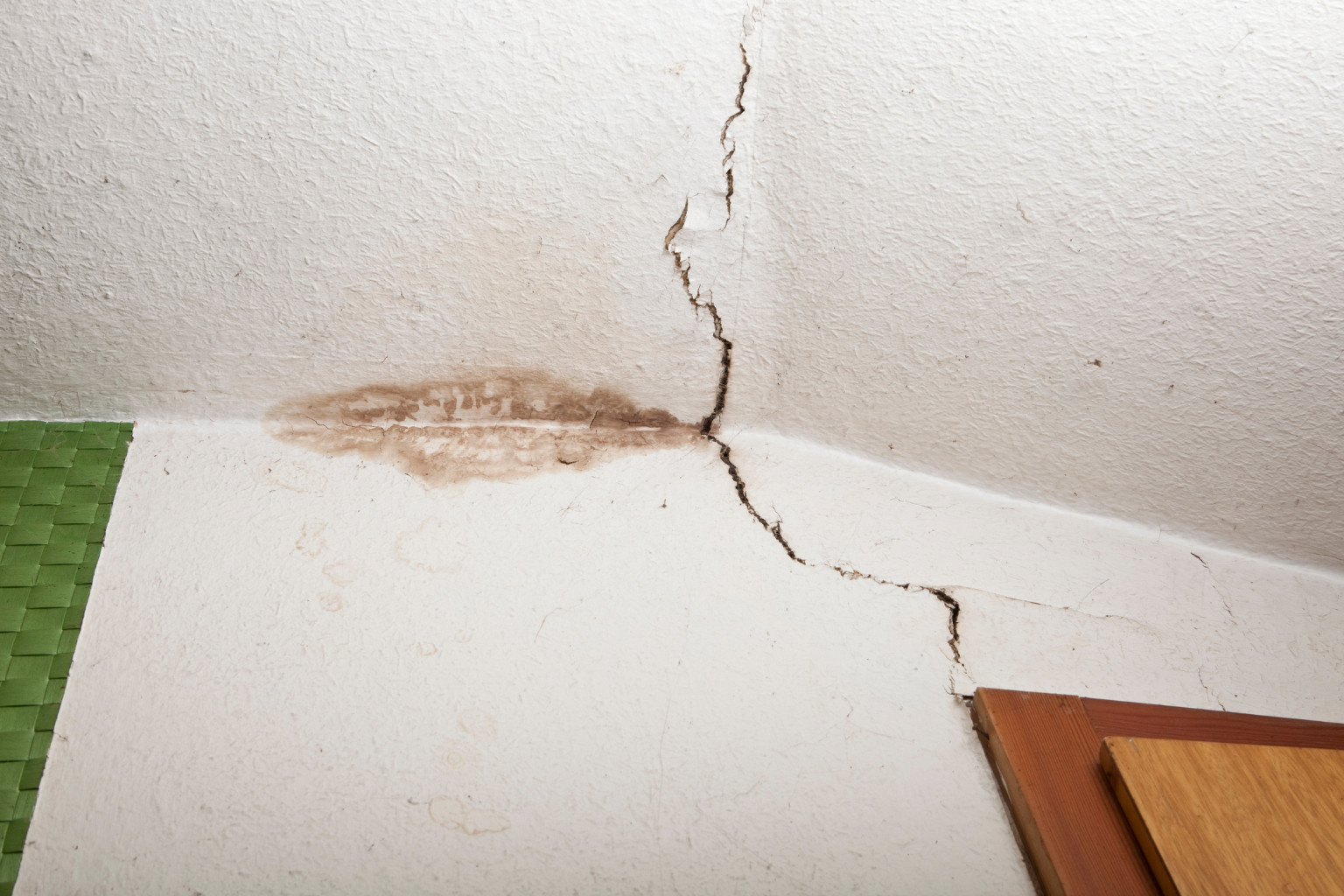
The air conditioner is working smoothly, the thermostat shows seventy-two degrees, and the house is cool. However, a slight yellowish ring then appears on the drywall above. This can confuse people in Cooper City, since a cooling system that appears to be working correctly is rarely the immediate cause of indoor flooding.
Air conditioners cool the air inside a building and remove a large amount of moisture from South Florida's humid air. This continuous flow of water must drain away through a special pipe. If the drain pan in the attic or the condensate pipe becomes blocked by algae or sediment, water will soon overflow onto the ceiling assembly beneath.
Why Ceiling Discoloration Is a Delayed Warning
Drywall can become completely saturated without showing signs of active dripping. In a typical residential attic, the air handler sits directly above the wooden ceiling joists, with thick layers of blown-in or batt insulation. When a condensate pan overflows, the escaping moisture first contacts the insulation and spreads across the vapor barrier like a sponge.
When discoloration or flaking paint shows up on the ceiling below, the water has probably been collecting above the finished sheetrock for several days. The noticeable spot is the lowest point where gravity finally pushed the moisture through the paper backing. Although putting a bucket under the area or applying a layer of stain-blocking primer will improve the appearance, it won’t address the wet structural framing hidden out of sight.
Natural cooling cannot replace structural drying.
Many people in Broward County believe that leaving the air conditioning on will automatically dry out wet ceiling drywall. Although central air conditioning reduces ambient relative humidity, standard cooling cycles cannot produce the vapor pressure needed to remove water deeply bound in dense ceiling joists and compressed insulation.
South Florida’s high coastal humidity greatly reduces passive evaporation. If building materials stay wet in an unconditioned attic, high temperatures can speed up cellulose degradation. Depending on normal air circulation leaves hidden framing at risk of fungal growth and structural weakness.
Identifying the True Extent of Moisture Travel
Tracking water from an HVAC overflow requires looking beyond the obvious center of the discoloration:
-
Check the drywall seams and fastener heads where water naturally moves along the joint tape.
-
Check the condition of the attic insulation directly under the evaporator coil and the secondary drain pan.
-
Monitor nearby wall partitions, since moisture usually travels down hidden wall cavities to reach the baseboards and flooring.
-
We noticed weak, musty smells coming from the nearby supply vents or return air plenums.
Using hand tools carelessly when opening a ceiling can cause unnecessary structural damage and pose safety hazards due to hidden electrical wiring. However, non-invasive moisture meters and thermal imaging cameras let us accurately determine the extent of water loss before deciding whether it’s worth removing any material.
Clearing the Drain Line Is Only Half the Job
Clearing a blocked condensate line stops additional water from spilling over the drain pan. Still, it does not dry out the framing, sheetrock, and insulation that already absorbed gallons of moisture. Halting the water flow addresses the plumbing issue; structural restoration addresses the building envelope.
Because condensate leaks often develop as slow, intermittent drips rather than sudden bursts, materials may have endured repeated wet-and-dry cycles before detection. Porous materials exposed to persistent dampness lose structural stability and provide ideal conditions for microbial colonization. Ensuring building materials reach baseline dry standards protects indoor air quality and prevents secondary property loss.
Trusted Property Recovery Across South Florida
To address water loss from an air-conditioning system, consider both the mechanical cause and the surrounding building materials. Our local team provides certified water damage restoration and structural drying, together with full-scale mold remediation, mold inspection, and fire damage recovery for both residential and commercial properties in Cooper City, Fort Lauderdale, Pompano Beach, Weston, and Deerfield Beach.
As a BBB Accredited Business with an A+ rating, our team is dedicated to restoring your living space thoroughly and safely. If a malfunctioning air conditioner or a hidden ceiling leak has affected your home, contact AdvantaClean of Fort Lauderdale or call (954) 994-2947 to schedule a detailed moisture assessment and stabilize your property. See our reviews on Google.
AdvantaClean of Fort Lauderdale, FL
236 NE 33rd St, Oakland Park, FL 33334
(954) 994-2947
https://maps.app.goo.gl/nv2Q3gaR4yumLsj8A