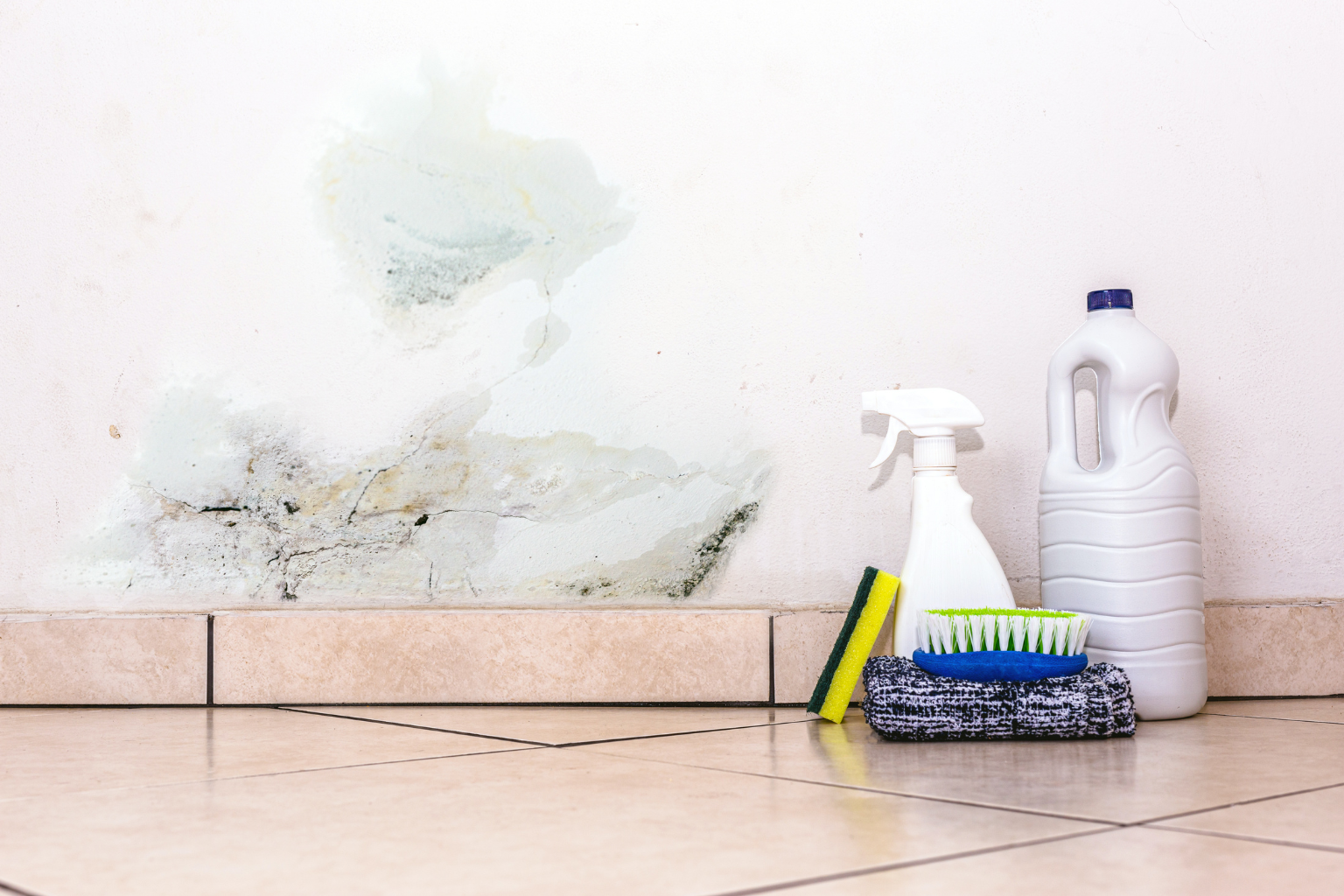
Mold has a way of starting in the parts of a house people rarely see:
-
On the underside of a subfloor above a damp crawl space
-
Behind stored items in a closet along an exterior wall
-
Around ductwork where condensation collects
-
Near a plumbing connection with a slow leak
When mould appears in the living area, the original moisture problem has probably already been going on for a long time.
Marietta’s climate naturally creates a lot of moisture. Humidity in Georgia, along with heavy rainfall, damp crawl spaces, undetected plumbing leaks, condensation, and inadequate drainage outside the building, can all lead to wet building materials. Mold doesn’t require a disastrous flood; it only needs moisture, an organic surface, and time.
Effective mold remediation should involve diagnosing conditions across the whole property, not just cleaning visible surface growth.
Where Mold Hides in a Marietta Home
While kitchens and bathrooms receive the most attention, significant mold problems frequently develop in concealed areas:
-
Crawl Spaces: These areas combine organic food sources (wood framing and subflooring) with high-moisture risks, such as ground moisture, elevated humidity, slow plumbing leaks, and inadequate ventilation.
-
HVAC Systems & Ductwork: Persistent condensation creates an ideal environment for spore accumulation.
-
Building Envelopes: Behind drywall, beneath finish flooring, around window assemblies, under sinks, and near plumbing penetrations.
-
Prior Water Damage Sites: Areas that were not completely dried during past leak events.
What is seen of the mold is usually only the beginning of the problem. You can determine the right way to address mold damage only by finding the root cause.
A Common Pattern: The Unseen Moisture Source
Suppose a homeowner detects a persistent musty smell in a first-floor bedroom. The walls are clean, there are no stains on the ceiling, and there is no evidence of a recent leak.
Looking only at the bedroom seldom reveals the solution.
However, a careful examination of the crawl space beneath the room found high moisture levels or active mold growth on the subfloor framing. The real cause may be a concealed plumbing penetration, seepage from the foundation, or very high humidity that cannot be detected in the living area above.
A musty smell suggests an investigation is needed, but the smell alone is not enough to determine where the mould is, how extensive it is, or what caused it.
Why Inspection Precedes Remediation
Sound remediation involves more than just rubbing off the discolored surfaces; the main aim is to find out where the moisture comes from.
A comprehensive inspection evaluates:
-
Crawl spaces and attics
-
Plumbing lines and fixtures
-
HVAC components and ductwork
-
Exterior wall assemblies
-
Moisture levels and ambient humidity readings across building materials
At AdvantaClean in Marietta, our procedure accounts for both active mold and the moisture source that caused it, which may involve plumbing repairs, crawl space encapsulation, drainage corrections, or targeted structural drying. Temporary relief comes only from cleaning the surface without addressing the moisture source.
What Professional Mold Remediation Involves
Every property requires a tailored approach based on the affected materials and the severity of contamination:
-
Containment involves installing physical barriers and using negative air pressure to prevent the spores from spreading into other occupied areas.
-
For air filtration, HEPA air scrubbers capture airborne particulates during the process.
-
Assessing the materials to determine which can be safely cleaned and disinfected, and which porous ones (for example, heavily damaged drywall or insulation) need to be removed under controlled conditions.
-
Moisture Correction: removing the source of moisture so that the structural materials stay dry after remediation has been completed.
Why Painting Over Mold Fails
Treating mold as a cosmetic flaw is one of the most expensive mistakes a homeowner can make.
Putting paint or primer over mould traps moisture beneath the surface, allowing decay to continue unnoticed. Similarly, cleaning a surface while a hidden plumbing leak continues means the mould will return each time. Remediation must address the source of the moisture problem, not just hide the discoloration.
Mold Remediation After Water Damage
Water damage and mold growth often occur together; for example, roof leaks, burst pipes, appliance overflows, or seepage from the foundation can leave structural components damp long after the standing water has been removed.
Porous materials—such as subflooring, drywall, and insulation—retain moisture deep inside their fibres. Without professional water extraction and industrial drying equipment monitored with moisture meters, these materials can create ideal conditions for mold to grow within 24 to 48 hours.
Frequently Asked Questions
How do you work out whether there is hidden mold in your home in Marietta?
Musty odors, unexplained respiratory irritation, constant humidity, visible staining, peeling paint, and warped trim or flooring can all indicate hidden mold. A professional inspection checks concealed cavities and crawl spaces that are hard to access safely.
Is it possible to have mold without seeing it?
Yes, mould frequently grows in unconditioned areas, behind drywall, under flooring, and in mechanical systems, even when it doesn't show visible growth in the main parts of the house.
What takes place at a mold inspection?
A technician examines suspected areas, looks for prior or current water infiltration, assesses high-risk areas such as crawl spaces and attics, and takes moisture readings from building materials to detect hidden moisture sources.
Does a musty smell always mean mold is present?
While musty odors strongly suggest dampness and microbial activity, an inspection is necessary to pinpoint the exact source and determine whether active mold colonization has occurred.
Where should homeowners check first?
Focus on high-humidity and water-adjacent zones: crawl spaces, under kitchen and bathroom sinks, around water heaters, near HVAC air handlers, along window sills, and in laundry rooms.
Is mold testing always required before remediation?
Not in every scenario. When active mold growth and its moisture source are plainly visible, immediate remediation is often the priority. Testing is most beneficial when identifying unexplained odors, confirming spore counts, or locating hidden contamination.
What are the next steps if mold is found?
A specific remediation plan is put in place, specifying containment arrangements, air filtration, removal of certain materials, antimicrobial cleaning, and long-term measures to control moisture.
Local Mold Remediation for Marietta Homes
A simple solution may be all you need for a minor, noticeable patch. Still, unresolved smells or ongoing dampness often indicate more serious problems under the floorboards or behind the walls. By identifying the source, you can ensure the remediation plan addresses it permanently.
You can read what homeowners in the area have said about working with our team on our Google Business Profile.
If you suspect mold, have experienced recent water damage, or need an inspection for your property, contact AdvantaClean of Marietta at (470) 819-2077. You can also learn more about our mold inspection, mold remediation, and property restoration services at advantaclean.com/marietta-ga.
AdvantaClean of Marietta, GA
2265 Roswell Rd #100, Marietta, GA 30062
(470) 819-2077
https://g.page/ACMarietta?share