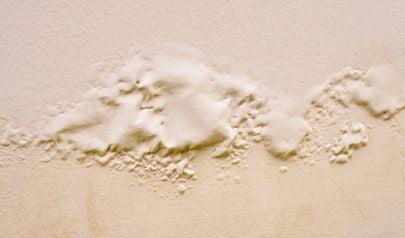
Suwanee homes offer a beautiful mix of modern open-concept designs and established, stately neighborhoods. From slab foundations to partially elevated structures, these layouts create clean lines and spacious living—but they also create "highways" for moisture. When a leak occurs, water doesn't just sit at the source; it follows the path of least resistance through framing and beneath floorboards, often disappearing long before it’s actually gone.
The Architecture of Moisture: How Design Dictates Damage
The way your Suwanee home is built determines how water moves through it. Properties built on slab foundations face a unique risk: when water seeps beneath luxury vinyl planks (LVP), hardwood, or tile, it has nowhere to go. It becomes trapped against the concrete, spreading laterally across the subfloor and soaking into the bottom of your drywall.
In multi-story homes, the challenge shifts upward. Plumbing lines running between levels can leak into ceiling cavities. Here, gravity pulls the water into the insulation and along the wooden framing, allowing it to travel quietly behind the walls before a single drip or stain ever appears on your ceiling.
The "Iceberg" Effect: What Lies Beneath the Surface
At AdvantaClean of Norcross and Buford, our inspections frequently prove that a visible water stain is rarely the whole story. Behind that damp patch of drywall, a complex interaction is taking place:
-
Insulation Sponges: Fiberglass and cellulose insulation can hold gallons of water and remain saturated for weeks if not professionally extracted.
-
Wall Cavity Air Pockets: Stagnant air inside walls slows down natural evaporation, creating a humid "micro-climate" that breeds mold.
-
Hidden Saturation: Materials like structural studs and subflooring may look dry to the naked eye but still register dangerously high moisture levels on professional-grade meters.
Strategic Mitigation: Restoring the Structural Equilibrium
Effective water mitigation in Suwanee requires more than just high-powered fans. Because our local climate stays humid for much of the year, the home cannot simply "air out" on its own. The process must be clinical and controlled.
Opening the Structure
To reach trapped moisture, we must first "breathe" for the house. This often involves the strategic removal of saturated drywall or the lifting of flooring materials. By exposing the "bones" of the home, we allow trapped pockets of humidity to escape.
Environmental Rebalancing
Once the structure is open, we introduce a two-pronged approach:
-
Directional Airflow: We force air into cabinetry, wall cavities, and floor joists—areas where air never naturally circulates.
-
Industrial Dehumidification: We remove evaporated moisture from the air. This is crucial in Suwanee, where high outdoor humidity would otherwise keep the indoor air too heavy to accept more moisture from the drying walls.
Beyond Drying: Achieving Long-Term Stability
In the restoration industry, there is a major difference between a surface being "dry" and a structure being "stable." If deep structural components remain damp, they will continue to bleed moisture into your home, potentially affecting indoor air quality and structural integrity months down the line.
AdvantaClean of Norcross and Buford focuses on restoring homes to their original design. True mitigation is only complete when the humidity is balanced, the airflow is consistent, and every layer of the home—from the slab to the ceiling—has returned to its dry standard.
AdvantaClean of Norcross and Buford, GA
3050 Business Park Drive # D, Norcross, GA 30071
(470) 819-2070
https://share.google/NvvK058haG9uVmZfK