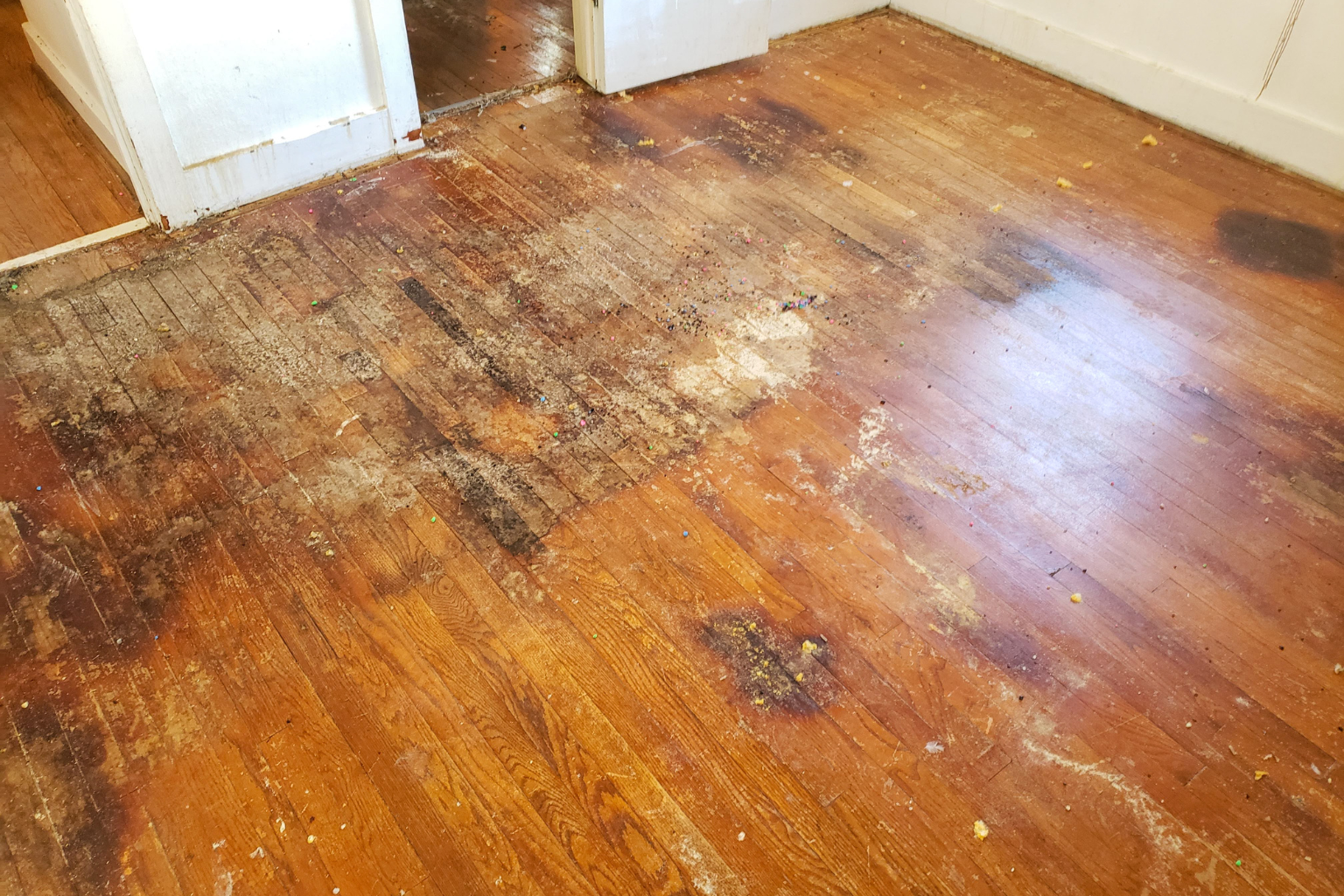
The first thing you should do after discovering water damage is to stop the source when it is safe to do so, document the affected area, and begin addressing both the visible water and moisture that may have already traveled into surrounding materials.
Many Norcross homeowners understandably start with towels, mops, wet vacuums, and household fans. Removing standing water is important, but a dry-looking floor does not necessarily mean the structure is dry.
Water can already be moving beneath flooring, into drywall, behind baseboards, through insulation, and into wood framing while the visible portion of the loss is being cleaned up. The difference between the water you can see and the moisture you cannot is where a seemingly manageable incident can become a much larger restoration project.
Where Does Water Go After a Leak?
Water does not remain where it first appears.
A burst pipe, air-conditioning overflow, a failed washing machine hose, a plumbing leak, or a storm-related intrusion can introduce water into multiple layers of a home. Gravity pulls it downward while porous building materials can absorb and redistribute moisture beyond the original wet area.
Drywall can wick moisture above the visible water line. Insulation can retain water inside a wall cavity. Flooring may appear dry while the subfloor beneath it remains affected. Wood framing can also absorb moisture and release it much more slowly than exposed surfaces.
Throughout Norcross, Peachtree Corners, and surrounding Gwinnett County communities, the area that needs evaluation can extend beyond the obvious stain or puddle.
Professional moisture meters and thermal imaging can help identify areas that warrant closer investigation and determine how far moisture conditions extend beyond what is visible.
How Quickly Should Water Damage Be Addressed?
As quickly as reasonably possible.
The longer moisture remains in porous building materials, the greater the opportunity for materials to swell, deteriorate, stain, separate, or develop microbial growth.
Georgia's warm, humid summer conditions can also reduce the ability of wet materials to dry naturally. Simply opening doors or placing a household fan in the room may move air without adequately controlling the moisture being released into the indoor environment.
That is why same-day response can make such a significant difference after a water loss.
Early intervention gives restoration professionals an opportunity to evaluate materials before prolonged moisture exposure creates additional complications. Depending on the water source, exposure duration, materials involved, and moisture conditions, some building materials may be dried in place, while others may require removal.
The decision should be based on the actual condition of the material—not an arbitrary number of hours or days.
What Does Professional Structural Drying Actually Involve?
Professional structural drying involves considerably more than placing several fans around a wet room.
AdvantaClean of Norcross and Buford begins by identifying the affected areas and documenting moisture conditions in relevant materials. Commercial air movers and dehumidification equipment can then be positioned according to the structure, materials involved, and extent of the water loss.
Moisture readings are monitored as drying progresses.
This matters because different materials dry at different rates. Drywall may respond differently from dimensional lumber. Carpet and pad behave differently from hardwood. An enclosed wall cavity presents a different challenge from an exposed concrete surface.
Hardwood flooring deserves particular attention. Homes throughout Johns Creek, Peachtree Corners, and Norcross may contain hardwood or engineered flooring that reacts to changes in moisture content. Improper or uncontrolled drying can contribute to cupping, crowning, separation, or other changes.
The objective is therefore not to make the room feel dry as quickly as possible.
The objective is to establish appropriate drying conditions and verify that affected materials have reached acceptable moisture levels.
When Should You Contact Your Insurance Company?
If the water loss may result in an insurance claim, contact your carrier promptly and document the conditions you discovered.
Take photographs and video before moving or removing affected items when it is safe to do so. Record when the problem was discovered, what appears to have caused it, and what immediate steps were taken to prevent additional damage.
Coverage varies considerably by policy and circumstances. Sudden and accidental water losses may be treated differently from long-term seepage, maintenance-related problems, groundwater intrusion, or flooding. Your insurance carrier or adjuster should determine what your individual policy covers.
Good documentation from the beginning can make it easier to establish what happened and what areas were affected.
How Do You Know When the House Is Actually Dry?
Not by looking at it.
One of the biggest mistakes after a water loss is assuming that the disappearance of visible water means the drying process is complete.
A wall can look normal while moisture remains within the material. Flooring can feel dry while the layers beneath it are still affected. Baseboards can conceal moisture along the lower portion of a wall.
Moisture readings provide objective information that appearance alone cannot.
If water has entered your home in Norcross, Peachtree Corners, Johns Creek, or the surrounding area, AdvantaClean of Norcross and Buford can evaluate the affected areas, identify moisture conditions, and develop an appropriate restoration plan.
The first few hours after water damage are not about making everything look dry. They are about determining where the water went and beginning the right drying process before a manageable water loss becomes a much larger problem.
Contact AdvantaClean of Norcross and Buford at (470) 819-2070 for assistance with water damage restoration in the Norcross area.
AdvantaClean of Norcross and Buford, GA
3050 Business Park Drive # D, Norcross, GA 30071
(470) 819-2070
https://share.google/NvvK058haG9uVmZfK