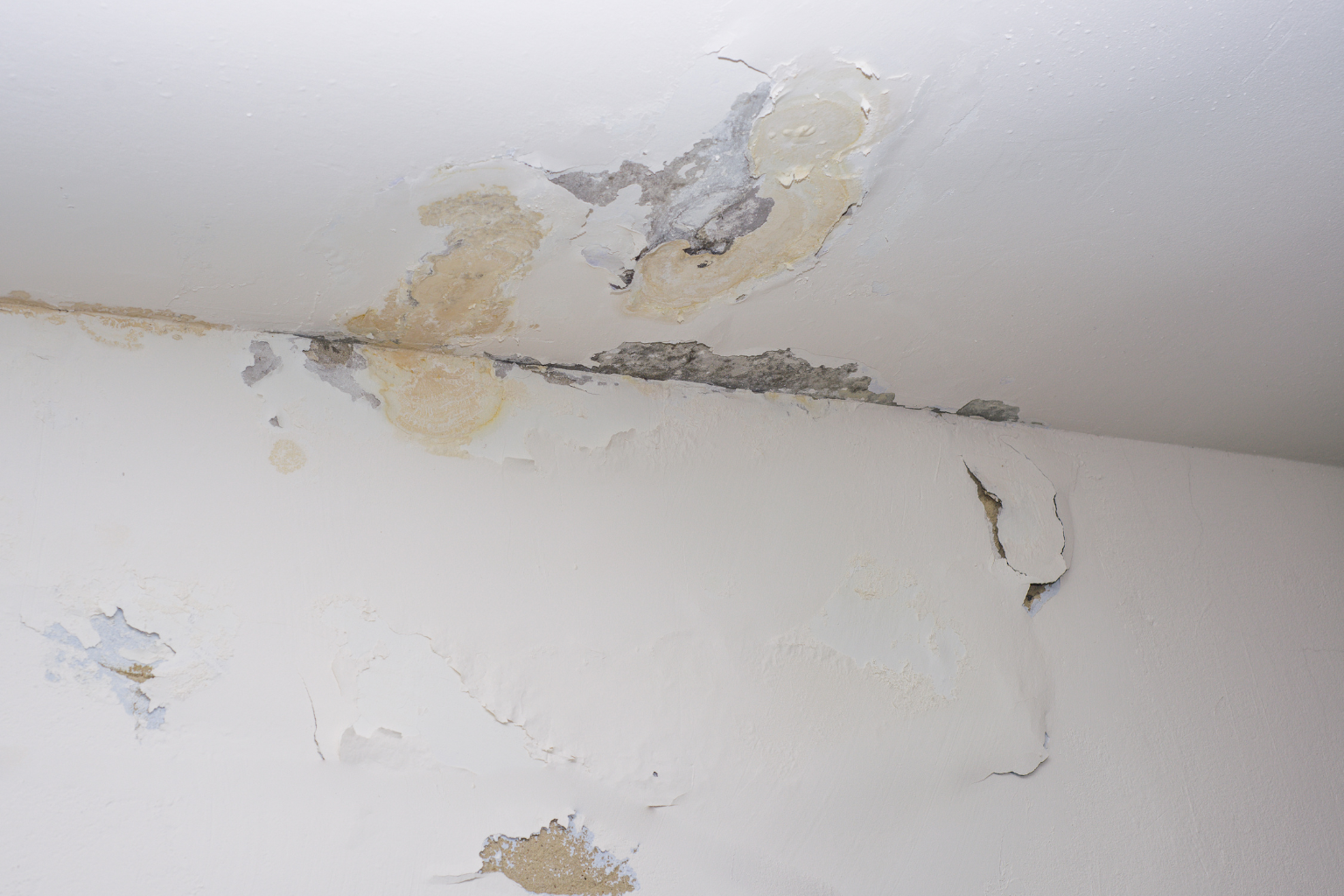
The puddle is rarely the whole story.
A supply line breaks beneath a bathroom sink. A washing machine connection fails. Water appears around the base of a finished basement wall after heavy rain. The visible water gets cleaned up, the floor looks dry, and the immediate problem seems under control.
But where did the water go before someone found it?
That question matters because water can move beyond the area where it first becomes visible. It can travel beneath flooring, reach wall cavities, soak the lower edge of drywall, affect insulation, or follow openings between levels of a home.
For water damage restoration in North Olmsted, determining how far moisture traveled can be just as important as removing the water you can see.
A Small Water Loss Can Have a Larger Moisture Footprint
Water follows the pathways a structure gives it.
Consider a dishwasher leak that leaves water across a kitchen floor. The obvious response is to remove the standing water, but the restoration boundary may extend beyond the visible puddle.
Did water reach beneath the cabinets? Did it migrate under finished flooring? Was the wall behind the dishwasher affected? Could moisture have reached the ceiling below?
The answers depend on how much water was released, how long it remained, and the materials involved.
That is why AdvantaClean of the West Side looks beyond surface appearance when evaluating water damage. Moisture conditions within the structure help determine what actually became wet and what needs attention.
A floor that feels dry under your hand does not necessarily tell you what is happening underneath it.
North Olmsted Homes Don’t All Dry the Same Way
Drive from the neighborhoods surrounding Butternut Ridge toward Lorain Road, Clague Road, or Columbia Road, and you will find homes representing different construction periods, layouts, renovations, and building materials.
Those differences matter during water restoration.
A finished basement may conceal moisture behind drywall or baseboards. Older flooring may respond differently to water than newer materials. Renovated spaces can contain layers of flooring, wall systems, or previous construction that affect how moisture moves and how easily it can escape.
Even two rooms affected by the same water event may require different drying decisions.
The important question isn’t simply, “Is the water gone?”
It is, “Have the affected materials returned to an appropriate moisture condition?”
The First Few Hours Can Change the Scope of the Job
One of the most useful things a property owner can do after discovering water is determine whether the source is still active.
If it is safe and practical, stopping the water source can limit additional damage. That might mean shutting off a fixture, appliance connection, or the property’s water supply until you can repair the problem.
Then document what happened.
Photographs and video can capture the original conditions before you extract water or move damaged materials. If an insurance claim becomes necessary, that documentation may help establish what areas and contents were initially affected.
After that, the focus shifts from what happened to where the water went.
Standing water may require extraction. Wet building materials should be identified. Moisture readings can help establish the affected area rather than relying only on visible staining or touch.
This is where professional water damage restoration becomes less about cleaning up a puddle and more about understanding the structure.
Dry on the Surface Isn’t the Same as Dry
This is one of the easiest mistakes to make after a water loss.
Carpet may stop feeling wet. Drywall may look normal again. A concrete floor may appear dry. A homeowner may run fans for a few days and reasonably assume the problem has been handled.
Surface appearance, however, doesn’t show the full moisture picture.
Drywall can retain moisture along its lower sections. Insulation can remain wet inside a wall cavity. Moisture can become trapped beneath flooring. Wood components may take longer to dry than surrounding surfaces.
AdvantaClean of the West Side uses moisture assessment to determine drying progress because the structure itself provides better information than appearance alone.
The goal isn’t to run drying equipment for an arbitrary number of days. The goal is to understand what became wet, establish appropriate drying conditions, and monitor how those materials respond.
What About Water in a Finished Basement?
Basements create their own restoration questions, particularly when finished walls and flooring conceal the original foundation and slab.
Water may enter from a plumbing failure, appliance leak, sump pump problem, foundation intrusion, or another source. Once inside, it can spread behind baseboards, beneath flooring, or along the bottom of finished wall systems.
Removing visible water from the center of the room may therefore solve only the most obvious part of the problem.
If moisture has reached concealed materials, the restoration plan has to account for those conditions rather than simply drying the open air in the room.
This is particularly important when a basement contains multiple finished spaces. Water discovered in one room may have moved farther than the visible staining suggests.
Not Every Wet Material Has to Be Treated the Same Way
Water restoration is not automatically a demolition project.
Some materials may be appropriate for drying. Others may require removal depending on the source of the water, extent of exposure, material condition, and ability to dry effectively.
That distinction matters.
Unnecessary removal increases the amount of reconstruction required later. Leaving materials in place when conditions do not support effective drying can create a different set of problems.
A thoughtful restoration plan identifies affected materials first, then determines the appropriate response.
AdvantaClean of the West Side works with property owners to evaluate water-damaged areas, perform water extraction when needed, establish drying conditions, and monitor moisture throughout the process.
The Water Source Matters Too
A broken supply line and a sewage backup should not be treated as the same event simply because both leave a wet floor.
The water source and condition influence restoration decisions.
Clean water from a plumbing supply can change after interacting with building materials or sitting in place. Water entering from outside may carry different contaminants. Sewage backups require additional precautions because of the potential biological hazards involved.
Knowing where the water came from helps you understand what to do next.
When speaking with a restoration professional, describe the source if you know it, approximately when the loss began, which rooms appear affected, and anything you have already done to stop or remove the water.
Those details help establish the starting point for the inspection.
Water Damage Is Also a Documentation Project
When insurance is involved, documentation can become nearly as important as drying.
Photographs can establish initial conditions. Moisture readings can document affected areas and drying progress. Records of removed materials can help explain why certain work was necessary. Estimates and job documentation can provide a clearer picture of the restoration process.
Property owners should direct questions about coverage, deductibles, and policy interpretation to their insurance carrier or adjuster. A restoration company can document the conditions it encounters and the work performed, but the insurance company determines what a particular policy covers.
Keeping those roles separate helps homeowners make decisions based on the property’s actual condition rather than assumptions about coverage.
Water Damage Restoration in North Olmsted Starts With the Right Question
After a water loss, it is natural to focus on the place where the water first appeared.
The better question is how far it traveled.
A wet kitchen floor may involve the nearby cabinets. A second-floor bathroom leak may affect the ceiling below. Water in a finished basement may extend behind walls or beneath flooring. What looks like a small affected area can have a different footprint once you evaluate the surrounding materials.
That is why effective water damage restoration in North Olmsted begins by identifying the source, determining the extent of moisture, and making drying and removal decisions based on the actual conditions inside the structure.
AdvantaClean of the West Side serves North Olmsted and surrounding communities, including Westlake, Bay Village, North Ridgeville, and Lakewood. If water has entered your home or business, contact AdvantaClean of the West Side to evaluate the affected areas and determine the appropriate next steps for water removal and structural drying.
AdvantaClean of the West Side, OH
31335 Industrial Pkwy Unit 1, North Olmsted, OH 44070
(440) 568-0300
https://maps.app.goo.gl/haE7CZR17uQU6AfN6