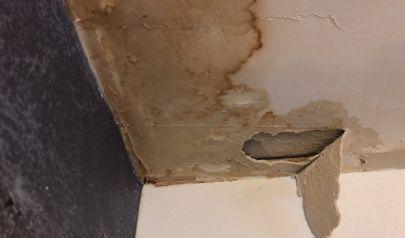
Water doesn’t need a dramatic entry point in these homes. It finds its way in through foundation lines, aging plumbing, or subtle gaps in the exterior, then settles in areas where airflow is restricted. The structure itself encourages this movement. Lower levels stay cooler, insulation varies from one section to another, and enclosed spaces—especially behind finished basement walls—hold moisture longer than the rest of the home.
Across North Olmsted, the homes tell a consistent story—mid-century construction, split-level layouts, and basements that sit just below grade with limited airflow. Walk neighborhoods near Lorain Road or around the older developments off Clague, and you’ll notice how many homes rely on layered updates rather than full structural overhauls. Those updates improve livability, but they also create transitions where materials respond differently to moisture.
Where Moisture Settles in North Olmsted Structures
Once water enters, it doesn’t spread evenly. In North Olmsted homes, moisture tends to follow the path of least resistance before stopping where conditions allow it to linger. That usually means:
-
Behind the basement wall systems, where framing meets the foundation
-
Beneath the flooring, there are transitions between older subfloors and newer materials
-
Around utility areas where airflow is limited
-
Inside exterior-facing walls that hold temperature differences
By the time staining or odor becomes noticeable, the moisture has already settled into these structural pockets.
During inspections, the focus shifts away from what’s visible and toward how the home is holding moisture internally. One section may appear dry while another—just a few feet away—shows elevated readings due to differences in insulation density or air movement. These inconsistencies are what define water damage in this area.
AdvantaClean of the West Side approaches water damage in North Olmsted with attention to these structural patterns. The goal is not just to identify the source, but to understand how the home’s construction allowed moisture to move and remain.
What the Restoration Process Reveals
As materials are opened and conditions are measured, the behavior of moisture becomes clearer. In homes throughout North Olmsted, water damage tends to present in layers. Surface materials may begin to dry, while deeper structural components continue to hold moisture due to limited exposure to air circulation.
Instead of removing materials broadly, technicians work with precision—opening specific areas where moisture is trapped and allowing controlled airflow to reach those spaces. Air movement is directed based on how the structure responds, not just on the size of the room. Dehumidification is adjusted as conditions shift, ensuring that moisture is drawn out of deeper materials rather than redistributed.
What becomes evident during this phase is how differently each section of the home behaves. Areas tied to older construction often retain moisture longer, while newer sections may dry more quickly. That imbalance is where long-term environmental issues can develop if not addressed fully.
AdvantaClean of the West Side has seen this pattern repeatedly in North Olmsted homes, particularly where renovations have introduced new materials into older frameworks without changing how air moves through the structure.
Restoring Balance to the Indoor Environment
Drying materials is only part of the outcome. The larger goal is to bring the home back into balance—where moisture is no longer held in isolated areas, and airflow supports consistent conditions throughout the structure.
In North Olmsted, that means accounting for how seasonal humidity interacts with below-grade spaces and how enclosed areas manage air exchange over time. When moisture settles unevenly, the home adapts to it. Restoring stability involves correcting that imbalance so the structure no longer supports those conditions.
The initial intrusion doesn’t define water damage in North Olmsted homes—it’s defined by how the structure holds onto moisture afterward. Addressing that behavior is what ultimately protects the indoor environment moving forward.
AdvantaClean of the West Side, OH
31335 Industrial Pkwy Unit 1, North Olmsted, OH 44070
(440) 568-0300
https://maps.app.goo.gl/haE7CZR17uQU6AfN6