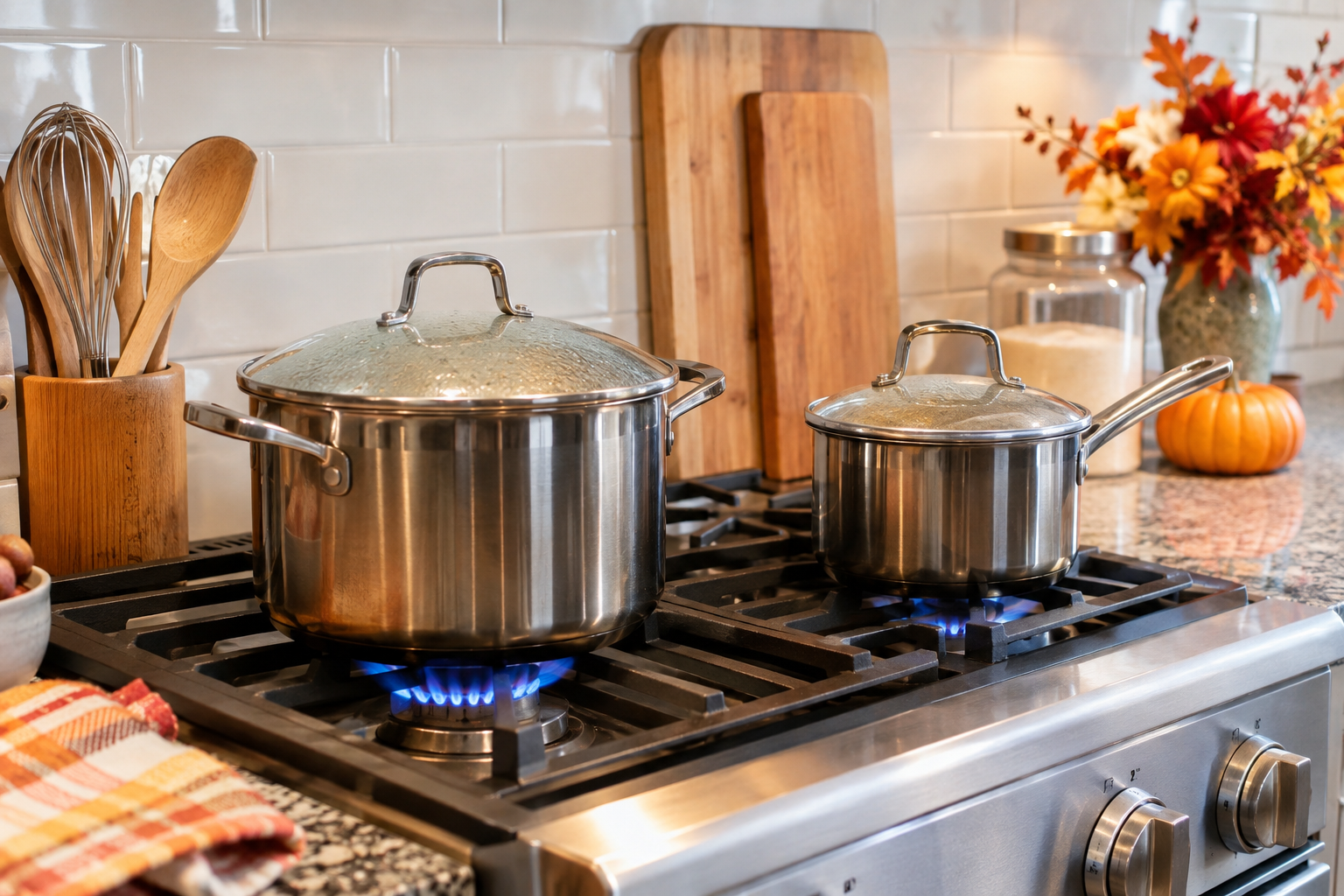
Few rooms welcome the holiday spirit like a warm, fragrant kitchen filled with simmering sides, freshly baked pies, and lively chatter. Yet Thanksgiving places extraordinary demands on cooking spaces that usually handle quieter family suppers. Long roasting hours, multiple hot appliances humming simultaneously, and a constant flow of visiting relatives can easily disrupt kitchen focus.
Cooking is the leading cause of reported residential fires, and Thanksgiving produces more home kitchen blazes than any other day of the year. Balancing hospitality with steady safety awareness lets you protect your household while preserving the joy of the feast.
Clear Worktops and Prepare the Space
A successful Thanksgiving dinner begins well before the first burner lights. Clear decorative runners, mail piles, and non-essential gadgets off your prep surfaces to have generous elbow room for managing heavy, scalding roasting pans without brushing against clutter. Check that appliance cables sit securely without stretching across walkways, and press the test button on nearby smoke alarms to confirm battery power.
Stay Attentive to Active Cooking and Guests
Because unattended equipment causes most kitchen flare-ups, staying close to active heat sources is paramount. High-temperature methods like frying, grilling, or searing demand your constant presence, as fats and oils can ignite within moments. Even slow-baked casseroles and low-simmering gravies require regular checks, making wearable timers or phone reminders essential while you step into the hallway to greet arriving friends.
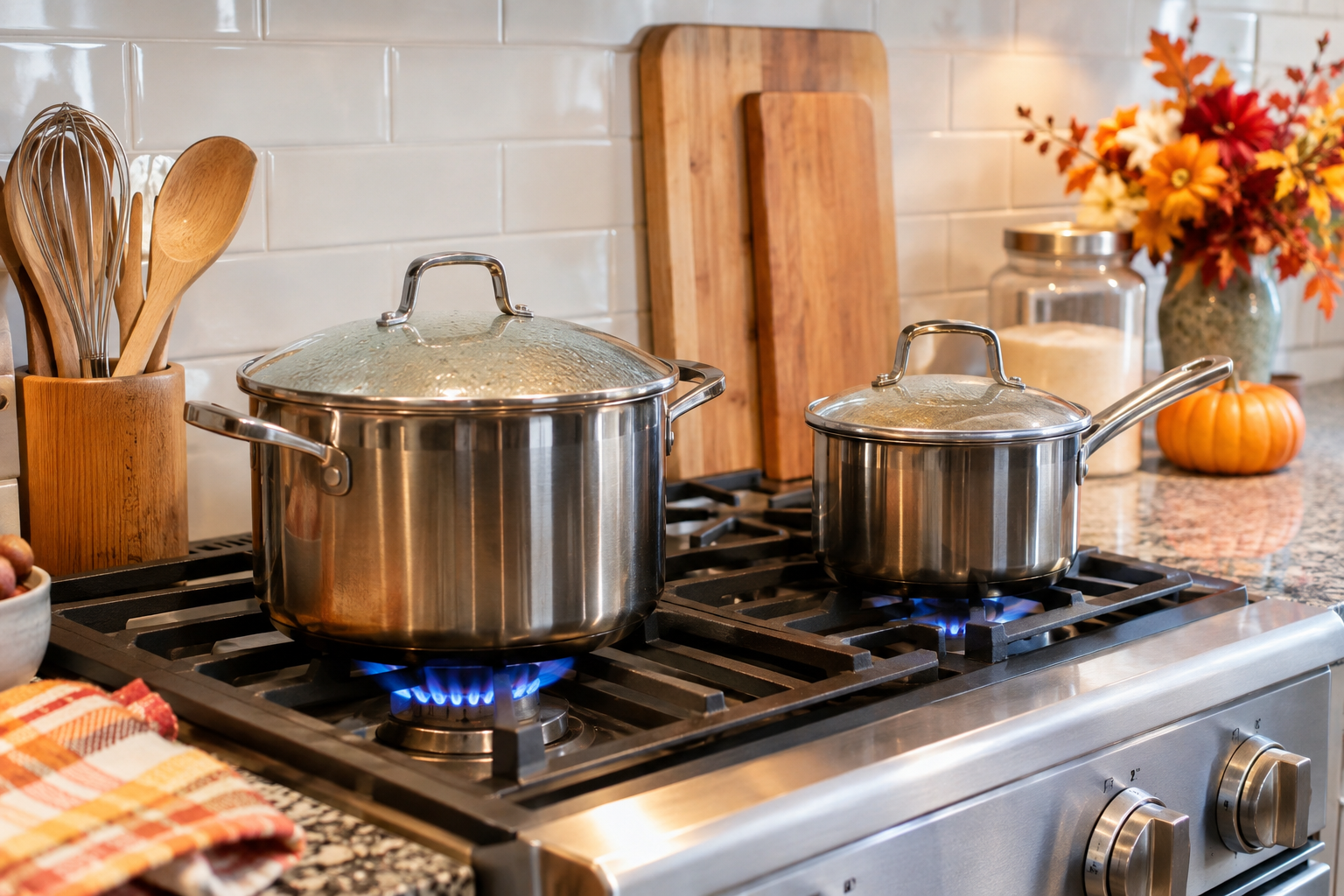
Creating calm zones around cooking appliances protects guests and the menu. Set up quiet craft tables or appetizer trays in adjacent dining areas to guide curious children and pets away from busy work zones. Turn saucepan handles inward toward the back of the cooker to prevent sleeves from overturning scalding liquids, and keep paper napkins, tea towels, and cardboard packaging far from heating elements.
Handle Cooking Oils and Turkey Fryers Safely
Working with hot cooking fat requires care. If cooking oil smokes, turn off the burner immediately and let the pan cool. Never pour water onto burning fat, as it turns to steam and scatters burning droplets across worktops and curtains. Smother minor flare-ups by sliding a tight-fitting metal lid across the rim to deprive the fire of oxygen. Evacuate everyone outside and call emergency services without hesitation if flames climb or spread.
Outdoor poultry fryers produce intense and require caution. Always place the fryer outdoors on a flat, stable patch of concrete or firm ground, well away from timber fencing, eaves, and exterior walls. Follow the appliance handbook carefully, and confirm the poultry is completely thawed and dried beforehand. Hidden moisture pockets in chilled flesh can cause bubbling hot fat to boil over open burner flames.
Address Smoke, Soot, and Water After an Incident
Even a small flare-up can leave sticky soot residues, pungent odors, and aerosolized grease that migrate into nearby living areas, dining chairs, and window drapes. Water used during emergency extinguishing can also cause structural moisture issues that need quick attention to protect flooring and baseboards.
Once emergency officials confirm the building is safe to enter, photograph all visible damage for your insurer. Avoid scrubbing charred surfaces with domestic soaps, which can drive corrosive carbon deeper into porous finishes.
Restore Cleanliness With Professional Care
Specialist cleaning teams assess affected structural framing, cabinetry, and soft furnishings to deploy targeted neutralising agents based on the specific temperatures and materials involved. When a holiday accident leaves soot, scorch marks, or heavy smoke lingering inside your home, AdvantaClean provides thorough fire and smoke remediation services designed to restore clean, healthy living conditions. To explore professional restoration options or speak with a local participating branch, visit https://www.advantaclean.com/services/fire/fire-damage/ or call (877) 800-2382.