Winter preparation for a commercial property is an operational strategy just as much as a facilities maintenance task. Between extensive plumbing runs, large-scale HVAC systems, flat roof expanses, and varied tenant schedules, commercial facilities carry unique structural vulnerabilities. When sub-freezing temperatures arrive, an overlooked pipe run inside an unheated plenum or a sluggish roof drain can trigger catastrophic disruptions that extend far beyond the initial failure point.
Creating a structured, documented winterization plan gives facility directors, property managers, and building engineers the tools to identify weaknesses early and maintain normal business operations throughout the winter months.
Frame Winterization as an Operational Priority
Commercial buildings differ substantially from residential properties in both scale and occupancy. A single ruptured supply line above an office drop ceiling can ruin expensive IT infrastructure, destroy inventory, and displace multiple business tenants for weeks.
Approaching seasonal protection from an operational mindset ensures accountability across every department:
- Assign specific task ownership: Designate trained team members to inspect specific mechanical rooms, exterior risers, and drainage paths rather than relying on informal walk-throughs.
- Establish inspection timelines: Complete all physical surveys and heating checks during autumn, well before the first overnight freeze.
- Coordinate tenant protocols: Communicate seasonal guidelines to commercial tenants regarding space heaters, holiday thermostat setbacks, and proper reporting pathways for minor leaks.
Map Vulnerable Plumbing and Temperature Pockets
Uneven thermal distribution is common across large commercial buildings. Heated office floors may stay comfortable while back-of-house utility areas dip near freezing.
Focus inspection routines on high-risk, unconditioned building zones:
- Identify cold pockets: Thoroughly survey loading docks, mechanical rooms, fire sprinkler riser closets, entry vestibules, and plumbing chases running along exterior walls.
- Protect exposed supply lines: Wrap vulnerable pipes with commercial-grade insulation sleeves or thermostatically controlled heat tracing cables installed strictly to manufacturer specifications.
- Audit shut-off accessibility: Clearly label every main and sectional water isolation valve. Confirm that valves turn freely and that building engineers carry the proper keys or access badges to reach mechanical closets instantly during an emergency.
- Service backflow preventers and exterior spigots: Drain, blow out, and isolate exterior irrigation systems, courtyard hose bibs, and unheated outdoor plumbing loops.
Clear Roof Drainage and Inspect Building Envelopes
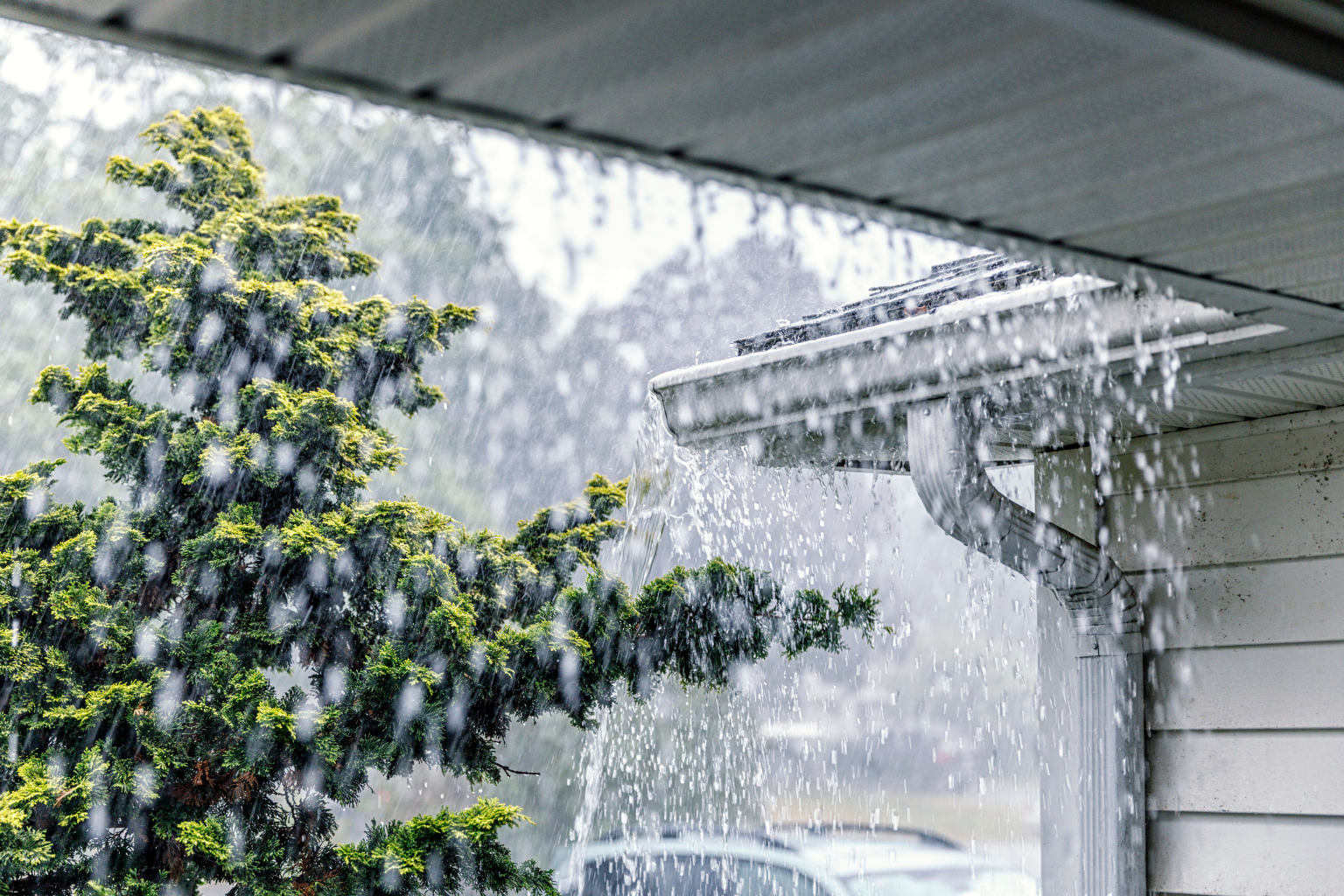
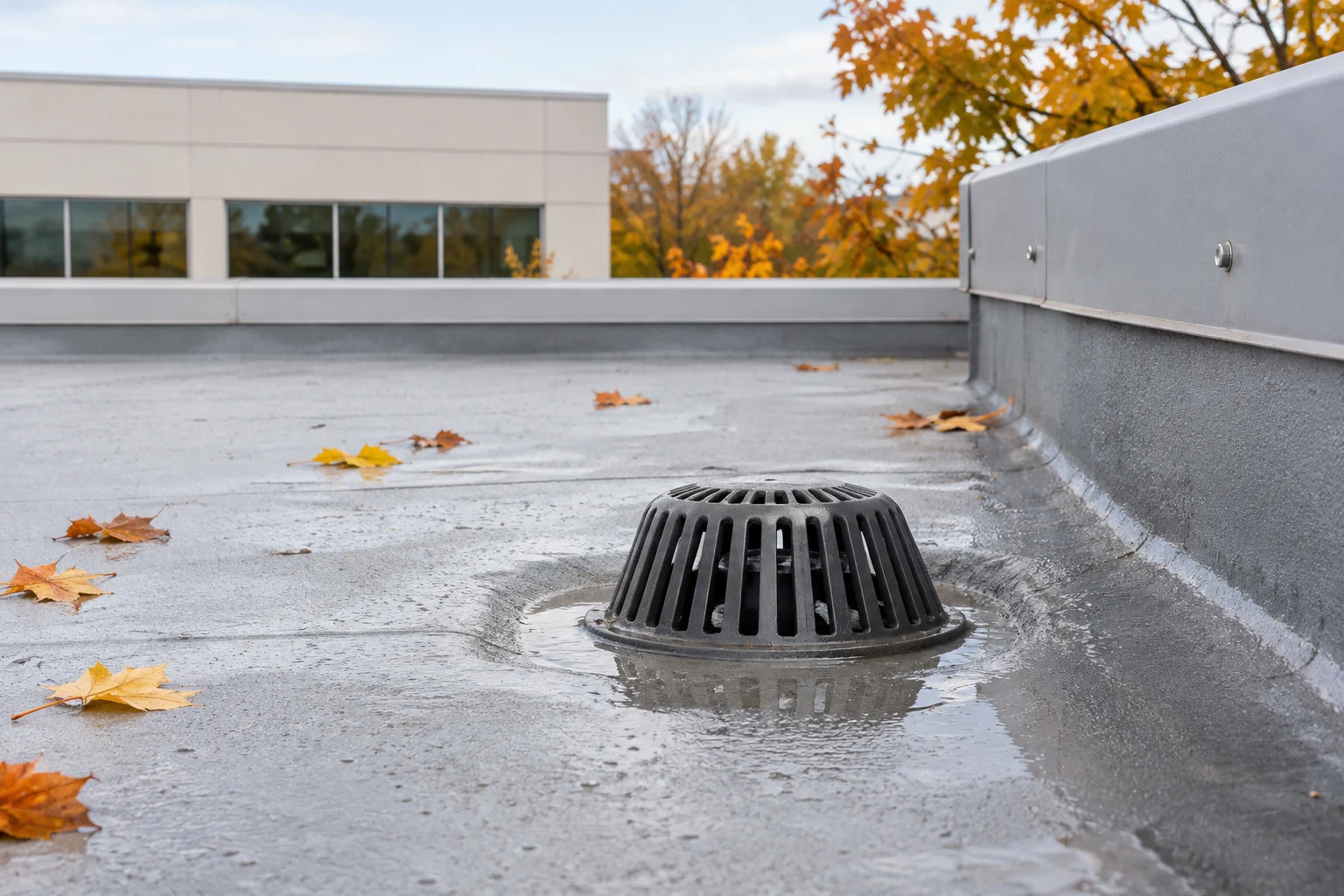
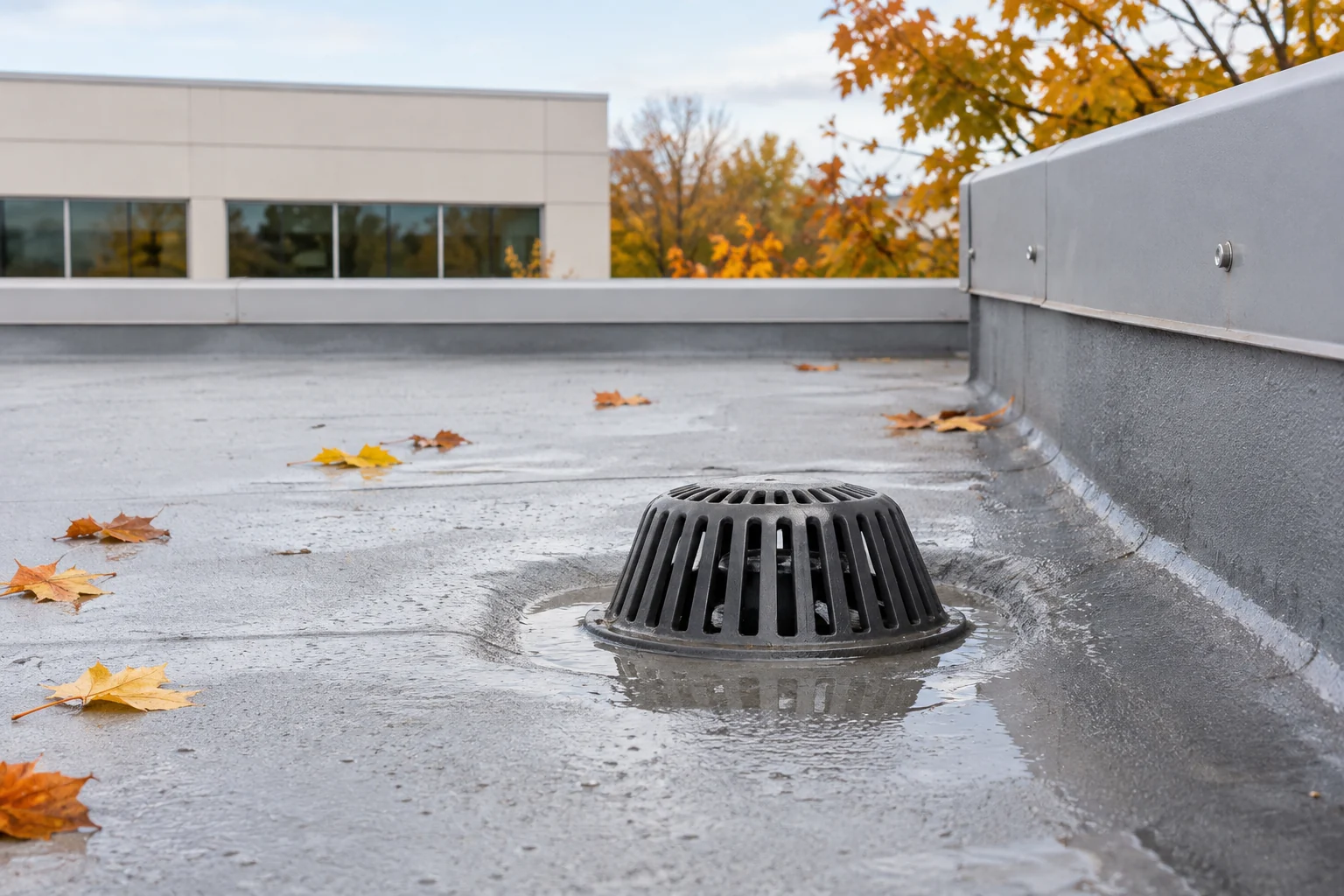
Flat and low-slope commercial roofs endure immense stress during winter freeze-thaw cycles. Stagnant meltwater trapped behind clogged drains can freeze into heavy ice sheets, compromising roof seams and introducing hidden leaks into ceiling cavities.
- Clear primary and secondary drains: Remove autumn leaves, twigs, and accumulated grit from internal roof drains, scuppers, and downspout heads to ensure water exits the roof line without ponding.
- Inspect roof penetrations: Examine the flashing around HVAC rooftop units, exhaust vents, skylights, and parapet coping walls for cracking or separation.
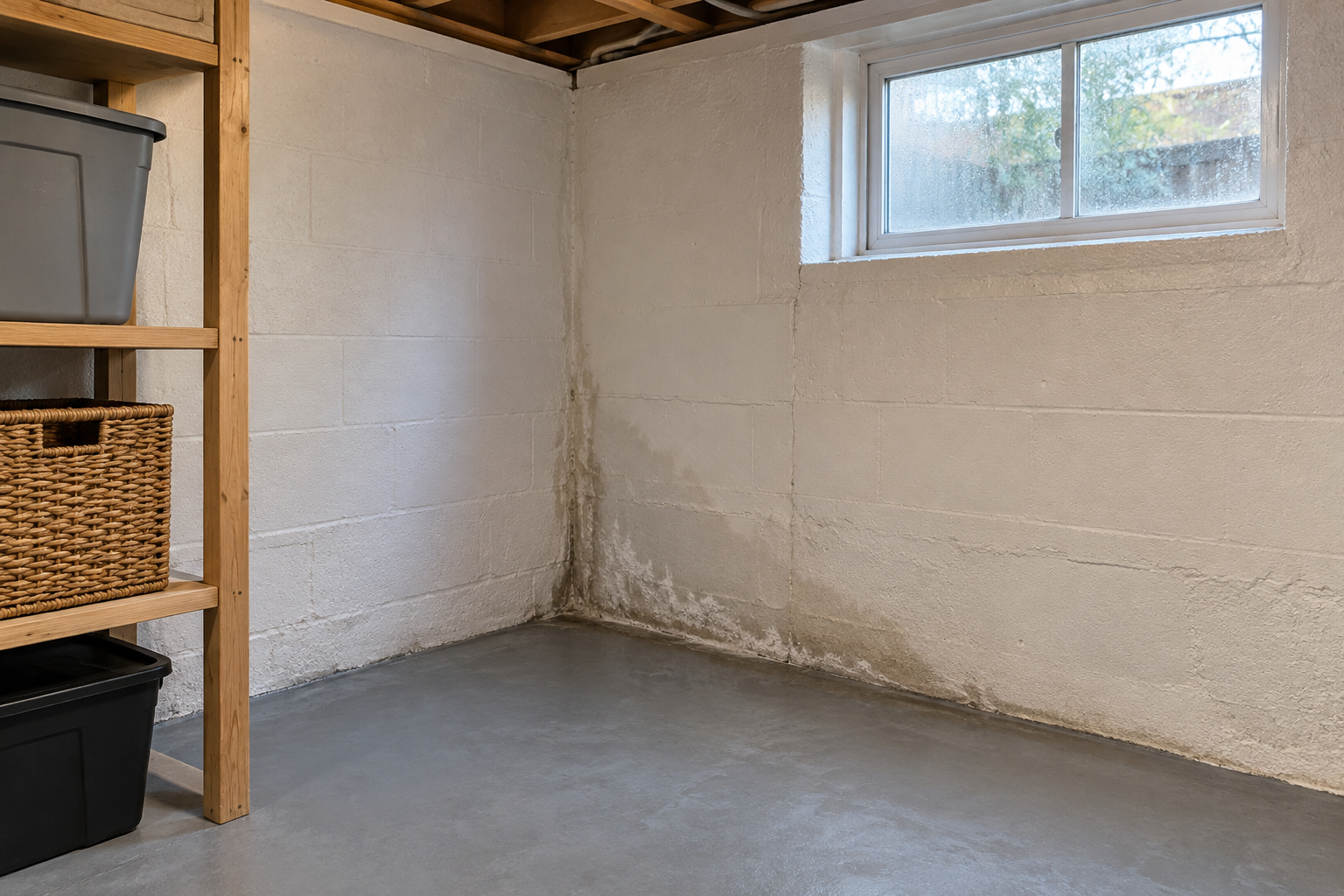
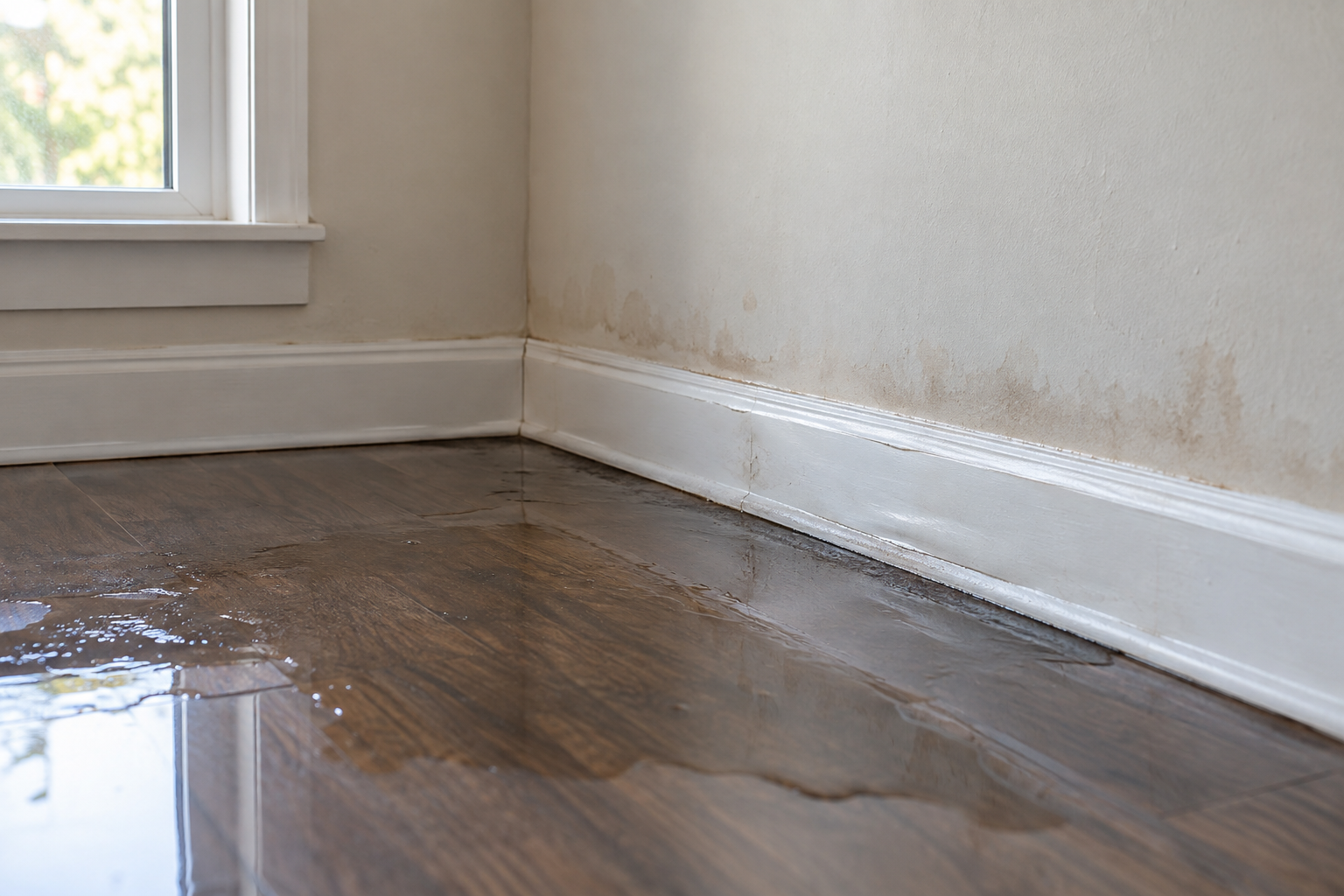
- Investigate interior ceiling blemishes: Never treat a discolored ceiling panel as purely a cosmetic nuisance. Water traveling along structural steel decking can pool far from the original exterior breach, saturating concealed insulation and drywall partitions long before dripping onto office carpeting.
Secure Unoccupied Suites and Plan for Off-Hours Emergencies
Commercial properties face their highest damage risk when buildings sit empty. Long holiday weekends, overnight closures, and vacant tenant suites present quiet windows where an unobserved pipe break can run for hours.
- Calibrate night and weekend setbacks: Avoid aggressive energy-saving temperature drops in unconditioned or perimeter zones. Maintain interior space temperatures at a minimum of 55 degrees Fahrenheit (13 degrees Celsius) to protect plumbing within exterior wall cavities.
- Monitor vacant lease spaces: Conduct regular physical walk-throughs of unoccupied tenant suites to verify that ambient heating remains active and that fixtures are not dripping.
- Streamline emergency escalation protocols: Maintain updated emergency rosters for facilities staff, property managers, key tenant contacts, and restoration specialists. Ensure automated building management system (BMS) alarms for low temperatures or water detection route directly to 24/7 on-call personnel.
Maintain Detailed Pre-Season Documentation
Thorough documentation provides operational clarity and structural protection if severe winter weather impacts your facility.
- Capture photo records: Photograph roof conditions, mechanical assets, drainage scuppers, and high-risk plumbing assemblies before cold weather sets in.
- Log maintenance and repairs: Keep detailed service records of boiler checkups, backflow tests, and roof sealant repairs.
- Clarify mitigation authority: Establish pre-approved authorization limits so facility managers can initiate immediate emergency water extraction and drying services without waiting for delayed committee approvals.
Professional Commercial Restoration Support
Even with rigorous seasonal maintenance, extreme winter weather events, severe ice dams, and unexpected mechanical failures can still occur. When water enters a commercial space, rapid response is crucial to extracting moisture, salvaging building assets, and keeping commercial tenants operational.
If winter storms or plumbing emergencies affect your commercial facility, the certified specialists at AdvantaClean deliver rapid, large-scale commercial water mitigation and structural drying services tailored to minimize business interruption. To review available commercial services or consult with a local specialist, check out our commercial services page or call (877) 800-2382.