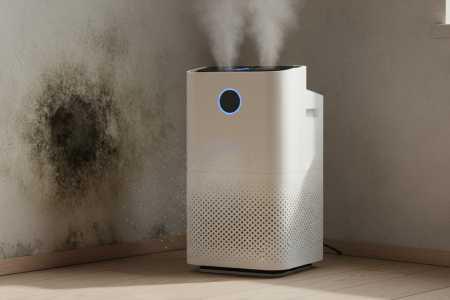
Discovering a mold issue in your Fort Lauderdale, Hollywood, or Plantation home can trigger immediate concern. In our humid South Florida climate, mold growth is a common and persistent problem. As you research solutions, a pressing question arises: can an air purifier solve your mold problem? While air purifiers are powerful tools for improving indoor air quality, understanding their specific role in mold remediation is crucial. This article cuts through the confusion, explaining what air purifiers can and cannot do, how to choose the right one, and why they are just one part of a complete strategy for a mold-free home.
Understanding the mold threat in South Florida homes
Mold is not just an unsightly nuisance; it's a living organism that reproduces by releasing microscopic spores into the air. These spores are present everywhere, both indoors and out, but become a problem when they land on a damp surface and begin to colonize. In Broward County, high humidity, frequent rain, and condensation create ideal breeding grounds. Once established, a mold colony continuously releases new spores and microbial volatile organic compounds (mVOCs) into your home's air.
Inhaling these spores and compounds can lead to a range of health issues, from allergic reactions like sneezing and itchy eyes to more severe respiratory problems, especially for those with asthma or compromised immune systems. Often, a persistent musty smell is the first clue homeowners have of a hidden mold problem. It’s critical to understand that if you have active mold growth, you are dealing with both a source (the wet colony) and a symptom (the airborne spores).
What air purifiers can actually do for mold
An air purifier is designed to clean the air that passes through it. When it comes to mold, a purifier with the correct technology can be highly effective at managing the airborne symptom—the spores.
Capturing airborne spores
The primary benefit of a quality air purifier during a mold issue is its ability to remove mold spores from the indoor air. By pulling air through a dense filter, it traps these microscopic particles, preventing you from inhaling them and stopping them from settling onto new damp surfaces elsewhere in your home. This can provide significant relief from allergy and asthma symptoms while you address the root cause.
Reducing cross-contamination during remediation
This is where air purifiers become an essential professional tool. During professional attic mold remediation or any mold removal process, specialists use heavy-duty air scrubbers equipped with HEPA filters. These devices create negative air pressure in the work area, capturing spores stirred up during the cleanup and preventing them from spreading to clean areas of your home. It’s a critical containment step.
Improving overall indoor air quality (IAQ)
Even after the active mold is removed, an air purifier helps maintain a healthier environment by continuously filtering out residual spores, dust, pollen, and other allergens. This is particularly valuable in South Florida, where outdoor humidity constantly threatens to create new indoor moisture problems.
The critical limitations of air purifiers
It is vital to set realistic expectations. An air purifier is a support tool, not a standalone solution.
They do not kill or remove active mold growth
This is the most important limitation. An air purifier does nothing to address the wet, active mold colony growing on your drywall, under your floor, or in your attic. It only cleans the spores already in the air. As long as the colony exists, it will continue to produce spores faster than a consumer-grade purifier can remove them. Think of it like using a towel to mop up water from an overflowing sink without first turning off the tap.
They cannot address the moisture source
Mold cannot grow without moisture. An air purifier does not fix leaking pipes, roof leaks, poor ventilation, or foundation seepage. Without identifying and resolving the source of moisture, mold will keep coming back, rendering the air purifier a perpetual, and losing, battle.
Not all air purifiers are effective against mold
The market is flooded with devices that make bold claims. Purifiers that use only ionizers, ozone generators, or basic dust filters are largely ineffective against mold spores. Some, like ozone generators, can be harmful to your health. Knowing what technology to look for is key.
Choosing the right air purifier for mold spores
If you are using an air purifier as part of your mold response plan, selecting the correct technology is non-negotiable.
The essential hepa filter
HEPA (High-Efficiency Particulate Air) is the gold standard. A true HEPA filter can capture at least 99.97% of particles as small as 0.3 microns. Mold spores typically range from 1 to 30 microns, making them easily trapped by a genuine HEPA filter. Always verify that the product states it has a "True HEPA" or "HEPA-type" filter may be less effective.
The role of activated carbon
While HEPA captures spore particles, a substantial activated carbon filter is crucial for adsorbing moldy odors and those mVOCs (the gases that cause the musty smell). A unit with a thick carbon bed will be far more effective at eliminating odors than one with a thin carbon coating on another filter.
What to avoid: Ozone generators
Beware of purifiers that generate ozone, sometimes marketed as "activated oxygen" for mold. Ozone is a lung irritant and can worsen asthma and other respiratory conditions. The EPA and CDC warn against using ozone generators in occupied spaces. They are not a safe or recommended solution for mold problems.
The professional mold remediation process: Where purifiers fit in
For confirmed mold growth, a professional, multi-step approach is the only way to guarantee the problem is solved. Here’s how air purification fits into the professional strategy:
-
Inspection & Moisture Diagnosis: Professionals first find all mold and, more importantly, the moisture source. This could be related to past hidden water damage in your Hollywood home or a chronic humidity issue.
-
Containment: Before any removal begins, the area is sealed with plastic. Professional-grade HEPA air scrubbers are turned on to create negative pressure and prevent spore migration.
-
Removal & Cleaning: Affected porous materials (like moldy drywall or insulation) are safely removed. Non-porous surfaces are deep-cleaned with antimicrobial agents.
-
Drying: The area is thoroughly dried to ensure no residual moisture remains, preventing immediate regrowth.
-
Restoration: Rebuilding occurs, such as replacing drywall or flooring.
-
Post-Remediation Verification & IAQ Management: The area is tested to ensure spore counts are safe. A recommendation for ongoing moisture control and potentially a home air purifier for maintenance may be provided.
Understanding that mold removal in Weston, Florida homes is not instantaneous highlights why this process is methodical. Air scrubbers are critical in steps 2 and 5, but they work in concert with physical removal and moisture control.
Frequently asked questions about air purifiers and mold
Can an air purifier completely get rid of mold in my house?
No. An air purifier cannot remove active mold growth from surfaces. It can only filter spores from the air. The mold colony itself must be physically removed, and the moisture source fixed.
I have a musty smell but no visible mold. Will an air purifier help?
An air purifier with a large activated carbon filter can reduce a mild, generalized musty odor. However, a strong, persistent musty smell often indicates hidden mold growth. In this case, identifying the odor source is crucial, as the purifier is only masking the symptom of a larger problem.
Should I run an air purifier before, during, or after mold cleanup?
The most critical time is during professional cleanup (to contain spores). Running a good HEPA purifier after remediation is excellent for maintaining clean air. Running one before addressing the growth offers only temporary, minor symptom relief.
Where should I place an air purifier for mold?
For a whole-house issue, place it in the room where you spend the most time (e.g., bedroom) or in a central location like a hallway. For a localized problem (like a moldy bathroom), place it in that room with the door closed. Ensure the unit’s Clean Air Delivery Rate (CADR) is appropriate for the room size.
Are UV-C lights in air purifiers effective against mold?
UV-C light can kill mold spores that pass directly in front of the bulb at close range. However, the exposure time in a typical purifier is often too short to be fully effective. UV-C should be considered a supplemental feature, not a replacement for a HEPA filter, which physically removes the spores.
The bottom line: Purifiers are part of the solution, not the solution
Air purifiers with True HEPA and activated carbon filters are excellent tools for managing airborne mold spores and odors. They provide health symptom relief and are indispensable for containing spores during professional cleanup. However, they are a secondary measure.
The unequivocal first step for any mold issue is to eliminate the moisture source and remove the active growth. This often requires professional expertise, especially for larger infestations or potentially toxic black mold in Plantation, FL homes.
If you suspect mold in your Ft. Lauderdale area home, don't rely on an appliance to solve it. Contact the mold remediation experts at AdvantaClean of Fort Lauderdale. We will conduct a thorough inspection, identify and fix the moisture problem, safely and completely remove the mold using professional containment and HEPA filtration, and restore your home to a safe, healthy condition. Call us today for a consultation and breathe easier knowing the job will be done right.