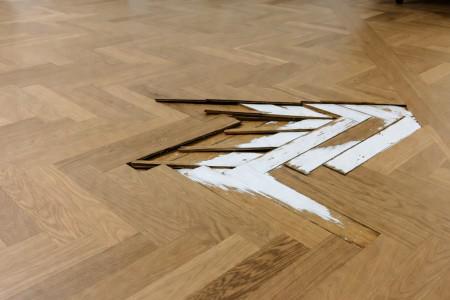
Few things feel worse than walking across your hardwood floor and noticing a dark stain, a warped board, or that unmistakable musty smell telling you moisture has been hiding where it should not be. Hardwood floors are one of the most beautiful and valuable features in a South Florida home. They are also one of the most vulnerable. In our humid climate, water damage to hardwood floors is not a matter of if. It is a matter of when. Whether it comes from a slow plumbing leak, a sudden burst pipe, or the relentless humidity that creeps through crawl spaces, water wreaks havoc on wood. The question every homeowner faces is whether that damage can be repaired or if the floor needs to be replaced. The answer depends on many factors, but the most important one is time. Acting quickly gives you the best chance of keeping your floor intact.
What water actually does to hardwood
Understanding why hardwood floors suffer so badly from water damage starts with understanding what wood really is. Wood is a natural material made up of millions of tiny hollow cells designed to transport water up and down a living tree. Those cells never lose their ability to absorb moisture. When dry wood gets wet, the cells swell. When the surrounding air drops in humidity, the cells shrink. This constant expansion and contraction is normal in small amounts. But when a significant amount of water soaks into a hardwood floor, the swelling becomes extreme. Boards push against each other, causing edges to raise higher than the centers in a condition called cupping. If the pressure continues, boards can lift completely off the subfloor in a condition called buckling.
Beyond the physical deformation, standing water also leaves dark black or gray stains on the wood. These stains are not just cosmetic. They often indicate that minerals, tannins, or biological growth have penetrated deep into the wood fibers. Sanding away the surface will not remove them. Black mold in Plantation, FL homes is a serious concern that sometimes lurks beneath seamless hardwood, growing on the dark subfloor beneath. The subtle signs of hidden water damage in your Hollywood home often go unnoticed, quietly weakening your floor's foundation.
What affects the cost of hardwood floor water damage repair
The final price tag for water-damaged hardwood floor repair varies dramatically based on several factors.
Damage severity
Minor surface wear like light scratches or scuffs is the least expensive to fix. Moderate structural issues including deeper gouges, visible water stains, cupping, or squeaky boards might require patching or replacing a few boards. Major structural problems like extensive water damage, rot, severe buckling, or subfloor issues are the most extensive and costly.
Wood species
Economy woods like pine or red oak are more affordable to repair. Premium species like maple, walnut, or exotic hardwoods cost more because the replacement boards are pricier and harder to match. Matching an existing floor's wood type and finish is essential for a seamless repair. If your floor uses a rare or discontinued wood species, replacement boards may be difficult to find, increasing the difficulty and cost.
Area size
The total square footage of the damaged area is obviously a major factor. Small spot repairs under twenty square feet are often quoted as a flat fee project. Larger areas naturally cost more, though per square foot costs generally go down as the repair area increases.
Hidden costs
Repairs often reveal hidden problems that add to the final bill. Subfloor damage is a common surprise. What seemed like a simple board replacement can become much more extensive if rot is discovered underneath. The subfloor must be repaired or replaced before new hardwood can be installed. Moving furniture out of the room, disposing of old materials, and refinishing the entire floor to achieve a uniform appearance can also add significant cost.
Hardwood floor water damage repair cost ranges
Here is what you can expect to pay for different types of hardwood floor repairs in 2025.
Minor scratch and surface repairs
For superficial damage where only the finish is affected, sanding and recoating is the most affordable option. Deeper scratches requiring filling and spot refinishing cost more. A small project of this nature might total a few hundred dollars.
Water stain removal
Light surface stains from clean water that was quickly removed sometimes sand out during a refinishing job. More severe stains that have penetrated the wood may require board replacement. Water damage and cupping repairs fall into a mid range.
Board replacement
Replacing individual damaged boards involves both material and labor costs. The challenge is finding matching wood. If the original flooring is still available, replacement is straightforward. If not, boards may need to be sourced from salvage or a closet to keep the appearance consistent.
Full refinishing
If the floor is structurally sound but the finish is worn or water stained, refinishing the entire floor may be the best option. A good refinishing job will sand away surface stains, restore the wood's natural color, and apply new stain and sealant. For an average sized room, this is a significant but worthwhile investment.
Full replacement
When water damage has penetrated too deeply or affected too large an area, replacement is the only answer. Installing new hardwood in Florida varies based on wood species, plank size, and installation complexity. For a typical living room, replacement costs are substantial but necessary for safety and appearance.
When to repair water-damaged hardwood floors
Repair is the preferred option when the damage is limited and the wood is structurally sound. Here are the situations where repair makes sense.
Minor cupping
If your floor shows slight cupping after a one time water event like a spilled appliance or a small leak, and you dried it quickly, the cupping often flattens out naturally as the wood dries. In many cases, the best thing to do is fix the source of the moisture and simply wait for the floor to dry out over six to eight weeks. Once completely dry, the boards may settle back down and any remaining imperfections can be sanded flat during refinishing.
Isolated stains
If water stains are confined to a small area and have not caused structural damage, sanding and refinishing that section alone may solve the problem. A professional can feather the new finish into the surrounding area so the repair blends in.
Sound subfloor
If the subfloor beneath the hardwood remains dry and solid, repair is usually possible. The subfloor is the foundation. If it is compromised, any new flooring on top will fail.
When to replace water-damaged hardwood floors
Replacement is necessary in several clear scenarios, especially in Florida's humid environment.
Severe cupping or buckling
Persistent cupping that does not resolve after thorough drying, or any buckling where boards have lifted off the subfloor, means the wood fibers have been permanently stretched and deformed. Sanding will not flatten severely cupped boards. Buckled boards have already pulled up fasteners and cannot be reattached.
Visible rot or soft spots
If you can press on a board and feel it compress, or if dark discoloration is accompanied by a crumbly texture, rot has set in. Rotten wood is structurally compromised and must be removed. Leaving it invites further damage and creates conditions for mold growth.
Delaminated engineered wood
Engineered hardwood consists of a thin wood veneer glued to a plywood or fiberboard core. Water can cause the layers to separate, a condition called delamination. Once delaminated, the floor cannot be repaired. The affected planks must be removed and replaced. Check the wear layer thickness before assuming refinishing is possible. Solid hardwood can take multiple sandings, but engineered floors depend entirely on veneer thickness.
Widespread damage
If water damage covers more than a small percentage of the floor, replacement is often more cost effective than attempting to repair individual spots. Patching many scattered boards across a room rarely yields a seamless result, especially as the wood ages and changes color differently in repaired versus unrepaired sections.
The restoration process for water-damaged hardwood floors
Whether you ultimately repair or replace, the process begins the same way.
Immediate steps every homeowner should take
The first hour after discovering water damage is the most critical. Stop the source immediately. If a pipe is burst, turn off the water. If a roof is leaking, put a tarp down or buckets under the drip and call a roofer. If an appliance has overflowed, shut it off and mop up standing water quickly. Remove area rugs and furniture from the wet area. Place fans to circulate air and, if humidity outside is lower than inside, open windows. But do not assume consumer fans will be enough to dry inside wall cavities and beneath flooring.
Professional assessment
Call a water damage restoration company as soon as possible. A professional will use moisture meters and thermal imaging cameras to determine exactly how far the water has spread, both on the surface and into the subfloor. They will also check for hidden moisture behind baseboards and under cabinets. This assessment is essential for making the repair versus replacement decision.
Extraction and drying
Standing water must be extracted with commercial equipment. Industrial dehumidifiers and high volume air movers then dry the area thoroughly. For hardwood floors specifically, professionals use advanced structural drying systems, including negative pressure floor mats and heat drying systems. Once the moisture has been reduced to acceptable levels, the floors need time to reacclimate. This period usually lasts between 30 to 60 days, during which the hardwood may continue to shift in shape or appearance.
Salvage evaluation
Once the floor is completely dry, a flooring expert evaluates whether the wood can be refinished or must be replaced. They consider the extent of warping or cupping, the type and quality of wood, staining or discoloration, subfloor damage, and the risk of future mold growth. If there is any doubt about a successful refinishing job, they will recommend replacement to ensure your satisfaction.
Repair or replacement execution
If repair is chosen, the professional will sand the floor to remove surface stains and flatten minor cupping. They will replace individual bad boards, then apply new stain and sealant. If replacement is necessary, they will remove the damaged hardwood, inspect and repair the subfloor if needed, and install new flooring.
Water damage repairs that protect your Cooper City home prioritize thorough structural drying, often saving natural wood floors by first drying the subfloor.
Does homeowners insurance cover hardwood floor water damage
The answer is it depends, and understanding the details could help you navigate a claim.
What is typically covered
Homeowners insurance usually covers water damage resulting from sudden and accidental incidents. This includes burst pipes, appliance malfunctions like a washing machine hose breaking, accidental overflows, and firefighting water damage. If a pipe bursts and floods your living room, damaging your hardwood floors, your insurance policy may cover the repair or replacement costs.
What is not typically covered
Standard homeowners policies do NOT cover damage caused by natural flooding from storms or hurricanes. Separate flood insurance is required for that. They also do not cover gradual leaks or damage caused by poor maintenance or neglect. If water has been slowly seeping from a pipe for months and you never fixed it, insurance likely will not pay. Groundwater seepage and sewer backups are also generally excluded unless you have specific endorsements.
How the claims process works
If you file a claim, your insurance company will send an adjuster to evaluate the damage. The adjuster's job is to determine whether the flooring can be restored or must be replaced. It is important to note that your water damage restoration technician does not decide that. The decision falls to a flooring professional assigned by your insurance company, typically after the drying process is complete. Insurance companies will not authorize full replacement unless there is clear documentation that the flooring is unsalvageable.
Preventing hardwood floor water damage in Florida
In South Florida, prevention is the best strategy because our climate works against you year round.
Control indoor humidity
Maintain indoor humidity between 45 and 55 percent using air conditioning and dehumidifiers. High humidity alone can cause hardwood floors to absorb enough moisture from the air to cup or crown. <a href="https://www.advantaclean.com/ft-lauderdale-fl/about-us/blog/musty-smell-in-house-identify-mold-mildew--odor-sources/">A musty smell in your house is never normal</a>. It is often the first warning that moisture is building up and wood materials are being affected.
Maintain appliances and plumbing
Inspect washing machine hoses, refrigerator water lines, dishwasher connections, and under sink plumbing regularly. Replace aging hoses before they fail. Fix small drips immediately.
Attic mold remediation teaches us that proper ventilation stops moisture condensation, which can drip down and destroy hardwood floors below.
Act fast after spills or leaks
Any water on a hardwood floor is an emergency. Mop it up immediately. Set fans blowing across the wet area. If the water came from a leak, do not assume it stopped at the surface. Check for moisture beneath the floor and in the subfloor. If in doubt, call a professional to test with a moisture meter.
Frequently asked questions about hardwood floor water damage
How long do I have to dry my hardwood floors before permanent damage occurs?
In ideal conditions with professional drying equipment, you may have 24 to 48 hours. In South Florida's humidity, that window can be much shorter. If water sits for more than a few hours, get professional help immediately. The longer you wait, the more likely cupping, staining, and mold become irreversible.
Can I walk on water-damaged hardwood floors while they are drying?
Minimize foot traffic as much as possible. Walking on wet or cupped boards can break the locking mechanisms between planks and damage the edges. If you must walk on the floor, do so gently and avoid heavy furniture or appliances.
My floors are cupped. Will they flatten on their own?
Sometimes. If the cupping resulted from a single water event and you dried the floor quickly, the boards may flatten as they reacclimate over six to eight weeks. If the cupping persists after full drying, sanding will be required. If the cupping is severe or the wood has been wet repeatedly, replacement may be necessary.
Can dark water stains be sanded out?
Light surface stains sometimes sand away completely. Dark black or gray stains that have penetrated deep into the wood often cannot be removed, no matter how much you sand. Those boards will need replacement.
Is engineered hardwood better for Florida homes than solid wood?
Engineered hardwood is generally more resistant to humidity and temperature changes than solid wood. It is constructed in multiple layers, which reduces expansion and contraction. Many South Florida homeowners choose engineered hardwood for this reason. However, engineered wood has a thinner wear layer and can only be sanded once or twice compared to solid wood's multiple sandings.
Why does my hardwood floor smell musty after getting wet?
A musty smell means moisture has penetrated the wood and mold or mildew is beginning to grow. The odor will not go away on its own. The floor needs to be dried thoroughly, and the affected areas may need cleaning with antimicrobial treatments. If the smell persists after drying, mold has likely grown inside the wood, and replacement of those boards is the only solution.
The bottom line on hardwood floor water damage
Hardwood floor water damage is stressful and potentially expensive. But you have options. Acting immediately is the single most important factor in determining whether your floor can be repaired or must be replaced. In the first few hours, professional extraction and drying can prevent permanent damage. After a day or two, repairs become more difficult and less likely to succeed. After a week, replacement is usually the only practical path.
Professional intervention early in the process gives you the best chance of preserving your floor. Restoration companies use commercial equipment and years of experience to dry wood that might otherwise seem lost. The cost of professional assessment and drying is modest compared to full floor replacement.
If you are dealing with water-damaged hardwood floors in Fort Lauderdale or anywhere in Broward County, do not wait to see what happens. Call a professional who can assess the damage, dry the floor properly, and give you an honest answer about whether repair or replacement is the right choice for your home. The clock matters. Every hour counts.
Visit AdvantaClean of Fort Lauderdale on Google Maps to see their location, read customer reviews, and get contact information. Their certified technicians understand South Florida's unique moisture challenges and can help you determine the best path forward for your hardwood floor. Do not let water damage compromise the beauty and value of your home.