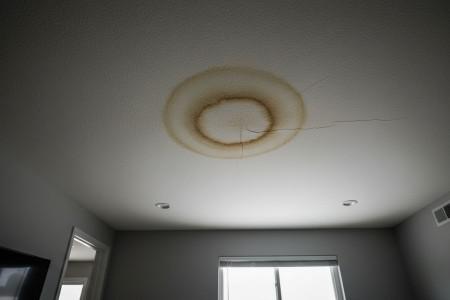
You spot it while lying in bed or sitting on the couch: a yellowish-brown ring on your ceiling. Your heart sinks. You immediately think of a leaky roof or a burst pipe. But when you check during the next rainstorm or inspect the plumbing above, everything seems dry. No active dripping. No obvious source. So where did the stain come from? For homeowners in Fort Lauderdale, Hollywood, Plantation, and across Broward County, ceiling stains without active leaks are surprisingly common. Understanding what's really happening overhead can save you from unnecessary repairs—or alert you to problems you didn't know you had.
The mystery of the dry ceiling stain
A water stain on your ceiling is evidence that moisture was present at some point. But "was present" and "is present" are two very different things. The stain you see today could be from a problem that resolved itself months ago. Or it could be a warning sign of a hidden issue still actively damaging your home.
Before assuming the danger has passed, it's essential to understand the three hidden causes that explain most ceiling stains when no active leak is visible.
Hidden cause #1: Past leaks that never fully dried
The most common explanation for a ceiling stain without active water is simple: the leak stopped, but the damage remains.
What happened
At some point in the past—weeks, months, or even years ago—water penetrated your ceiling. Maybe a roof leak during a storm. Maybe a plumbing pipe that has since been repaired. Maybe condensation from an HVAC unit that was later fixed. The water source stopped, but the evidence stayed.
Why the stain remains
When water soaks into ceiling materials, it leaves behind more than just moisture. Here's what's really happening:
Dissolved minerals: Water that passes through roofing materials, wood, or drywall picks up minerals, tannins, and other compounds. When the water eventually evaporates, these dissolved solids remain, creating that characteristic yellowish-brown stain.
Material discoloration: Gypsum, paper, and paint permanently change color when saturated. Even after complete drying, the material may never return to its original appearance.
Embedded particles: If the water came from outside during a storm, it carried airborne particles, dust, and pollutants that deposited in your ceiling as the water dried.
How to tell if it's truly dry
A past leak stain that's completely dry is harmless cosmetically but may still indicate incomplete drying. To check:
-
Touch the stain gently. Does it feel cooler than the surrounding ceiling? That suggests residual moisture.
-
Look closely at the edges. Dry stains have crisp borders; active moisture creates feathered, spreading edges.
-
Check after rain. Does the stain darken or expand when it storms? If not, the source is likely resolved.
-
Consider professional moisture testing. Hidden water damage in Hollywood homes often lurks behind seemingly dry surfaces.
What to do
If the stain is confirmed dry, you have options:
-
Paint over it with stain-blocking primer and ceiling paint
-
Leave it as is if appearance doesn't bother you
-
Investigate further if you suspect incomplete drying behind the ceiling
Hidden cause #2: Condensation and humidity buildup
This cause surprises many homeowners because it doesn't involve a leak at all. The water comes from the air itself.
How condensation forms on ceilings
Warm, moist air rises. In Florida homes, that's a constant reality. When warm, humid air reaches a cold surface, condensation occurs. In your attic or ceiling cavity, several cold surfaces exist:
Air conditioning ducts: Uninsulated or poorly insulated ductwork gets cold when AC runs. Warm attic air contacting these ducts creates condensation that drips onto the ceiling below.
Cold roof decking: On cool nights, roof sheathing can drop below the dew point. Moisture condenses and drips onto insulation and ceilings.
Temperature differentials: Rooms with poor ventilation trap humid air that condenses on ceiling surfaces, especially in bathrooms, kitchens, and laundry areas.
The Florida humidity factor
South Florida's year-round humidity makes condensation a perpetual threat. Musty smells in houses often trace back to condensation issues that create chronic moisture without obvious leaks.
Signs of condensation-related stains
-
Stains appear in multiple spots rather than one concentrated area
-
Stains worsen during humid weather, not necessarily during rain
-
Stains are often accompanied by higher indoor humidity readings
-
Stains may appear near vents, ducts, or exterior walls
-
The ceiling feels cool to the touch even when the room is warm
The hidden danger of condensation
Unlike a one-time leak, condensation is often an ongoing issue. Every night or every time your AC runs, moisture accumulates. This repeated wetting and drying cycle:
-
Promotes mold growth in ceiling cavities
-
Degrades insulation effectiveness
-
Weakens ceiling materials over time
-
Creates persistent musty odors
What to do about condensation stains
Addressing condensation requires understanding why it's happening:
Improve attic ventilation: Ensure your attic has proper intake and exhaust ventilation to move air and reduce temperature extremes.
Insulate ductwork: All air conditioning ducts in unconditioned spaces should be properly insulated and sealed.
Add ceiling insulation: More insulation between living space and attic keeps the ceiling warmer, reducing condensation potential.
Control indoor humidity: Use dehumidifiers, exhaust fans, and proper ventilation to keep indoor humidity below 60 percent. Attic mold often starts with condensation issues that eventually spread.
Check bathroom and kitchen fans: Ensure they vent outside, not into attics.
Hidden cause #3: Ghosting and soot deposition
This cause has nothing to do with water at all. Those ceiling stains might not be water stains—they might be something called ghosting.
What is ghosting?
Ghosting is the gradual deposition of dark particles on ceilings and walls, often forming patterns that follow studs, joists, or other framing. It creates the appearance of staining without any moisture involvement.
How ghosting happens
Several factors combine to create ghosting:
Airborne particles: Candles, fireplaces, cooking, smoking, and even normal household dust create microscopic particles that float in indoor air.
Temperature differences: Framing members like ceiling joists conduct heat differently than the insulated spaces between them. These temperature variations create minor air currents and areas where particles preferentially deposit.
Static electricity: In some cases, static charges attract particles to certain surface areas.
The stacking effect: Dark particles accumulate over months and years, gradually creating visible patterns that look like stains.
Why ghosting mimics water stains
Ghosting often produces:
-
Dark streaks or patches that follow ceiling joists
-
Stains near light fixtures or vents
-
Patterns that appear worse in certain lighting
-
Discoloration that doesn't change with weather
Distinguishing ghosting from water damage
Ghosting differs from water stains in key ways:
| Water Stains | Ghosting |
| Yellowish-brown color | Gray to black color |
| Irregular, spreading edges | Patterns follow framing |
| May feel damp or cool | Dry to the touch |
| Changes with weather | Stable appearance year-round |
| Single concentrated spots | Multiple patterned areas |
Is ghosting harmful?
Ghosting itself isn't harmful—it's mostly cosmetic. However, it can indicate:
-
Poor indoor air quality with high particle levels
-
Inadequate ventilation
-
Combustion sources (candles, fireplaces) releasing particulates
-
Potential for other indoor air issues
What to do about ghosting
Identify particle sources: Reduce candle burning, ensure proper ventilation for cooking, and maintain HVAC filters.
Improve filtration: Use high-quality air filters and change them regularly. Consider HEPA air purifiers in problem rooms.
Clean surfaces: Ghosting can often be cleaned with appropriate wall cleaners. Repainting with quality paint may be necessary for severe cases.
Check for hidden mold: Before assuming ghosting, rule out mold. Black mold in Plantation homes sometimes appears as dark ceiling spots that homeowners mistake for ghosting.
When a stain means something more serious
While many ceiling stains are harmless or cosmetic, some indicate ongoing problems requiring attention.
Stains that return after painting
If you paint over a stain and it reappears within weeks or months, moisture is still active. The source remains unaddressed.
Expanding or darkening stains
Stains that grow larger or darker over time signal continuing moisture intrusion. The problem isn't historical—it's current.
Stains accompanied by other signs
Watch for these red flags:
-
Peeling paint or bubbling drywall
-
Soft or sagging ceiling areas
-
Persistent musty odors
-
Visible mold growth near stains
-
Higher than normal humidity in the room
Stains after storms
If stains appear or worsen following heavy rain, roof leaks are likely. What to do after water damage includes investigating storm-related ceiling stains promptly.
The professional inspection advantage
When you can't determine the cause of a ceiling stain, professional help provides answers.
What professionals use
-
Moisture meters: Detect hidden moisture behind ceilings
-
Infrared cameras: Reveal temperature differences indicating wet insulation or active moisture
-
Borescopes: Look inside ceiling cavities without cutting holes
-
Humidity sensors: Measure conditions that promote condensation
What professionals look for
-
Roof condition and potential leak points
-
Plumbing lines above the stain
-
HVAC equipment and ductwork
-
Attic ventilation and insulation
-
Signs of past repairs or previous issues
Preventing future ceiling stains
Regular maintenance
-
Inspect your roof annually and after major storms
-
Clean gutters to prevent water backup
-
Check attic ventilation seasonally
-
Monitor indoor humidity with a hygrometer
Quick response to incidents
If you experience any water event—even minor ones—dry affected areas thoroughly. Water damage repairs in Cooper City often trace back to small issues that weren't addressed promptly.
Humidity control
In South Florida, dehumidifiers aren't optional. They're essential tools for preventing condensation-based ceiling issues. Maintain indoor humidity between 45 and 55 percent year-round.
Documentation
Keep records of any stains, when they appear, and what was happening weather-wise. This helps identify patterns and causes.
Frequently asked questions about ceiling stains
Can I just paint over a water stain?
Only if you're certain the stain is completely dry and the source is resolved. Paint over active moisture will peel and fail. Use stain-blocking primer specifically designed for water stains before repainting.
Why does my ceiling stain keep coming back after painting?
Recurring stains mean moisture is still present. Either the original leak wasn't fixed, condensation continues, or hidden moisture remains in ceiling materials.
Are ceiling stains dangerous?
The stain itself isn't dangerous, but what caused it might be. Water stains can indicate conditions that promote mold growth, structural damage, or ongoing leaks requiring attention.
How do I know if a stain is from an old leak or a current one?
Check during and after rain. If the stain doesn't change, it's likely old. If it darkens, spreads, or feels damp, it's active. Professional moisture testing provides definitive answers.
Can humidity really cause ceiling stains without a leak?
Absolutely. In Florida's climate, condensation from poor ventilation, inadequate insulation, or temperature differentials creates significant moisture that stains ceilings.
Should I cut into my ceiling to investigate a stain?
Not without professional guidance. Cutting into ceilings can release mold spores if present and may create bigger problems. Let professionals inspect first.
The bottom line: Know what you're dealing with
A ceiling stain without an obvious leak isn't necessarily a crisis, but it's also not something to ignore. Whether it's a harmless reminder of a past leak, a sign of ongoing condensation issues, or simply ghosting from indoor particles, understanding the cause helps you make the right decision.
Some stains require nothing more than primer and paint. Others demand professional investigation and remediation. The difference lies in understanding what's really happening above your ceiling—and taking action before small problems become big ones.
Need help solving the mystery of your ceiling stain?
If you're staring at a ceiling stain and can't figure out where it came from or what to do about it, the experts at AdvantaClean of Fort Lauderdale can help. Our certified technicians use advanced moisture detection equipment to find hidden problems and provide clear answers.
Don't let ceiling stains keep you guessing. Request service online to schedule an inspection. Or visit us on Google Maps for our location and contact information. We'll help you understand what's really happening with your ceiling and recommend the right solution for your home.