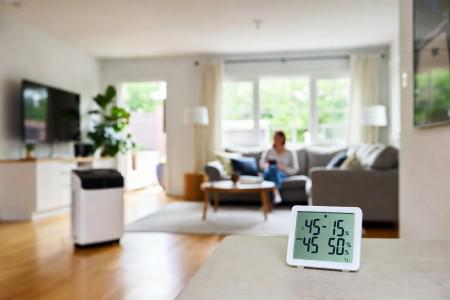
Most Fort Lauderdale homeowners would benefit from a whole home dehumidifier. Whether a particular home needs one depends on the home's construction, the existing air conditioning system, the family's health, and personal tolerance for humidity. This article explains the facts to help homeowners decide.
Fort Lauderdale humidity levels
Fort Lauderdale is known for sticky, humid air throughout most of the year. Even during cooler months, the air often feels damp. The Florida Department of Health recommends keeping indoor humidity low enough to prevent mold and dust mites. Many homes struggle to meet that standard.
Why an air conditioner may not remove enough moisture
Many homeowners assume their air conditioner also works as a dehumidifier. This is partially true but often insufficient in South Florida.
Air conditioners remove moisture as a byproduct of cooling. Warm air passes over cold evaporator coils, the air temperature drops, and moisture condenses out. In drier climates, this incidental dehumidification works well. In South Florida, several factors interfere.
An oversized air conditioner cools a home too quickly. The system finishes its cycle before it has run long enough to extract meaningful moisture. The home feels cool but clammy.
Short cycling occurs when a system turns on and off frequently due to refrigerant problems, dirty filters, or thermostat issues. Moisture does not get pulled out properly.
On mild days when temperatures are comfortable but humidity remains high, the air conditioner may run very little or not at all. It removes no moisture while humid air continues infiltrating the home.
Poor insulation and air sealing allow humid outdoor air to seep inside through gaps around windows and doors. Florida homes built before 2000 often have these issues.
Signs of excess indoor moisture
Several signs indicate indoor humidity is too high.
Physical discomfort includes feeling sticky or clammy even when the thermostat reads a normal temperature. Skin does not feel dry. Hair frizzes indoors. A person may sweat while sitting still.
Visible condensation appears as foggy windows, water droplets on glass doors, or moisture forming on air conditioning vents. In severe cases, water may drip from registers.
Musty odors signal that moisture has found a home somewhere. A musty smell in your house is never normal. It indicates mold or mildew growth. Visible mold or mildew on walls, ceilings, bathroom tile, closet corners, or around windows is a clear indicator. Attic mold remediation is a common service in South Florida because humidity rises and condenses on cold roof decking.
Health symptoms like persistent allergies, asthma flare ups, sinus congestion, or unexplained fatigue that improve when leaving the home may be caused by high humidity and the mold it supports. Dust mites thrive in damp conditions. Mold multiplies rapidly in wet environments.
Rotting or warping appears as peeling paint, bubbling wallpaper, warped wood floors, or soft spots in drywall. Moisture breaks down building materials over time.
How high humidity affects health and home
Research from public health organizations has concluded that building moisture and biological agents lead to increased respiratory symptoms, allergies, and asthma. Damp building exposure has been linked to respiratory symptoms, asthma, and respiratory infections.
When indoor air stays damp for long periods, conditions become ideal for dust mites, mold, bacteria, and other allergens. These allergens circulate through the air and are breathed in by everyone in the home. People with asthma, children, elderly adults, and those with compromised immune systems are most vulnerable.
High humidity also damages the home. Wood absorbs moisture and swells, causing warped floors, sticking doors, and compromised structural framing. Drywall softens and crumbles. Insulation loses effectiveness when wet. Electronics can fail with constant dampness.
Portable dehumidifiers versus whole home systems
If a homeowner decides to improve humidity control, two main options exist.
Portable dehumidifiers are the wheeled units sold at home improvement stores. They are less expensive upfront. However, a portable unit treats only the room where it sits. For a multi bedroom home, multiple units would be needed running constantly. Portable units are also loud, which makes them disruptive in bedrooms or main living areas. The water tank must be emptied daily, sometimes multiple times. When the tank fills, the unit shuts off. Some models offer continuous drain options, but that requires running a hose to a floor drain. Portable units typically last a few years.
Whole home dehumidifiers integrate with the existing HVAC system. The upfront cost is higher, but the advantages are significant. A single system treats every room evenly. It pulls air from the return ducts, passes it through the dehumidifier, and circulates dry air through the supply ducts. The equipment installs in the attic, garage, or utility room, so operation is quiet. No tanks need emptying. The system connects directly to a condensate drain. A humidistat senses conditions throughout the home and adjusts operation automatically. A properly maintained whole home dehumidifier can last many years.
How the technology works
A whole home dehumidifier pulls air from the home through the return ductwork. It passes that air over refrigerated coils that are colder than the air's dew point. Moisture condenses and drips into a drain pan. The now dry air passes over warm condenser coils and returns to the supply ducts, circulating throughout the home.
Unlike an air conditioner, which only dehumidifies when actively cooling, a whole home dehumidifier operates independently. On mild days when the AC does not run, the dehumidifier continues working, removing moisture without overcooling the home.
Modern units integrate with a thermostat or a separate humidistat. The homeowner sets a target humidity level, typically described as comfortable and dry, and the system maintains it automatically. Some newer models offer WiFi connectivity and remote monitoring.
Other benefits of whole home dehumidifiers
Drier air feels cooler than humid air at the same temperature. Once a home's humidity is under control, the thermostat can be raised by a few degrees without noticing a difference in comfort. This lowers cooling costs.
By removing the humidity load from the air conditioner, the AC runs shorter cycles and experiences less wear. That means fewer repairs and a longer lifespan for an expensive system.
Leather furniture, wood cabinets, musical instruments, electronics, and artwork all last longer in stable, moderate humidity.
Dust mites thrive in humid environments and die off when conditions become dry. Less dust means less cleaning and fewer allergens.
The musty odor that seems to linger in many Florida homes disappears when moisture is properly controlled.
When a whole home dehumidifier may not be needed
Not every Fort Lauderdale home requires a whole home dehumidifier.
If a home was built recently with good insulation, proper air sealing, and an HVAC system specifically sized for South Florida's climate, it may already have adequate dehumidification. Testing indoor humidity with a hygrometer under different weather conditions can provide clarity. If readings consistently show low moisture levels without a dehumidifier, one may not be necessary.
In a small apartment or condo, a high quality portable dehumidifier may be sufficient. There are fewer square feet to treat, and emptying a tank once or twice per day is manageable.
If a home has never shown condensation on windows, never produced musty odors, never had mold issues, and no one in the home experiences allergy or asthma symptoms that worsen indoors, the current setup may be working well enough.
Steps to take before buying
Before investing in a whole home dehumidifier, an HVAC system inspection is wise. A professional can check for oversized equipment, short cycling, dirty coils, or refrigerant problems. Fixing those issues sometimes resolves humidity problems without adding a dehumidifier.
Checking for air leaks around windows, doors, and attic hatches can also help. Sealing those leaks reduces moisture infiltration. Adding insulation in the attic can also help by keeping the ceiling cooler and reducing condensation.
If an air conditioning system is old or failing, replacing it with a properly sized unit designed for Florida's climate may be a better first step. Some newer systems have variable speed compressors that run longer at lower speeds, providing better dehumidification.
Only after addressing these underlying issues should a whole home dehumidifier be considered.
Frequently asked questions
What humidity level should I aim for in my Fort Lauderdale home?
A level that feels comfortable and dry, typically where condensation does not form on windows and musty odors do not develop. For most people, this means a noticeable reduction from the sticky feeling of untreated air.
How do I know if my home's humidity is too high?
A hygrometer from any hardware store provides a reading. Taking measurements in different rooms at different times of day gives a clear picture. Persistent condensation, musty smells, or visible mold are also strong indicators.
Will a whole home dehumidifier increase my electric bill?
Yes, but the increase is often modest. Many homeowners find they can raise their thermostat a few degrees because drier air feels cooler, which offsets part of the operating cost.
Can I install a whole home dehumidifier myself?
No. Professional installation is essential. The unit must be properly integrated with the HVAC system, electrical supply, and drainage.
How loud are whole home dehumidifiers?
Much quieter than portable units. The equipment installs in the attic, garage, or utility room. A faint hum from the vents may be noticeable, but it is generally unobtrusive.
Do whole home dehumidifiers require maintenance?
Yes, but minimal. The air filter should be changed or cleaned every few months. The drain line should be checked annually to ensure it is clear. A professional inspection every few years is recommended.
Are there alternatives to whole home dehumidifiers?
Improving ventilation, sealing air leaks, adding insulation, and ensuring the AC system is properly sized can all help. In some cases, these measures alone may be sufficient.
Making a decision
A whole home dehumidifier is a significant investment. For homes that struggle with persistent dampness, condensation on windows, musty smells, or mold growth, the system provides consistent relief. For homes with mild issues, improving the existing air conditioner or using a portable dehumidifier may be enough.
Testing indoor humidity with a hygrometer is a good first step. Having an HVAC professional inspect the system can reveal whether the air conditioner is performing properly. Sealing air leaks and adding insulation are lower cost measures that may reduce the need for a dehumidifier.
Every home is different. The right choice depends on the home's construction, the family's sensitivity to humidity, and the severity of moisture problems. Understanding the options makes that choice easier.