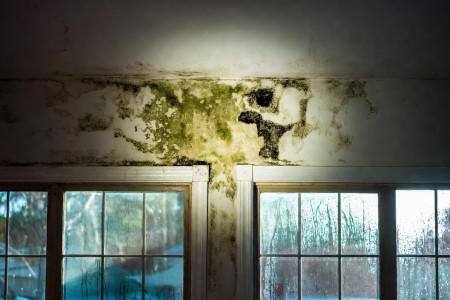
Named storms get most of the attention when Florida homeowners think about storm-related mold. The bigger long-term problem, in most Broward County homes, is not the named storm every few years. It is the ordinary afternoon thunderstorm that rolls through several times a week from May through September, drops an inch of rain in thirty minutes, and drives water into small gaps in the roof, walls, and windows that nobody has ever noticed.
Individually, none of these events looks like damage. Cumulatively, across one summer, they are the single most common source of hidden mold problems in this climate.
This guide covers what actually happens in the 48 hours after a thunderstorm, how wind-driven rain enters buildings even when nothing appears to be leaking, why small storm-related leaks are more dangerous than they look, how to dry your home properly after heavy rain, and how to tell whether post-storm moisture has already crossed into an active mold problem.
The storm-to-mold timeline: what happens in the first 48 hours
Florida records more thunderstorm days per year than any other state, and Broward, Miami-Dade, and Palm Beach counties routinely log more than 70 annually. In peak summer, an afternoon storm several times a week is simply normal. Each event triggers the same sequence in any home with any vulnerability in its envelope.
Hour 0 to 1 — storm active
Wind-driven rain pushes water into whatever openings exist. Roof valleys, ridge caps, plumbing vents, flashing at HVAC penetrations, window seals, sliding door tracks, and stucco cracks all become entry points under heavy rain with sustained wind.
Hour 1 to 6 — immediate aftermath
Water that made it into wall cavities, attic spaces, or above ceilings begins migrating through insulation, along framing, and down interior wall surfaces. In most cases the homeowner sees nothing at all at this stage. The exterior looks fine, the interior looks fine, and the water that entered is out of sight.
Hour 6 to 24 — accumulation
Materials that got wet start holding that moisture. Drywall paper, wood framing, insulation, and any porous surface absorb water. Where a drainage path exists, water reaches interior surfaces and produces the first visible staining, usually on ceilings or upper wall areas.
Hour 24 to 48 — biological phase
Per EPA guidance, mold can begin growing on damp materials within 24 to 48 hours. In Florida summer conditions, with ambient RH around 65 to 75% and outdoor dew points in the mid-70s, the lower end of that window is realistic, not conservative. Materials still wet at the 24-hour mark have very likely started microbial activity by hour 48.
Hour 48 and beyond
If materials have not been fully dried by this point, colonies are forming. Whether they become visible or symptomatic depends on how much water got in, how much airflow reaches the material, and the humidity of the surrounding space.
The critical window is short and easy to miss. A ceiling stain that appears the day after a storm and stops looking wet two days later has not necessarily resolved anything. The material behind the stain can still be well above safe moisture content, and growth may already have started on the back side — which is the side you cannot see.
How wind-driven rain finds its way into walls and attics
Rain falling straight down goes where roofs and gutters are designed to send it. Rain driven by 40 to 60 mph gusts — routine in a Florida summer thunderstorm, with no named storm anywhere — behaves entirely differently. It moves horizontally, penetrates surfaces that normally shed water, and finds every gap in the envelope.
The most common entry paths:
Stucco cracks and hairline separations. Stucco is the exterior finish on most Fort Lauderdale homes. Hairline cracks that are functionally invisible in dry weather become entry points under wind-driven rain. Water enters the crack, wicks along the substrate, and can emerge several feet from where it went in.
Roof flashing failures. Every roof penetration — chimney, plumbing vent, HVAC curb, skylight, dormer — is sealed by metal flashing and sealant. When that sealant ages, cracks, or debonds, wind-driven rain pushes under the flashing and into the deck.
Ridge caps and roof valleys. The two most vulnerable areas on any pitched roof. Rain that would normally run off gets pushed uphill against the shingle or tile lap by wind pressure.
Window seals and glazing gaskets. Even impact-rated windows have gaskets that degrade. Non-impact glazing in older windows is usually worse. Sliding door tracks are especially vulnerable because the track is a horizontal channel that can fill and back water up into the interior.
Vent hoods and exhaust penetrations. Bath fan terminations, dryer vent hoods, and range hood exhausts are engineered to shed water, but wind-driven rain can push past their baffles and into the duct behind them.
Soffit and eave vents. Attic ventilation openings are essential to how the roof assembly works, and they also admit wind-driven rain during severe storms. This is a common and badly overlooked source of attic moisture in South Florida — and because it wets the top side of the ceiling, the homeowner sees nothing until the drywall telegraphs it.
Garage doors. The seal at an overhead door is almost always the weakest point in the envelope. Water under and around a garage door in heavy rain is close to universal.
Once water has entered by any of these paths, it follows gravity and capillarity — which means it can end up in wall cavities, attic insulation, and above ceilings well away from where it got in. This is exactly why the visible sign of a leak so often does not sit under the source of the leak.
Why small leaks after a storm are more dangerous than they look
Homeowners consistently underestimate small storm-related leaks. The mental model is: if it is a small stain and it dries out, it is not a real problem. That model works for a one-time event on a non-porous material. It fails badly for repeated storm cycles on porous materials in a humid climate.
Repetition, not severity, drives the damage
A single wetting event that dries fully within 24 hours may cause no lasting damage at all. The same event repeated ten or twenty times over a summer, on the same materials, with incomplete drying between cycles, produces material that is chronically at elevated moisture content. That is where microbial growth actually establishes itself. Because each individual event looks trivial, the pattern is invisible until a musty smell or visible growth finally announces it.
Drying happens on the visible surface, not in the cavity
A ceiling stain looks dry when the paint stops feeling wet. The gypsum core, the framing behind it, and any wet insulation can still be holding substantial water while the painted face reads dry to the touch. In Florida summer humidity, material inside a closed wall cavity can take a week or more to reach a safe moisture content after the surface looks completely normal.
Paint over the stain does not fix anything
Painting over a storm-related ceiling stain is the most common homeowner response and the least useful one. It hides the visible evidence of moisture, does nothing about the source, and typically means the next storm produces the same stain three feet away rather than in the same spot. Meanwhile the cavity behind the paint keeps accumulating growth.
If a ceiling stain appears after a storm, the first question is not "what color paint matches this." It is "what path did water take to get here, and has that path been closed." For more on separating an old resolved stain from an active one, see our ceiling stain investigation guide.
Drying out your home properly after heavy rain
For most thunderstorm-related moisture events, the damage is small enough that professional water mitigation is not warranted — but the response has to be far more aggressive than "let it air out." The gap between those two extremes is where most homeowners get into trouble.
Start as soon as it is safe
Wet materials do not dry passively in Florida summer humidity. When outdoor dew point is in the mid-70s, opening the windows makes things worse: you are importing moisture, not exporting it. Every hour materials stay wet is an hour closer to growth. Do not wait for tomorrow.
Find the source before you dry
Drying an area still connected to a leaking roof or an unsealed window is wasted effort. Locate where water is entering. If it is not obvious, wait for the next storm and observe — that is a legitimate diagnostic technique, not a delay tactic. Temporary tarping or plastic sheeting on the exterior buys time until a proper repair can be scheduled.
Remove what cannot be dried in place
Carpet pad that got soaked is not salvageable and traps water under the carpet. Saturated insulation, wet cardboard, and porous items sitting in water need to come out. Fabric items should be moved to a dry area and washed or dry-cleaned.
Set up airflow
Multiple fans pointed across the wet area — not at it — move moisture off surfaces and into the air where a dehumidifier or the AC can remove it. Box fans work. Oscillating fans are better. Commercial air movers are best, and are rare in a household. Aim them along floors and walls at a shallow angle.
Run a dehumidifier, and run the AC
In a Florida summer, running the AC continuously with a clean filter is often the single most effective residential drying tool available, because the evaporator coil condenses moisture out of the air and drains it outside. A standalone dehumidifier is a strong supplement, particularly in spaces the AC does not reach well — closets, bathrooms, garages. Target indoor RH below 50% during active drying.
Measure moisture. Do not eyeball it.
This is the step that separates a dried building from a building that merely looks dry, and it is worth being precise about what the numbers mean.
Mold does not care about how much total water a material contains. It responds to water activity (aᵥ) at the material surface — essentially the equilibrium relative humidity in immediate contact with that surface. Most common indoor molds need a surface water activity of roughly 0.80 and above, which corresponds to about 80% equilibrium RH at the surface. Below that, growth stalls. Above it, and given time and a food source, growth proceeds.
What that means in practical terms, with a $30 pinless meter from a hardware store:
-
On wood and framing: moisture content above roughly 16% puts the surface in the range where mold can grow. A typical dry standard for framing in this region is on the order of 10 to 15% moisture content. Sustained readings in the high teens or above mean the material is still wet, regardless of how it feels.
-
On drywall: ignore any absolute percentage the meter displays. Consumer pinless meters report a relative or wood-equivalent scale on gypsum, not a true moisture content, so the number itself is close to meaningless. What is meaningful is the comparison: take a reading in the affected area and a reading in an unaffected area of the same material, in the same room. When the two match, the material is dry. Until they match, keep drying.
That comparison method — affected versus a dry reference of the same material — is how professionals actually establish a drying goal, and it is a technique any homeowner can use for the price of a meter.
Give it 48 to 72 hours, minimum
Even a small water event usually takes two to three days of continuous air movement and dehumidification to fully resolve in this climate. Turning the fans off after eight hours because the surface looks dry is the most common drying mistake homeowners make, and it is the one that turns a $0 problem into a $4,000 one.
Know when it is beyond a DIY response
Call a licensed water mitigation professional rather than trying to dry it yourself if any of the following apply: standing water anywhere; water that affected more than about 25 square feet; water in the HVAC system or ductwork; water that reached upholstered furniture or mattresses; water from anything other than clean rain (sewage, grey water from appliances); or any event where you cannot identify the source of intrusion. Our emergency mold removal guide covers the professional response, and our water damage mitigation service page explains how the work is scoped and documented for a claim.
Signs that post-storm moisture has already become a mold issue
Sometimes the drying window closes before the homeowner realized there was anything to dry. These are the signs that a storm-related moisture event has already crossed the line.
A musty smell that appears or intensifies after rain. The most reliable single indicator there is. If the house smells earthy after summer thunderstorms and the smell fades over the following days, moisture is producing microbial volatile organic compounds somewhere in the assembly. Our musty smell diagnostic guide covers how to trace the source.
Water stains that darken or spread over time. A stain bigger this month than last month means moisture is still active. A stain that has changed shape or color has cycled through wet and dry phases repeatedly — which is the exact pattern this article is about.
Visible growth around ceiling vents, in corners of exterior walls, or on the underside of window sills. Dark spotting, fuzzy patches, or discoloration in these locations is worth having inspected. These spots combine a cool interior surface with a plausible water entry path, which is the whole recipe.
Allergy or respiratory symptoms that worsen at home during summer. If household members feel notably better traveling and worse within a day of returning, and the pattern intensified over the summer, cumulative storm moisture is a strong candidate. Our companion article on whether your AC system is making your allergies worse covers how to separate an HVAC source from a building envelope source.
Ceiling drywall that has gone slightly wavy, or shows faint discoloration in the joist pattern. That pattern almost always means the attic insulation above it has been repeatedly wet.
Warped or cupped wood flooring. By the time this shows up, moisture has been elevated below the floor for weeks or longer.
Our signs of hidden mold guide covers the broader detection framework, including sources unrelated to storm intrusion. And our summer humidity guide covers the ambient humidity that compounds every single one of these storm events — the two problems stack, and in most Broward homes both are running at once.
Frequently asked questions
Can a single afternoon thunderstorm cause mold?
Usually not by itself. One storm causing minor intrusion, followed by prompt and thorough drying, rarely produces a lasting problem. The risk is the cumulative pattern: many storms across a summer, each leaving small unaddressed moisture in the same materials.
How do I know if wind-driven rain got into my walls?
The most reliable indicators are stains on interior walls or ceilings after storms — especially near exterior corners, under windows, or below the roofline — musty smells that come and go with rain, and moisture readings that are elevated relative to an unaffected reference area of the same material. A pinless moisture meter is inexpensive and genuinely useful for this.
Is a small ceiling stain after rain something I can just paint over?
No. A ceiling stain means water reached the back of the drywall from somewhere. Painting does not stop the water path or dry the cavity. Identify the source, verify the material is dry against a reference reading, then repaint. Repeated staining in the same area means the intrusion is ongoing.
Should I run my AC to dry the house after a storm?
Yes. In a Florida summer the AC is often the most effective drying tool in the house, because it condenses moisture out of the air and drains it outside. Run it continuously with a clean filter. Add a standalone dehumidifier and multiple air movers if any real volume of water is involved. Do not open the windows — outdoor dew point is higher than indoor, so you would be importing moisture.
How long does it take for interior surfaces to dry after a thunderstorm?
The visible surface can look dry within hours. The material underneath — drywall core, framing, insulation — typically needs 48 to 72 hours of active drying with air movement and dehumidification to return to normal moisture content in this climate. Passive drying alone frequently never gets there.
What moisture reading means my drywall is dry?
On drywall, do not trust the absolute number on a consumer meter — it is not a true moisture content on gypsum. Compare the affected area against an unaffected area of the same material in the same room. When the readings match, it is dry. On wood framing, moisture content above roughly 16% is in the range where mold can grow; the dry standard here is typically 10 to 15%.
Do I need a professional inspection for minor storm moisture?
Not for a single event with thorough DIY drying. Consider one if you have had repeated stains in the same area, if a musty smell has developed over the summer, if you cannot identify the source of intrusion, or if drying is not resolving the readings. Licensed inspectors use infrared cameras and moisture meters to find accumulation behind surfaces that look perfectly normal.
When should I call for emergency water mitigation after a storm?
Immediately, for any of the following: standing water inside the home, water affecting more than about 25 square feet, water that reached the HVAC system, water from anything other than clean rain, or any event where you cannot locate the source. Our emergency mold removal guide walks through the acute response.
Getting help
AdvantaClean of Fort Lauderdale provides mold inspection and water damage restoration across Broward County — 24/7 emergency response for the storm events that need it, and scheduled assessments for the cumulative moisture problems that build quietly across a summer. If you have recurring post-storm stains, a musty smell that spikes after rain, or moisture that never quite resolves, an inspection identifies both the entry path and the accumulated moisture behind the surface. Small problems caught in July cost a fraction of the same problems found in January. See mold remediation services.
AdvantaClean of Fort Lauderdale — 236 NE 33rd St, Oakland Park, FL 33334. Serving Fort Lauderdale, Oakland Park, Wilton Manors, Lauderdale-by-the-Sea, Pompano Beach, Deerfield Beach, Plantation, Davie, and Broward County. Call (754) 218-8070 or request service online. Emergency response available 24/7.
ABOUT THE AUTHOR
Mariano Llorian is the owner and qualifying agent of AdvantaClean of Fort Lauderdale (Innoveco LLC), 236 NE 33rd St, Oakland Park, FL 33334. He holds Florida license CBC1269223 (Certified Building Contractor), CAC1823910 (Class A Air Conditioning Contractor), and MRSR2683 (Mold Remediator), and is licensed for radon mitigation (R3039 / RB3040). Licenses are verifiable through the Florida DBPR license portal. He has spent more than a decade diagnosing moisture, mold, and HVAC failures in Broward and Miami-Dade buildings, from single-family homes to commercial restaurant build-outs.
Technically reviewed July 2026 against EPA mold guidance, IICRC S500 drying principles, and water activity thresholds for common indoor fungal growth.