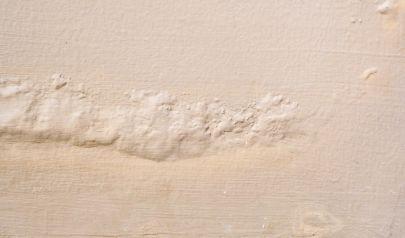
The finished basement carpet was dry at bedtime, but by 6 a.m., it was soaked. Rapid snowmelt had entered through a corner of the foundation where the block wall meets the floor. When the homeowner on Bradley Road stepped onto the bottom stair, she found herself standing in an inch of cold water. The playroom, sectional, and custom shelving were all affected.
Our team encounters this situation every year in Westlake. The damage is significant, the disruption immediate, and homeowners often feel uncertain about where to begin.
Why Water Damage Moves Fast
Many people do not realize that water damage extends beyond what is immediately wet. The critical issue is what occurs in the hours after water intrusion. Within 24 hours, water migrates into drywall, under flooring, and into framing and insulation. Materials may appear unaffected on the surface but can be saturated internally. Wood subfloors swell, and drywall paper absorbs moisture, creating conditions for mold growth. Mold can begin to develop within 48 hours under the right conditions.
Structural risks increase over time. Prolonged moisture in framing and sheathing can lead to costly issues such as soft floors, warped walls, and weakened supports. Our technicians in Bay Village and Rocky River have seen minor flooding events escalate to major renovations due to delayed or improper drying.
A timely response is critical. Taking appropriate action within the first few hours can significantly improve the outcome.
What the Restoration Process Actually Looks Like
Upon arrival, our priority is to assess the situation accurately. We take moisture readings, not just visual inspections, using thermal imaging and moisture meters to determine the extent of water migration, which often exceeds what is visible.
Next, we extract standing water using truck-mounted or portable equipment. We then deploy commercial-grade air movers and dehumidifiers. These industrial systems are designed to remove moisture from materials, not just circulate air.
During the drying process, our team monitors moisture levels daily and adjusts as needed. Once materials reach target moisture levels, we determine what can be salvaged and what must be removed. Affected drywall and wet insulation are removed, and any materials that cannot be properly dried are discarded to prevent mold.
We document the process throughout. For homeowners in Westlake and Olmsted Falls, this documentation is important when working with insurance carriers.
Westlake Homes and Winter Water Risk
Westlake is located in the Lake Erie snowbelt, which significantly affects older homes. Heavy snowfall accumulates during winter, and when temperatures rise in late February or March, it melts rapidly while the ground remains frozen. Water often flows to the lowest point, typically the basement of homes built in the 1950s or 1960s.
Freeze-thaw cycles can damage plumbing, especially pipes in exterior walls, crawlspaces, or unheated areas. Our team in North Ridgeville and Columbia Station responds to burst-pipe incidents each winter, often for homeowners who are unaware of their plumbing's vulnerability. In older homes in Avon Lake and Berea, aging infrastructure such as cast-iron pipes, outdated drain tile systems, and foundation settling increases the risk of water intrusion.
Water intrusion is a matter of when, not if. Preparation is essential.
A Few Things Homeowners Get Wrong
"I'll just run my dehumidifier for a few days." While understandable, residential dehumidifiers are not equipped to handle the moisture levels after flooding. They also do not address moisture inside walls or beneath flooring. A room may feel dry, but the framing behind the drywall can remain wet.
"The damage is visible, so I know what I'm dealing with." This is not always the case. Water can travel in unexpected directions, and significant damage may occur in areas that appear unaffected. Families in Lakewood and North Olmsted have discovered that floors that looked fine had to be removed due to saturated subfloors.
"I need to wait for the insurance adjuster before touching anything." This is not necessary. Most policies require prompt action to mitigate further damage. Delaying can allow mold growth and complicate claims. Document everything before mitigation begins; our team can assist with this. Contact your insurer, then begin the drying process.
If you are currently experiencing water damage or want to assess your risk before next winter, contact AdvantaClean of the West Side. As a local team with extensive experience in Greater Cleveland, we are equipped to handle flooding situations. Call us at (440) 568-0300 or visit advantaclean.com/north-olmsted-oh. You can also read reviews from local homeowners on our Google Business Profile.
AdvantaClean of the West Side, OH
31335 Industrial Pkwy Unit 1, North Olmsted, OH 44070
(440) 568-0300
https://maps.app.goo.gl/haE7CZR17uQU6AfN6