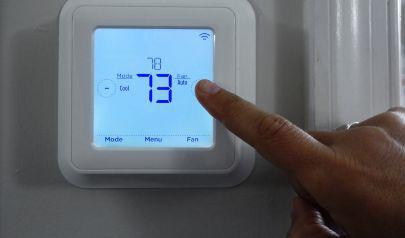
Most homeowners blame the thermostat first.
The air conditioning is running. The temperature looks right. Yet the house still feels sticky by late afternoon, especially in certain rooms. One side of the home feels heavier than the other. Bedding feels damp overnight. The indoor air starts carrying that “closed up” feeling even when the system never shuts off.
That disconnect frustrates people because the equipment appears to be doing exactly what it’s supposed to do.
In many cases, it is.
Summer humidity problems inside a home are often tied less to cooling performance and more to how the structure itself is interacting with moisture once outdoor conditions shift.
Some homes absorb summer differently than others
Two houses on the same street can react completely differently to the exact same weather.
One stays balanced through July and August. The other starts trapping humidity the second outdoor moisture levels rise.
That difference usually comes down to how air moves — and where it stops moving.
Homes naturally create micro-environments:
- Guest rooms that stay closed most of the week
- Hallways with limited circulation
- Laundry areas generating constant moisture
- Lower levels where cooler air slows evaporation
- Closets and storage spaces with almost no air exchange
Once humidity settles into those spaces, it stops behaving like outdoor weather and starts behaving like an indoor condition.
That’s why homeowners often describe humidity issues emotionally before they describe them visually:
- “The house feels stale.”
- “That room always feels heavier.”
- “The air feels wet at night.”
Those observations matter more than people think because they usually appear well before visible moisture concerns.
Why lowering the thermostat usually doesn’t solve it
One of the most common summer reactions is dropping the temperature lower and lower trying to “dry the house out.”
Sometimes that helps temporarily. Sometimes it makes the imbalance more noticeable.
Cooling and humidity control are connected, but they are not identical functions. A home can technically cool while still retaining excess indoor moisture in isolated areas.
That’s why homeowners end up with rooms that are:
- Cool but clammy
- Comfortable during the day but damp overnight
- Different from the rest of the house for no obvious reason
The issue isn’t always system failure. It’s often uneven environmental behavior throughout the structure itself.
The signs usually show up in everyday routines first
Summer humidity rarely announces itself through major damage at the beginning.
It shows up through repetition:
- Towels that never fully dry
- Condensation reappearing on windows
- Persistent odors after showers
- Bedding feeling humid overnight
- Floors feeling different barefoot in the morning
Most people adapt to those changes instead of recognizing them as indicators that the home is retaining moisture longer than it should.
That delay is what allows environmental imbalance to continue building quietly over the course of the season.
Humidity control is really about environmental balance
Indoor humidity affects more than comfort. It changes how air feels, how materials respond, and how consistently a home regulates itself throughout the summer.
That’s why humidity control isn’t just about “making the house colder.” It’s about identifying why moisture is lingering indoors longer than the structure can naturally release it.
Sometimes that means improving ventilation. Sometimes it means addressing airflow between isolated areas. Sometimes it means evaluating how moisture-producing spaces are interacting with the rest of the home.
The goal is consistency — not just lower temperature readings.
AdvantaClean works with homeowners to evaluate the environmental conditions contributing to indoor humidity imbalance, helping identify where moisture retention, airflow limitations, and ventilation patterns may be affecting overall indoor air quality during the summer months.